17 Czech UNESCO Sites: From Prague to the Ore Mountains
USD 21,04
Popular
Czechia boasts one of the richest collections of UNESCO World Heritage Sites in the world — as of July 2026, the overall UNESCO list includes 1,273 sites worldwide, 17 of which are located in Czechia. Beyond its tangible monuments, the country is also represented on the Intangible Cultural Heritage list, thanks to its traditions, crafts and customs.
UNESCO, the United Nations Educational, Scientific and Cultural Organization, adds to its lists places of outstanding cultural or natural significance that must be preserved for future generations. The key selection criterion is uniqueness — having no equivalent anywhere else in the world.
Historic City Centres
The best-known Czech site is the Historic Centre of Prague, spanning 866 hectares, together with Průhonice Park, founded by Arnošt Emanuel Silva-Tarouca. Since 2010, this 200-hectare park with its unique plant collection has formed part of the protected area.
The list also includes the historic centres of Český Krumlov, home to the country's second-largest castle complex, and Telč, with its Renaissance chateau designed by architect Baldassare Maggi, which draws around 100,000 visitors a year. Kutná Hora deserves a special mention — once one of Europe's wealthiest towns thanks to silver mining, it still preserves its Gothic Cathedral of St Barbara.
Castles, Parks and Architectural Masterpieces
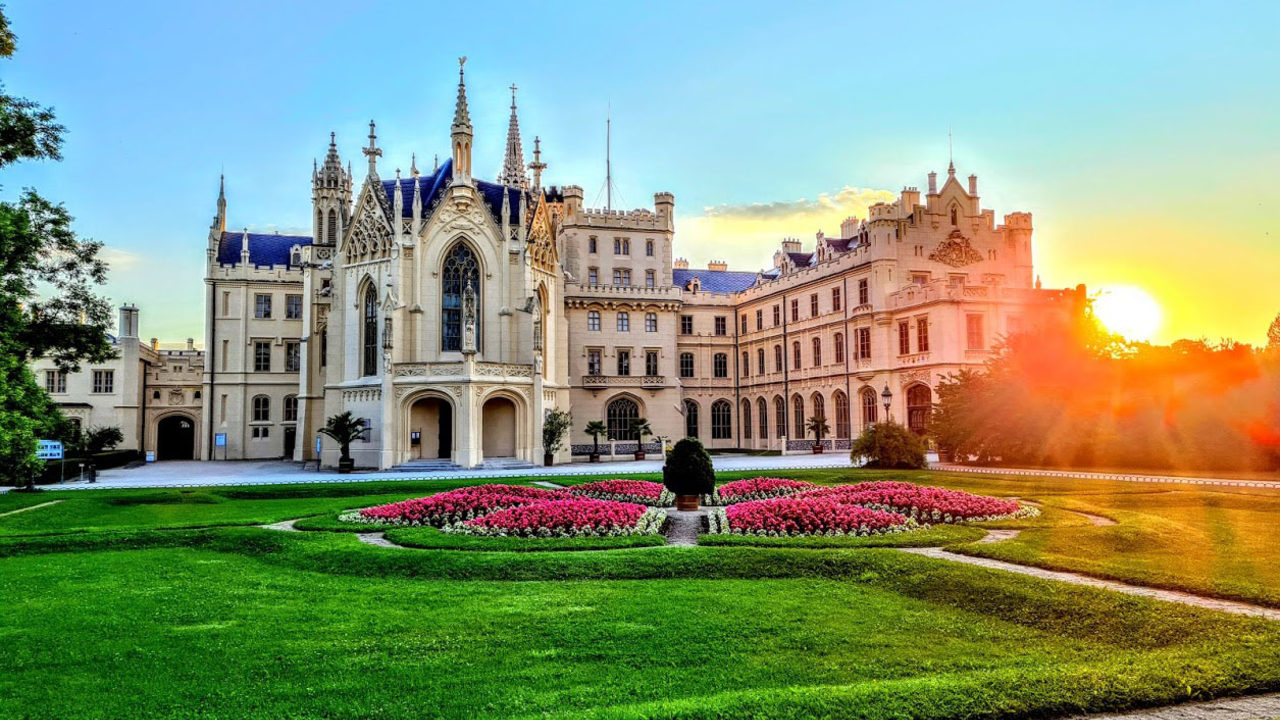
The UNESCO list also features the Lednice–Valtice Cultural Landscape in southern Moravia — the world's largest holistically designed landscape park, covering nearly 300 square kilometres, created by the House of Liechtenstein and nicknamed the "Garden of Europe".
Other sites include the castle and gardens in Kroměříž, home to a picture gallery with works by Titian and Lucas Cranach; the Renaissance chateau in Litomyšl, known for its unique sgraffito decoration, currently under restoration due for completion by 2027; and Villa Tugendhat in Brno, designed by Ludwig Mies van der Rohe — an icon of 1930s functionalism.
A particular gem is the Church of St John of Nepomuk on Zelená hora in Žďár nad Sázavou, an 18th-century creation by architect Jan Blažej Santini Aichel that blends Baroque with Gothic. Another of his works is the reconstruction of the church in Sedlec, near Kutná Hora, in the "Baroque Gothic" style.
Villages, Spas and Industrial Heritage
The list also includes the village of Holašovice near České Budějovice — a fine example of 1870s rural Baroque architecture with 23 protected farmsteads. The National Stud Farm at Kladruby nad Labem, founded by Emperor Rudolf II back in 1579, is protected together with the entire surrounding cultural landscape.
Among the natural and industrial sites are the Ore Mountains (Krušné hory) Mining Region on the border with Germany, the spa triangle of Karlovy Vary–Mariánské Lázně–Františkovy Lázně, and the town of Žatec with its unique hop-growing landscape — local hops are used in Czech Pilsner beer, Irish Guinness and Belgian Stella Artois.
Czechia's only UNESCO-protected natural monument is the Jizera Mountains beech forests, a national nature reserve established in 1999 comprising seven areas of primeval beech forest.
Intangible Heritage
Beyond its architectural monuments, Czechia is also represented on the UNESCO list through living traditions: Slovácko verbuňk (a men's dance from south-eastern Moravia), falconry, Shrovetide door-to-door processions, the Ride of the Kings (Jízda králů), puppetry, the "blueprint" technique of indigo-dyeing fabric, blown-glass Christmas ornaments from the Podkrkonoší region, timber rafting, traditional handmade glass production, and amateur theatre — a tradition that has continuously existed in the Czech lands for more than two centuries.
Read also: Prague Castle from the inside: 9 must-see spots within the fortress
Source: seznamzpravy.cz