A candidate in a rubbish bin costume runs against Nigel Farage in by-election
USD 21,01
Popular
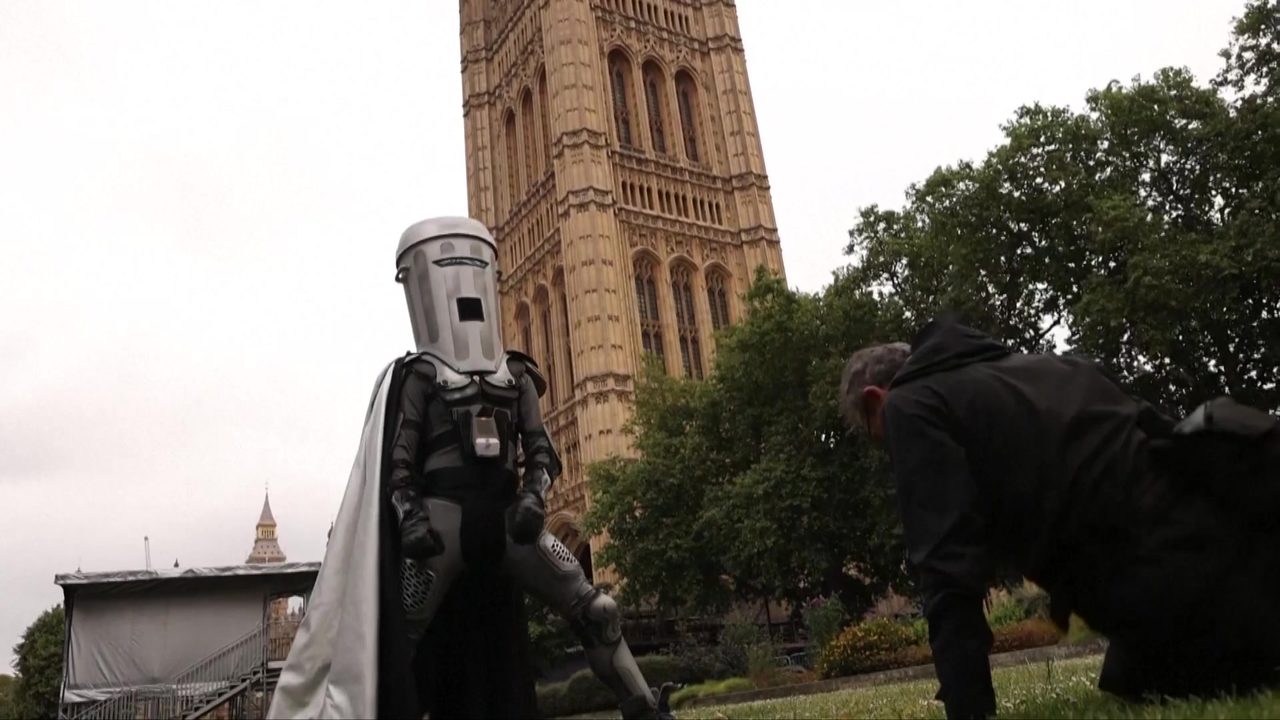
The English constituency of Clacton, in Essex, is holding a snap parliamentary by-election on Thursday, in which Reform UK leader Nigel Farage faces an unusual rival — comedian Jonathan Harvey, better known by his stage persona "Count Binface," who campaigns wearing a costume topped with a bin lid instead of a helmet.
A total of 34 candidates are contesting the seat — a historic record for a single constituency. Notably, there are no Labour, Conservative, Green or Liberal Democrat candidates on the ballot, meaning media and public attention has focused almost entirely on the eccentric "intergalactic space warrior from the planet Sigma IX."
Stephen Pollard, a journalist at the conservative magazine The Spectator, called the situation "possibly the strangest sentence" he had ever had to write: the real contest for the seat, he suggested, appears to be between Farage and Count Binface. Anthony Clavane, a political scientist at the University of Essex who has lived in nearby Colchester for more than 30 years, described the race as "highly unusual" and noted that this is certainly not the kind of opponent Farage had expected.
Why Farage gave up his seat in the first place
Farage himself triggered the by-election, resigning his parliamentary seat amid questions over his finances — in particular, a donation of £5 million (roughly 141 million Czech crowns) from Christopher Harborne, a British-Thai cryptocurrency investor. Farage said he wanted to give voters the chance to decide anew whether they trust him, framing the vote as a battle of "the people versus the elite."
The UK Parliament's standards watchdog is currently examining whether Farage should have declared this gift before standing for election in 2024. Under parliamentary rules, newly elected MPs must disclose financial interests and so-called registrable benefits from the preceding 12 months — though personal gifts are not covered by this requirement.
Clacton holds particular symbolic weight for Farage: in the 2016 Brexit referendum, local voters overwhelmingly backed leaving the EU, and it was on the twin issues of Brexit and immigration that he built his political career.
A parody of Farage himself
Count Binface is no stranger to such campaigns: he has previously run in the same guise against the Conservatives' Boris Johnson and Rishi Sunak, as well as against London's Labour mayor, Sadiq Khan.
While Farage relied on his usual themes — immigration and criticism of the established parties — his rival deliberately avoided competing on those issues, instead choosing to parody Farage's own style. "I am indeed an alien — but let me clarify, not an illegal one," the comedian quipped, playing on the term "illegal aliens" typically used to describe undocumented migrants.
In his manifesto, Count Binface pushed the genre of campaign pledges to absurd extremes: he proposed a referendum on whether Pluto should be classified as a planet, and called for knighthoods to be awarded to the animated characters Wallace and Gromit. He also joked that he would like to nationalise singer Adele, arguing she could single-handedly boost the country's GDP.
Yet his manifesto also contained more serious-sounding pledges: to build at least one affordable home, to reply to every letter or email within three days, and to spend ten days in the constituency for every day spent abroad. He promised to donate any income earned outside his parliamentary duties to local charities, and to help one randomly chosen family a week take out their bins.
The favourite is still clear
Both of the race's main figures avoided public debates with the other candidates. According to The Guardian, independent candidates Attia Fard and Andy Erlam held near-daily meetings with voters, while Farage made only limited appearances in the constituency, holding just one major press conference for the national media.
Despite all the carnival atmosphere surrounding the vote, Farage remains the clear favourite to win. In the 2024 general election, he secured 46.2% of the vote in Clacton, and according to a new poll by Survation, his support has since risen to 73%. Count Binface, according to the same poll, can expect around 20% of the vote. Polling stations closed on Thursday at 23:00 Central European Summer Time.
Source: seznamzpravy.cz