Archaeologists in Brno Uncover Remains of a Late 19th-Century Mother-of-Pearl Button Workshop
USD 21,65
Popular
During excavations at a construction site for a new residential building on Tábor Street in Brno, archaeologists have uncovered the remains of a workshop that produced mother-of-pearl buttons at the turn of the 19th and 20th centuries. The find was reported to Novinky by Michal Bučo, an archaeologist with the company Archaia who led the excavation.
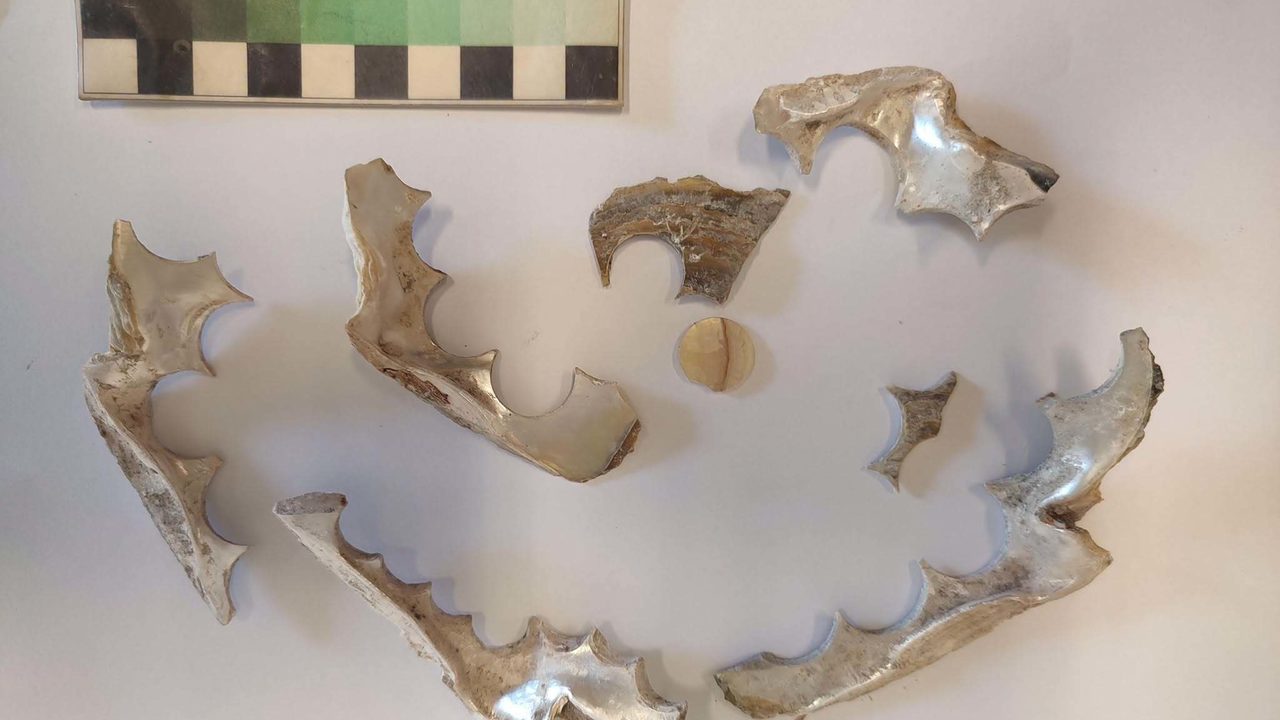
According to Bučo, the team found two pits filled with household waste containing remnants of processed shells — both marine shells and freshwater mussels. Making mother-of-pearl buttons was a highly specialized, dusty and noisy craft that required specific equipment: lathes for cutting rings out of shells, punching machines, and grinding tools.
An Illicit Home Workshop
The archaeologist believes the workshop was most likely unofficial and unregistered. "This is valuable evidence of small-scale suburban craft production in Brno, which apparently operated informally or as a subcontractor for the sewing industry in Židenice," Bučo explained. Button-making from mother-of-pearl was such a minor trade in Brno that no written records of it have survived.
Between 1880 and 1910, the districts of Židenice and Zábrdovice were the heart of Brno's textile and garment industry. Local tailoring and sewing workshops consumed vast quantities of cheap buttons, making it profitable to run small-scale production right next to the customers who needed them.
River Pearl Instead of Sea Pearl
The use of freshwater shells — mostly painter's mussels and swollen river mussels — suggests the craftsman relied on locally available materials. Large numbers of these mussels could be gathered from the winding, unregulated beds of the Svitava and Svratka rivers, as well as from nearby canals in Židenice and Zábrdovice. River-sourced mother-of-pearl was a cheaper alternative to the costly marine variety.
The waste pits also contained several glass bottles that may be linked to the button-making process. After the button blanks were drilled and cut from the shells, the mother-of-pearl remained dull and rough — its shine was achieved through acid-bath etching, along with bleaching in hydrogen peroxide and ammonia. Archaeologists found fragments of mother-of-pearl bearing traces of cut-out buttons, as well as a special bottle with two openings that was used in this process.
Read also: Brno: what to see and where to go
Source: novinky.cz