Myndos Gate in Bodrum: the ancient fortress of Halicarnassus
USD 21,80
Popular
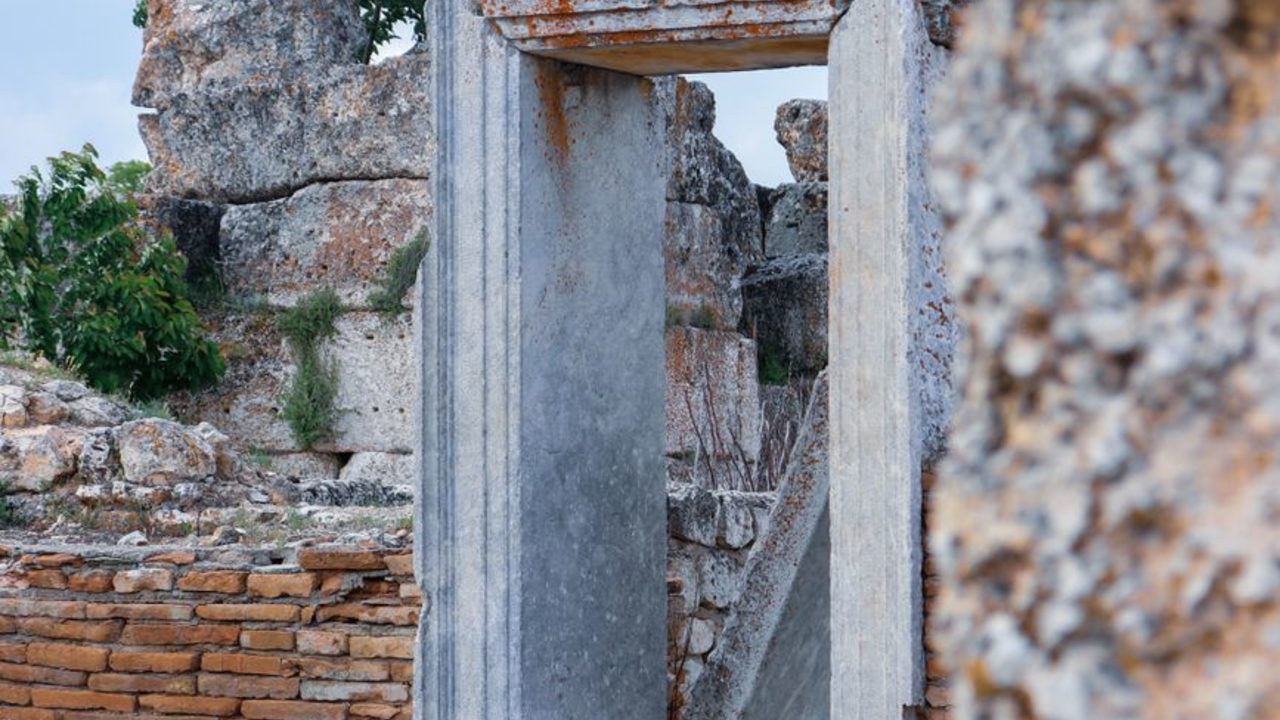
On the western edge of the Turkish city of Bodrum stands the Myndos Gate, built around 360 BC. It is the only significant remnant of the mighty defensive walls of ancient Halicarnassus. The area around it has effectively become a small archaeological park, yet the gate itself remains little known to tourists.
The gate that saw Alexander the Great
According to a Czech travel portal, the gate was one of the two main entrances to Halicarnassus. It was built by Mausolus, satrap of Caria, and consists of two monumental towers with an inner courtyard. Each tower has a base of roughly 7 by 8.5 metres, and one of them has survived almost to its original height. The gate is called “Myndos” because it led to the ancient peninsula city of Myndos, where the resort of Gümüşlük stands today.
Locals call the gate Diktiri, Dikdiri or Dikturu, which means “standing upright.” It is their way of paying tribute to a structure that has stood for more than 2,500 years. The gate apparently once had three towers, but the middle one has vanished without a trace. The surviving parts are built from large, heavy, square blocks of andesite.
In 334 BC, when Alexander the Great reached Halicarnassus, a fierce battle broke out right at this gate. The city was defended by the Persian commanders Orontobates and Memnon of Rhodes. The fighting was long and many people died, but the gate held. Only when the defenders withdrew by sea to the island of Kos did Alexander take the city and largely destroy it. The remains of the defensive ditch that halted the Macedonian assaults are still visible today.
What you can see on site
Around the gate, archaeologists found vaulted tombs with burial chambers. They were opened in the 19th century by the Briton Charles Newton. Inside were terracotta containers and sarcophagi. The tombs date to the Hellenistic and Roman periods, mostly to the 4th century BC. Some have two storeys, others just one, and in a few the floors were decorated with mosaics. Part of the wall has been reconstructed: the first stage of restoring the towers was completed in 1999. The walls originally stretched for 7 kilometres.
The complex includes the northern and southern towers with a courtyard, tombs from different eras, the remains of the wall, and an area with ancient building blocks. The defensive ditch was 56 metres long, 7 metres wide and 2.5 metres deep. Excavations on the site are continuing, and archaeologists are hoping for new finds.
How to get there and what to know
The site is believed to be open to the public free of charge (apparently only since 2024). The gate lies between old Bodrum and the resort of Gümbet, next to a Turkish cemetery, at Büyük İskender Caddesi (Alexander the Great Street). The site is well kept, with information boards in Turkish and English, and the towers are lit up in the evening.
The author of the original article notes that the gate is surprisingly rarely visited. A guide from one Czech tour operator dismissed it as simply “a few ruined stones.” Yet groups of Russian tourists regularly stop at the gate, arriving by coach and minibus and hearing about the monument’s history.
Around Prague, based on reporting by turistika.cz