Rubik's Cube Production Returns to Hungary After Decades Abroad
USD 22,10
Popular
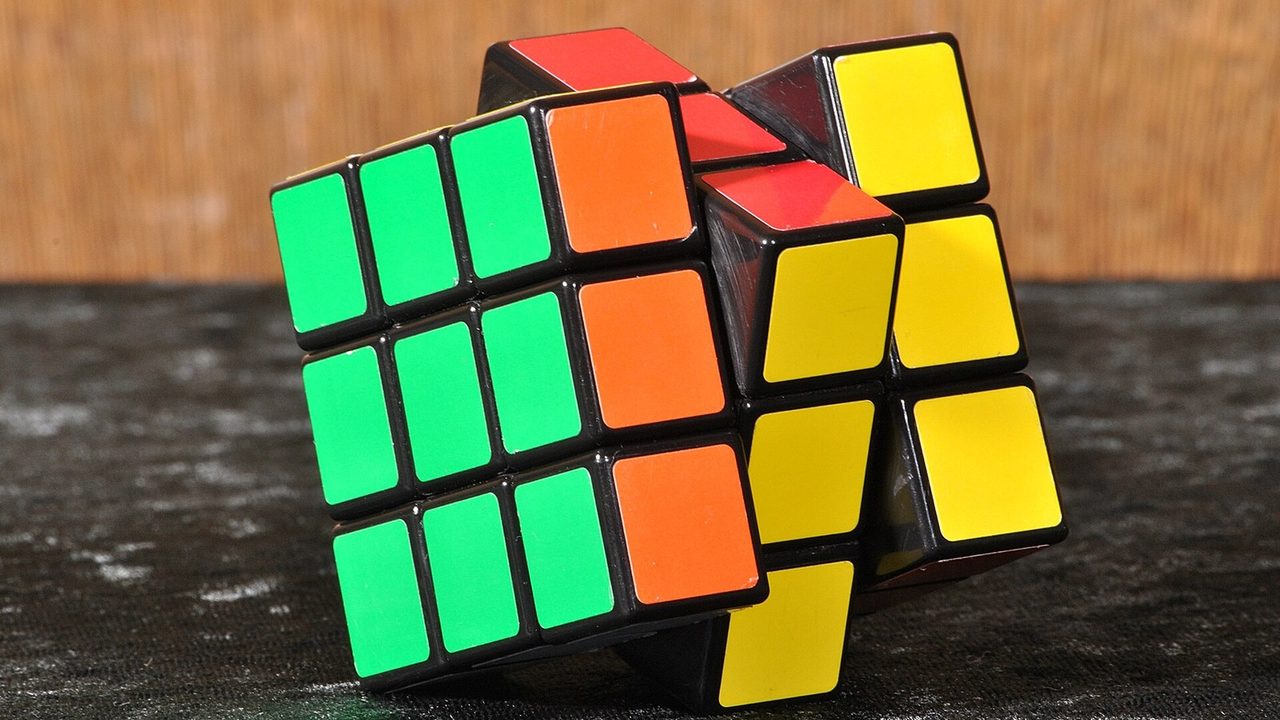
The Rubik's Cube is being made in Hungary again. A new, fully automated production line has opened in the city of Jászberény, bringing manufacturing of the puzzle back to the country where inventor Ernő Rubik first created it, ABC News reported.
The line is designed to turn out 1 million cubes a year, with robotic arms assembling each puzzle and testing it for functionality and durability. Rubik, 82, attended the opening on Tuesday and said Hungary is the home of the cube because it was born there.
How the cube got from a Budapest classroom to the world
- 1974: Rubik was teaching design at the Academy of Applied Arts and Design in Budapest. According to ABC News, he wanted to build a three-dimensional object that felt endless and finished a wooden prototype made of 27 blocks that could rotate on several axes.
- 1977: An initial 5,000 units of what was then sold as the Magic Cube went on sale at specialty shops in the Hungarian capital.
- After 1977: Rubik said that in then-socialist Hungary it was hard to obtain materials, and the country was not ready for production on that scale. The cube was licensed to a British toy company and then a U.S. one, and manufacturing moved abroad.
- 1980 to 1983: Rubik called this the first big wave of popularity. He said 200 million units were sold in those years.
From hand assembly to robots
Rubik said the new line is very different from the early days, when the cubes were put together by hand. Sales dipped after the initial boom, ABC News reported, but millions of cubes are still sold every year, and the puzzle has sold more than half a billion units in total.
Rubik himself prefers to call the cube a discovery rather than an invention. He said that for him it is a sculpture that can be transformed, a place where art and engineering meet and where users can change the object in nearly endless variations. He does not consider himself a speed competitor.
Steve Radewych, a senior vice president at Spin Master, the Canadian toy company that owns the Rubik's Cube trademark, said the theme of the day was a return to the cube's roots. He called the puzzle more than a toy and a global social phenomenon, and pointed to its lasting appeal among young people.
What it means for cube fans
For people who buy or collect the puzzle, the news is mostly symbolic. Officials did not say whether the Jászberény line will replace production elsewhere or whether prices will change. What is clear is that the toy's owner is investing in automated manufacturing in the country of its origin, even decades after the first craze faded.
The cube also remains a competitive pastime. ABC News noted that global competitions measuring who can solve it fastest have multiplied in recent years. The current record, set last month in China by nine-year-old Xuanyi Geng, is 2.51 seconds, according to the World Cube Association, which organizes and certifies competitions around the world.
Why the cube still matters to Rubik
Asked about the meaning of his creation, Rubik said that making something gives a person the chance to do something meaningful and beautiful. Radewych described the cube as a symbol of intelligence, problem-solving and cognitive discipline that has brought joy, and frustration, to many generations.
The production line is planned to make 1 million cubes annually and a sign that the toy's owner wants the cube made where it began.
Read next
Floppy Molecules Let MIT Team Build Nanoparticle Crystals Never Seen Before
Self-Resizing Triangle Modules Snap Together Like Magnets in Lab Test
Harry Kane becomes England's most-capped player with 126th appearance
Around Prague, based on reporting by ABC News
Cover photo: kaʁstn Disk / Cat / Wikimedia Commons, CC BY-SA 3.0, cropped