Czech Athletics Leaves European Championships Without a Medal for the First Time Since 1938
USD 21,73
Popular
The Czech athletics team returned from the European Championships in Birmingham without a single medal — a drought the Czech (then Czechoslovak) team last experienced in 1938, when future legend Emil Zátopek was still in school.
The medal tally is telling, but it's not the whole story. Hammer thrower Vladimír Myslivčík and javelin thrower Jakub Vadlejch were unlucky by the narrowest of margins — had they thrown seven and nine centimetres further respectively, they would have walked away with medals. Still, that wouldn't have changed the bigger picture.
A historic low for finalists
Far more worrying is the breakdown of final placings: of 40 events (including two relays), only five produced a top-eight finish. That's the worst tally since the breakup of Czechoslovakia. At each of the previous seven European Championships, double-digit numbers of Czech athletes reached that level. Now, in the team standings, the Czech Republic trails even Croatia, Turkey and Israel.
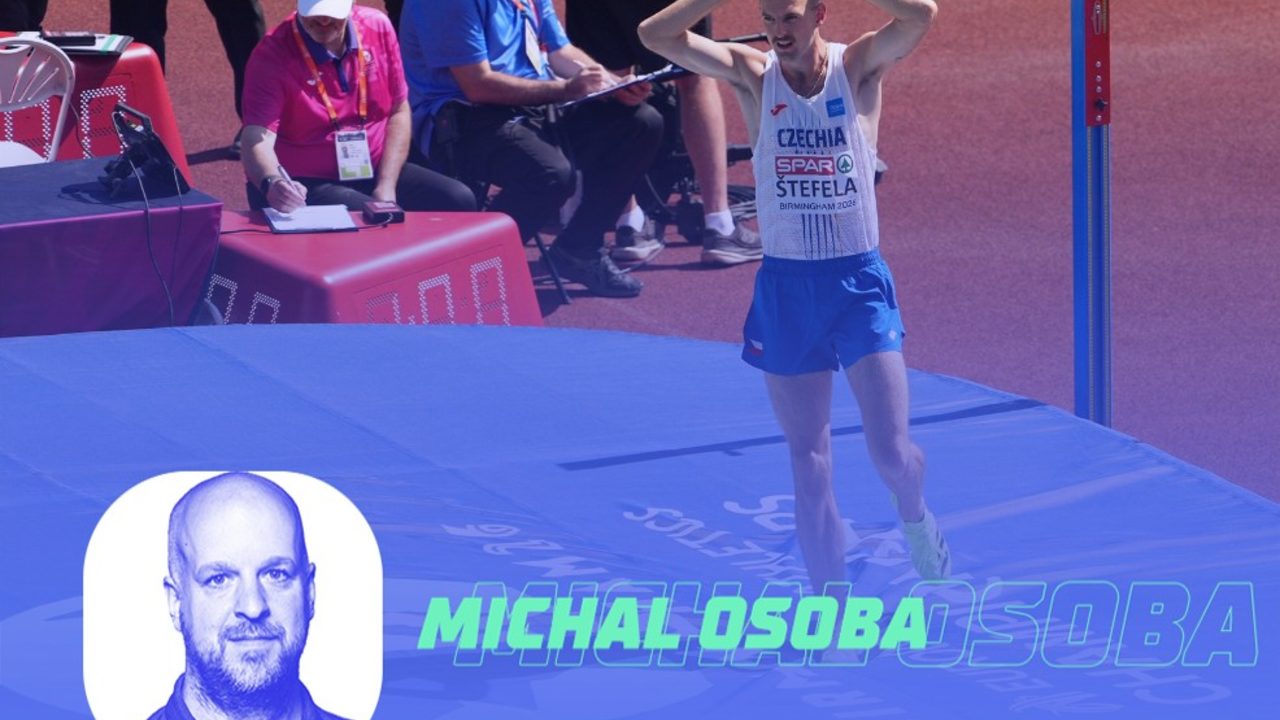
Only one Czech athlete truly announced herself among Europe's elite this season — Lourdes Gloria Manuel. The rest of the team's leaders arrived far from their best form: Amálie Švábíková is expecting a child, Jakub Vadlejch has been battling injury, and Jan Štefela failed to produce consistent results on the Diamond League circuit, clearing 230 cm just once — at the home championships in Plzeň — which turned out to be his only European-level result of the season.
Underperformance instead of peak form
Most athletes fell well short of their potential. Only Petr Meindlschmid improved his personal season best on the track, having competed only twice before the championships. The race walkers fared better, though they too had few competitive outings on their new distances.
The ability to peak precisely for the season's main event — a trait once displayed by Czech stars such as Barbora Špotáková, Zuzana Hejnová and Jakub Vadlejch himself — was largely absent from this squad. Injuries compounded the problem: an unusually high number of lingering and new muscle and joint issues plagued the team, echoing a similar pattern seen at the start of last season.
Hope in the younger generation
Špotáková, now vice-chair of the federation, defended the athletes: "Everyone who made it here is exceptional" — and she's right: with a growing pool of talent, 52 of the country's strongest athletes qualified for the championships. Still, making the team for the season's biggest event should be a stepping stone, not the ultimate goal.
Encouragingly, the fire hasn't gone out among the youngest talents. Twenty-one-year-old Lourdes Gloria Manuel finished only fourth in what was otherwise a strong season and didn't hide her tears of disappointment, while Petr Meindlschmid, despite injury, placed eighth but admitted he had wanted more — and that hunger to improve is exactly what fuels future progress.
As veterans like Jakub Vadlejch and Tomáš Staněk increasingly struggle with their own bodies, more and more hope is being placed in the new generation. For at least seven years now, people have been talking about a generational shift in Czech athletics — Czech athletes are already among Europe's elite at junior level. Birmingham was supposed to prove that this progress is translating into senior success. It didn't, and next year's World Championships in Beijing will bring even tougher competition. The results of youth tournaments remain the main reason for optimism — whether the generation of Michal Rada, Nikol Krutilová, Linda Botková and Tomáš Horňák, together with recent successful juniors Lourdes Manuel, Tomáš Jarveinen and Petr Meindlschmid, can become the backbone of the senior team should become clear in the coming years.
Source: sport.cz