Drought in Czechia Now Visible from Space
USD 21,04
Popular
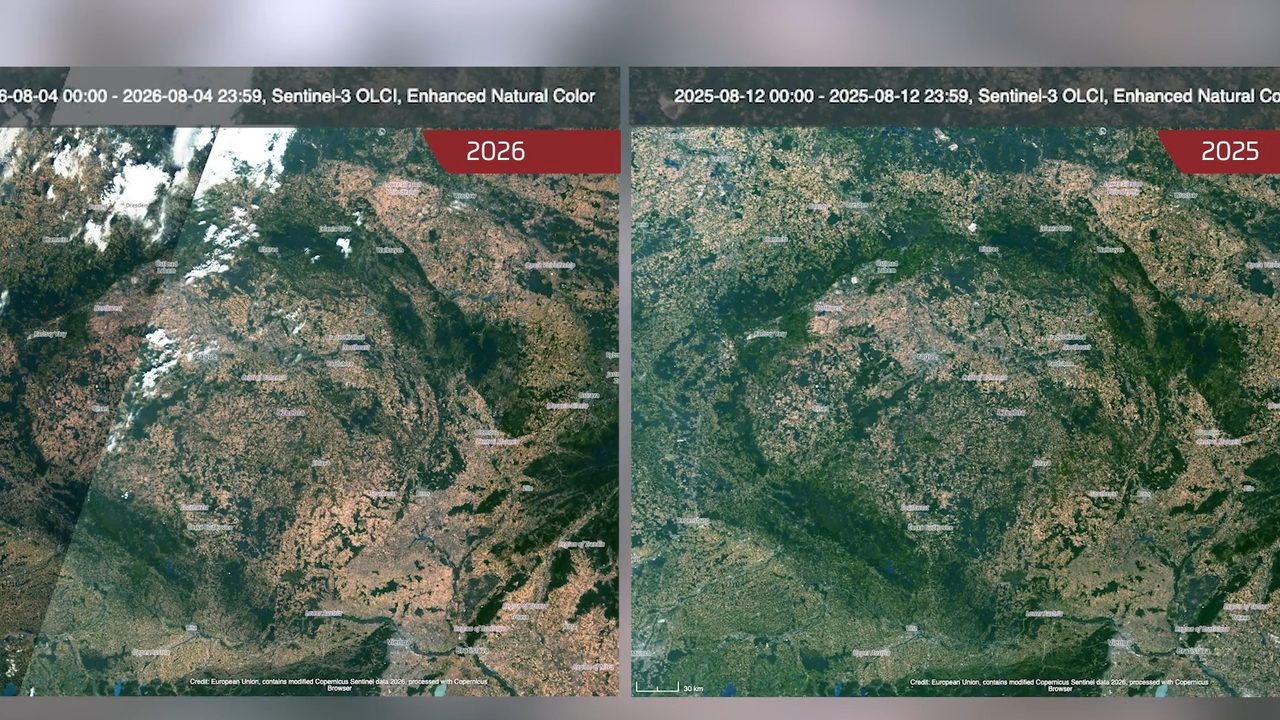
Satellite images from early August show significantly more parched, brown patches of land across Czechia than in previous years. The differences are especially striking in the Bohemian-Moravian Highlands and other mid-elevation regions, whereas the lowlands suffer from moisture shortages almost every year. In scale, this year's drought is comparable to 2018, when Czechia was also gripped by severe dryness.
According to the Intersucho portal, extreme soil drought covered a third of the country's territory in the first week of August, while pronounced drought affected more than two-thirds of Czechia.
Rivers and Wells Are Drying Up
"In terms of hydrological drought, most of the territory is now affected. Rivers have very little water, and the situation on smaller streams and brooks is even worse. Some are drying up completely, others are hitting historic lows for this time of year or approaching 2018 levels. Wells are drying up too, and fishermen, for instance, are feeling the impact," Martin Pecha, a hydrologist at the Czech Hydrometeorological Institute, told the outlet.
Forests Have Stopped Growing
The drought has also dealt a serious blow to Czech forests. Timber growth has stalled in most areas — 70% of the country's forest ecosystems are showing below-average or even weaker growth. Nine percent of forests are suffering from an extreme water deficit, and another 60% from a high deficit.
The drought stems from two causes: a lack of precipitation and abnormally high temperatures. Rainfall was already scarce back in spring — according to the Czech Hydrometeorological Institute, this spring was the driest on record. The first two months of summer also turned out drier than normal.
Summer itself has been historically hot. In late June, an all-time temperature record for the whole of Czechia was broken, with 41.9°C recorded in Doksany. Just a few days ago, the record for Moravia fell too, as thermometers in Strážnice hit exactly 41°C. High temperatures further accelerate water evaporation, deepening the drought even more.
Not Just a Czech Problem
The drought has affected not only Czechia but other European countries as well. The Danube and Rhine rivers have reached historic lows. France and Spain are also enduring an extremely dry summer. The cause is the same everywhere — steadily rising temperatures due to climate change combined with this year's lack of rainfall.
The situation is further worsened by shrinking snow reserves. As global temperatures rise, less and less snow falls in mid- and low-altitude areas during winter — and it is precisely the meltwater in spring that has traditionally helped replenish the landscape's water supplies.
Source: novinky.cz