Escape from Leopoldov: Inmates Stabbed Five Guards to Death, Then Boarded the Wrong Train and Ended Up Back in Prison
USD 21,04
Popular
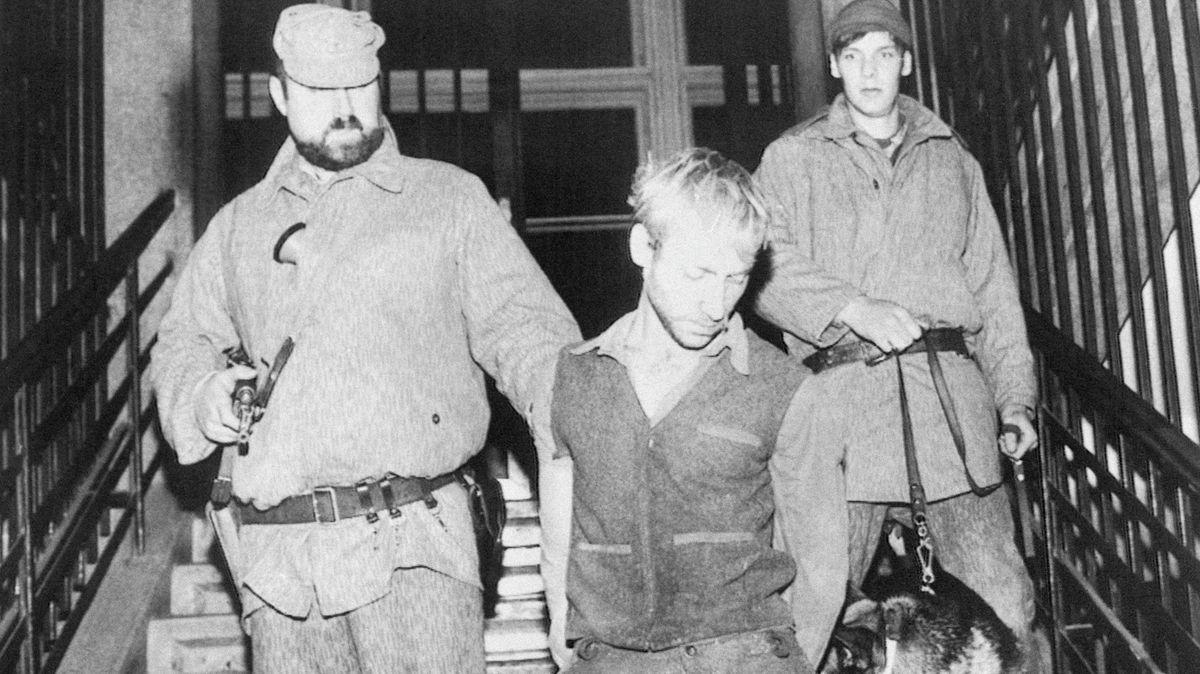
On Saturday, November 23, 1991, the Leopoldov prison near Trnava in Slovakia was the scene of one of the most brutal prison breaks in modern Czechoslovak history. A group of convicts murdered five guards and attacked several bystanders — only to see their plan collapse due to their own disorganization.
According to case files, seven inmates took advantage of a guard shift change and a lapse in supervision. They killed the first guard with a homemade knife, stabbing him seven times in the chest, and tied up two others. The group's ringleaders were 30-year-old Tibor Polgári, nicknamed "Blázen" ("The Fool"), who had led a mass riot at the same prison in March 1990, and 22-year-old Miloš Uriga. After stripping the dead guard of his uniform and taking his keys, the escapees disguised themselves as guards and made their way to the control post at the main gate, where they killed four more prison staff members, including the deputy shift commander.
Having seized two submachine guns and four pistols from the weapons locker, the seven armed fugitives broke out and headed north, planning to reach Australia via Poland. They took one of the guards hostage as insurance against a possible police confrontation. Along the way they hijacked several cars from random drivers, seriously injuring four people and lightly injuring seven others, all while drinking alcohol and using drugs.
The escape quickly descended into chaos. The fugitives first crashed their stolen car into a tree, then decided to switch to a train — but boarded the wrong one, which carried the drunk, armed criminals right back to the Leopoldov area. Near Piešťany, police surrounded them in a haystack. In the ensuing shootout, Polgári was wounded in the stomach. Twenty hours after it began, the escape was over.
The crime shook a Czechoslovakia only recently freed from communism and sparked widespread calls for the reinstatement of the death penalty. In February 1993, a court sentenced Polgári, Uriga and Andrej Harvan to life imprisonment for the guards' murders. Harvan, who was already serving time for a double murder, later took his own life in prison. The other members of the group were Dalibor Bajger, Vladimír Duda, Bartolomej Boto and Václav Fedák.
In 2018, 25 years later, a court considered Polgári's request for early release. According to Slovak media, he told the court: "I do not deny the tragic events at Leopoldov. I deeply regret what I did. I killed a man, and I will carry that with me for the rest of my life. Prison has taught me to be a better person." The court denied his release.
Polgári and Uriga were already well known among Leopoldov inmates from March 1990 — the moment when the chain of events that led directly to the tragedy a year and a half later began. On March 15, 1990, 217 inmates declared a hunger strike, drove guards out of the residential blocks and barricaded themselves in, demanding immediate release. The number of rioters quickly grew roughly fivefold, with about a third of them considered highly dangerous. Looting, vandalism and arson followed — the inmates took 150 people who were not part of the riot hostage and seized the prison kitchen along with supplies worth 1.5 million crowns. Tibor Polgári proclaimed himself the prison's self-styled "director."
The riot was triggered by an amnesty issued by President Václav Havel, which did not apply to those convicted of murder, rape or robbery. Negotiations with the inmates failed, and on March 28, 1990, authorities decided to launch a forceful operation. The assault involved three helicopters, twelve armored personnel carriers and more than two thousand personnel, including 62 rapid-response special forces troops, 350 prison service staff and roughly 150 paratroopers. The inmates had already manufactured incendiary devices, bladed weapons, machetes, axes and even a homemade flamethrower in the prison workshops, and hurled Molotov cocktails at the assault teams from the rooftops.
The clashes lasted two and a half hours and resembled an actual battle. In the end, security forces managed to free all the hostages and regain control of the prison. Damages totaled nearly 30 million crowns, and five of the complex's eleven buildings were destroyed. Seventy-three inmates, including Polgári, stood trial — the combined sentences totaled 345 years and 10 months, with the longest individual term at 14.5 years and the shortest at 18 months. A year and a half later, one of the key figures in those events would attempt a new, far bloodier escape — one that would end in the deaths of five guards.
Source: seznamzpravy.cz