Head of Czech Railways Voluntarily Gives Up Security Clearance — Minister Demands Investigation
USD 20,98
Popular
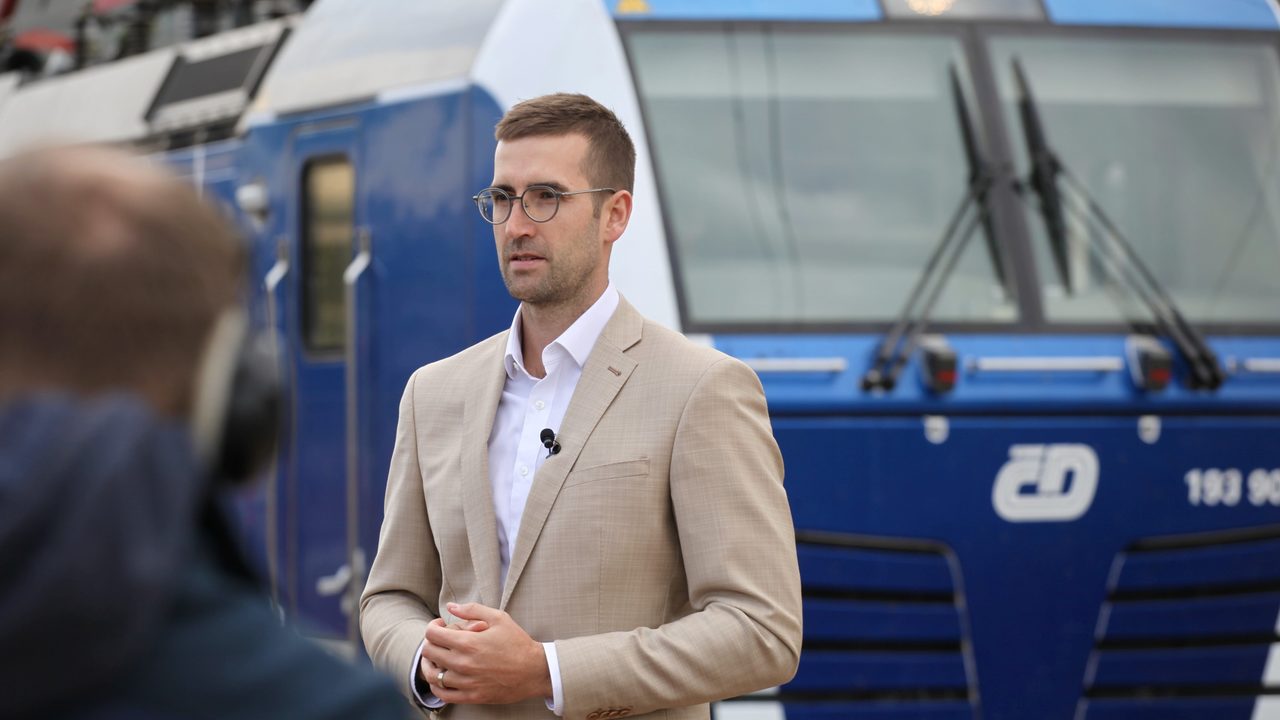
The CEO of the state-owned company České dráhy (Czech Railways), Michal Krapinec, has voluntarily given up his security clearance at the "Confidential" level — the second-highest of the four classification levels in the Czech Republic. This emerged from responses given by company spokesman Petr Šťáhlavský to journalists' inquiries.
The move is unusual: officials and heads of state-owned companies typically try to hold on to such clearances, which grant access to classified information. According to the company's spokesman, the law does not actually require the head of the national carrier to hold a clearance, so Krapinec, "after weighing all the circumstances," decided to relinquish it.
Transport Minister Unhappy with the Decision
Transport Minister Ivan Bednárik (SPD) disagrees with that interpretation. According to his spokesman Filip Medelský, holding a security clearance was one of the qualification requirements of the competition that Krapinec won at the time. Although the clearance was not formally required at the moment of his appointment, it was expected that he would obtain one after taking office.
Upon learning that the clearance had been surrendered, the minister immediately turned to the Czech Railways supervisory board, demanding a review of the situation. "The minister considers this an unusual situation and expects the supervisory board to examine the matter thoroughly," the ministry's spokesman said.
Dozens of Hours of Questioning by the Intelligence Service
Holding a state secret clearance comes with a number of obligations — including the need to disclose one's financial situation, transactions, and personal connections. The company spokesman confirmed that the decision was made "in light of personal and family circumstances," as well as the fact that the position of CEO does not formally require such a clearance.
According to sources close to the Transport Ministry and security services, Krapinec's decision followed numerous checks by the National Security Authority (NBÚ). Over the past year, the CEO reportedly spent dozens of hours in total being questioned in connection with suspected leaks of classified information from within his circle.
At the same time, according to the company spokesman, Krapinec himself was never officially notified of any suspicions regarding violations of rules governing the handling of classified or sensitive information. Czech Railways insists that giving up the clearance in no way limits the director's authority — he allegedly retains access to all the information necessary to carry out his duties.
The National Security Authority declined to comment, citing the confidential nature of clearance-review procedures.
Questions for the Rest of Management
Even before Krapinec's appointment, the company had discussed the need for at least some members of management to hold a security clearance — for instance, to receive classified information from the army or police regarding the schedule of arms transports between the Czech Republic and Ukraine, or, in peacetime, data on the transport of nuclear fuel.
Asked whether other board members hold the relevant clearance, the company spokesman was evasive, stating only that all board members are "granted authority commensurate with their job responsibilities." Besides Krapinec, the company's board currently has only two other members — Jiří Ješeta and Lukáš Svoboda. The latter, incidentally, already has a criminal record: while working as a senior executive at Česká pošta (Czech Post), he fell victim to a phishing attack and transferred roughly one million crowns of company funds to fraudsters, for which he was convicted; the Supreme Court recently rejected his appeal.
Source: seznamzpravy.cz