Head of SAP Czech Republic: Czechs Are Too Comfortable to Grow, Says Tech Chief
USD 21,00
Popular
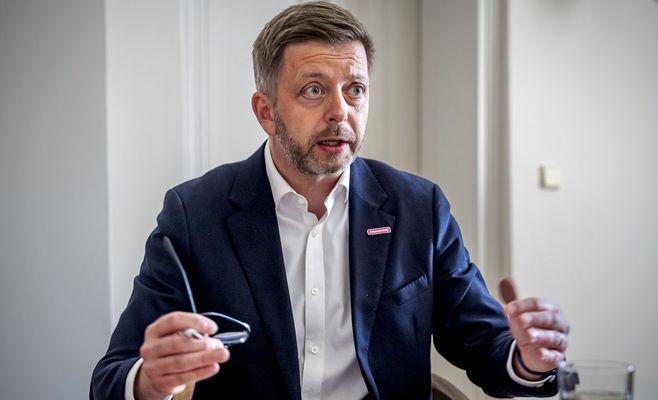
Czech companies are falling behind their American and Asian competitors in adopting new technologies and artificial intelligence, held back by "technological debt" and a level of comfort that saps their motivation to change. That's according to Hana Součková, who has headed the Czech branch of global IT giant SAP for more than nine years — a company whose products are used by 1,400 Czech firms, together making up roughly 80% of the country's economy.
Why businesses are afraid of change
According to Součková, the main problem isn't a lack of technology but a reluctance to implement it. "We've lived in safety and economic stability for too long, so there's no real incentive to change," she explains. For comparison, SAP's Czech office employs 4,000 people, 56% of whom are neither Czech nor Slovak. In her observation, people who have left their home countries to work abroad tend to be far more willing to learn new skills and adapt.
SAP's Czech division is the second-largest in Europe and fifth-largest in the world. The company signs up around 10–15 new clients in the Czech Republic every year, with recent additions including ELI, the country's largest laser research centre, and Fixed, a phone-case manufacturer based in České Budějovice. Annual revenue tied specifically to Czech clients stands at around 3 billion crowns, with a team of 250 people working directly with local customers — the rest of the staff are engaged in global development and support operations.
Artificial intelligence is changing the rules
Součková admits that the rise of AI has changed business "dramatically, and there's no end in sight yet." SAP is already rolling out what it calls an Autonomous Enterprise — systems in which AI agents respond independently to production disruptions: if a delivery is delayed, the system checks alternative suppliers and existing contracts, and can even launch a mini-tender on its own, coordinating its actions with other agents.
Still, traditional enterprise software businesses don't yet see neural networks as a direct threat. Fields such as accounting, logistics and production quality control demand one hundred percent data accuracy without any "hallucinations," and such processes undergo strict audits and mandatory certification.
Layoffs and growing social divides
The head of SAP Czech Republic notes that after an initial wave of layoffs driven by AI adoption, companies are shifting to a new model — rather than expanding headcount, they aim to double business efficiency with the same number of employees. Workers who are freed up are redirected toward training and other tasks.
But technological progress has a troubling side too. According to SAP's own research on shifts in the labour market, 54% of people would rather turn to AI for help than to a colleague, 47% would prefer an AI manager over a human one, and 30% of employees share their stress specifically with artificial intelligence on a tough day. Součková admits these numbers shocked her: virtual reality is increasingly encroaching on people's personal and social bonds, and where that will ultimately lead remains unclear.
Source: seznamzpravy.cz