Ketchup Test: Little-Known Brands Beat Heinz and Other Market Leaders
USD 21,01
Popular
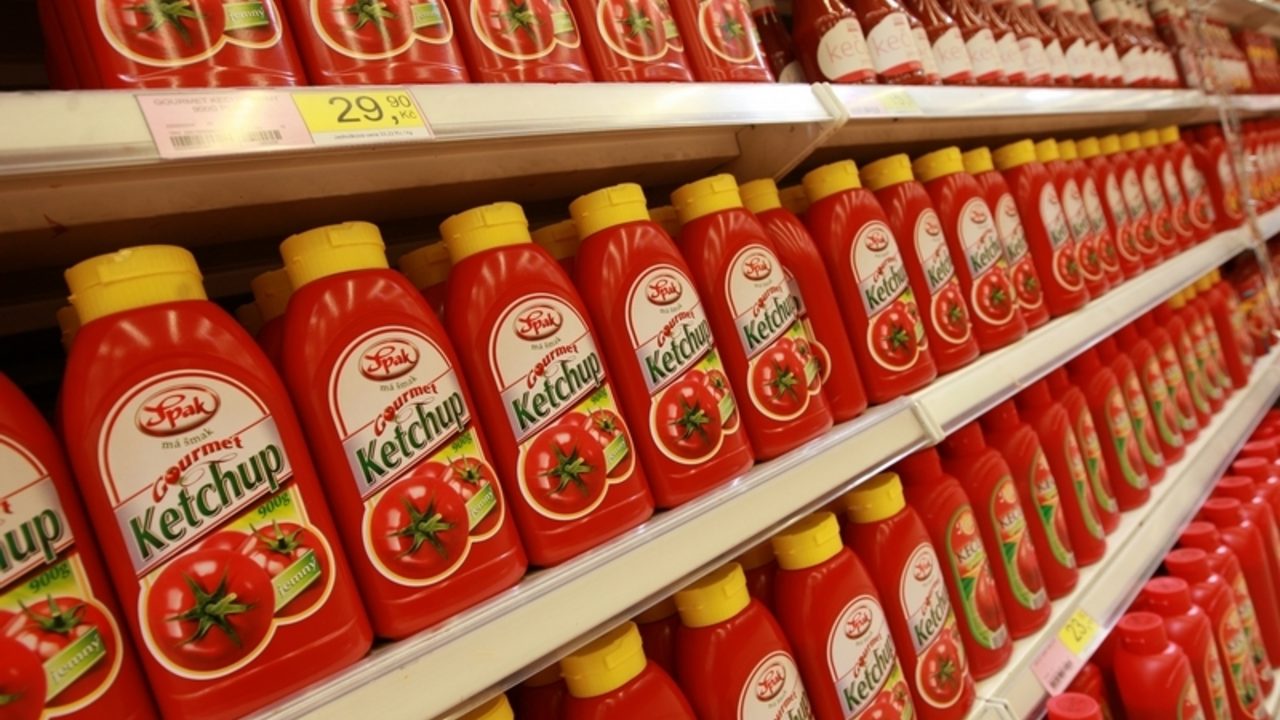
The Eurofins laboratory, commissioned by the Czech outlet Novinky, tested ten ketchups bought in ordinary Czech shops, focusing mainly on tomato content and salt levels. The results turned out to be surprising: little-known brands outperformed famous names in quality, including Heinz.
How Many Tomatoes Are Really in the Bottle
Based on the measured data, experts calculated how many fresh tomatoes go into producing 100 grams of ketchup. Since water is removed from tomatoes during processing, this figure can noticeably exceed 100 grams, and the result is considered approximate, with a margin of error of up to one-fifth.
On average, the tested ketchup samples contained about 175 grams of tomatoes per 100 grams of product. The highest amount was found in Kand Tomato Kečup sladký — around 250 grams, followed by Vilgain organic ketchup with roughly 226 grams. At the other end of the scale, figures were as low as 125–130 grams.
"I consider a tomato content of 175 to 200 grams per 100 grams of ketchup to be a very good level — such products can be labeled Prima, Extra or Speciál," said food quality expert Jan Pivoňka from the University of Chemistry and Technology, Prague. According to him, more tomatoes isn't always better: an overly concentrated ketchup can end up excessively thick, and the flavor should stay balanced.
Heinz Zero and the mild ketchup from the Lidl chain also showed around 200 grams of tomatoes per 100 grams of product. At the bottom of the ranking were regular Heinz Tomato Ketchup and the Nelly brand.
Children's Ketchup With a Record Amount of Sugar
The lab separately drew attention to the labeling of the Lidl product: the Czech label states 78% concentrated tomato puree. However, this figure alone tells buyers little, since different concentrates contain different amounts of water. Calculated for the most common type of concentrate, the stated 78% doesn't match the lab's calculations — although the ketchup itself actually showed an above-average tomato content. "The problem isn't the product itself, but the way it's labeled," Pivoňka noted.
Major differences were also found in sugar content. The lowest was in Heinz Zero, with no added sugar or salt — just 5 grams per 100 grams of product. Vilgain's organic ketchup without added sugar contained 7.3 grams.
At the opposite end was the Nelly brand, with 27 grams of sugar. "Rudolfs Bio Kečup for children" also produced a surprisingly high result: the nutrition table lists 23 grams of sugar per 100 grams of product, with 18% added sugar among the ingredients.
"Ketchup is essentially a seasoned tomato sauce, where sugar and salt have their place. Their mere presence doesn't indicate poor quality," Pivoňka explained, adding that what matters most is the quantity and overall balance of the recipe. Salt content differences between most brands were less dramatic — typically 1.5–2 grams per 100 grams — with the exception of Heinz Zero, at just 0.06 grams.
Color and the Absence of Preservatives Don't Guarantee Quality
Ketchup's shade is not an indicator of quality: a darker product doesn't necessarily contain more tomatoes, since color is also influenced by the tomato variety and how the puree is processed. Likewise, the absence of preservatives doesn't automatically mean higher quality: pasteurized ketchup keeps well before opening, but once opened it may spoil faster — sugar, salt and preservatives extend shelf life.
Czech law strictly regulates ketchup composition: a standard product must contain at least 7% so-called refractometric dry tomato matter, while for the Prima, Extra or Speciál categories the minimum is 10%.
When shopping, experts advise against relying solely on labels like "organic," "for children" or "preservative-free" — it's more important to check the amount of tomatoes used, the sugar and salt content, and the full ingredient list. As the test showed, even a high puree percentage on the label, without further explanation, doesn't tell buyers how many tomatoes actually went into production.
From Fish Sauce to Tomato Ketchup
Interestingly, ketchup originally had nothing to do with tomatoes. Its predecessors emerged in Asia as fermented sauces, including fish-based ones. Europeans later created their own versions — made from mushrooms or walnuts, for example. Among the first published American tomato ketchup recipes was one from physician James Mease, which appeared in 1812, while American manufacturer Heinz began producing tomato ketchup in 1876.
Read also: 9 Best Pubs and Breweries in Prague: From Monastery Beer to Craft Novelties in Karlín
Source: novinky.cz