Partial Solar Eclipse and Perseids: A Double Sky Show Is Coming to Czechia
USD 21,04
Popular
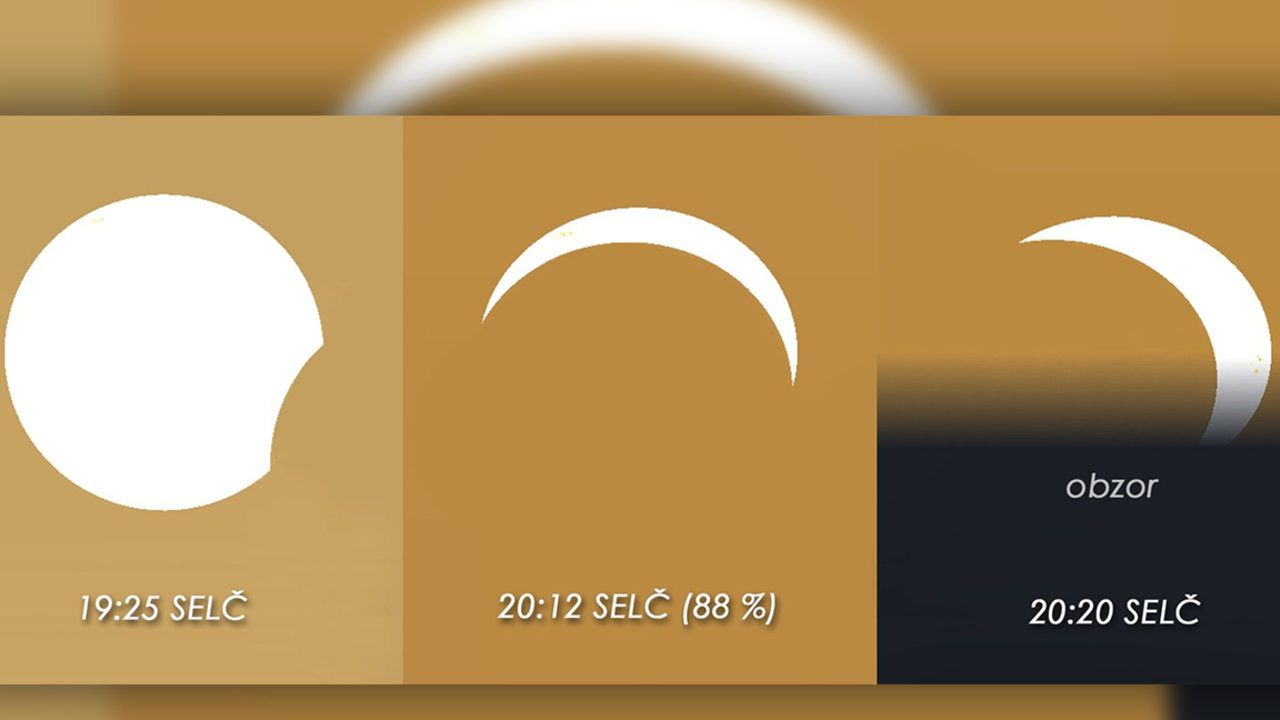
On the evening of 12 August 2026, people across Czechia will be able to watch a partial solar eclipse as the Moon covers roughly 86% of the Sun's disk. It will be the most striking eclipse visible from Czechia since 1999, while in other parts of Europe — a narrow band running through Greenland, Iceland and, most notably, Spain — it will be a total eclipse.
In Central Europe, the partial phase will last less than an hour. In Czechia, the eclipse will begin no earlier than 19:19 Central European Summer Time, as the dark silhouette of the new Moon starts to "bite" into the Sun's disk from the lower right edge. The further east an observer is located, the later the eclipse will start and the smaller the portion of the Sun that will be covered.
Maximum eclipse will occur at around 20:11 local time. However, not everyone will get to see this phase: in eastern Czechia and across most of Slovakia, the Sun will set below the horizon before the peak is reached. Exact timings for specific locations can be found on the specialised interactive map created by French amateur astronomer Xavier Jubier.
A Double Twilight — and a Slight Chill
The eclipse promises an unusual visual effect — essentially, observers will witness a double sunset. First, the sky will darken as the eclipse reaches its maximum, then it will brighten slightly again, before the ordinary sunset and its familiar twilight finally set in. Alongside the noticeable darkening of the landscape, a slight drop in temperature is also expected — around 2 degrees — though don't expect a real chill.
Why Eclipses Are So Rare
The Moon passes between the Sun and Earth every month, at each new moon. Yet eclipses remain rare events, because the Moon's orbit is tilted about 5 degrees relative to the plane of Earth's orbit around the Sun — meaning the Moon usually passes above or below the Sun's disk rather than directly in front of it.
According to astronomers' calculations, this will be the most notable partial eclipse visible from Central Europe until 2075. The next total solar eclipse observable from Czechia and Slovakia won't occur until 2081 at the earliest. Elsewhere on the planet, total eclipses will come sooner: Egypt will see one in 2027, Australia will experience a remarkably long total eclipse in 2028, and the Arctic will have its turn in 2029.
The Perseids Will Round Off the Show
The celestial surprises don't end there: on the night of 13 August 2026, the sky will also be lit up by the annual Perseid meteor shower. Bits of cometary dust and debris, hurtling into Earth's atmosphere at tremendous speed, burn up to create a spectacular natural fireworks display.
Source: novinky.cz