Perseids 2024: When and How to Best Watch the Meteor Shower
USD 21,01
Popular
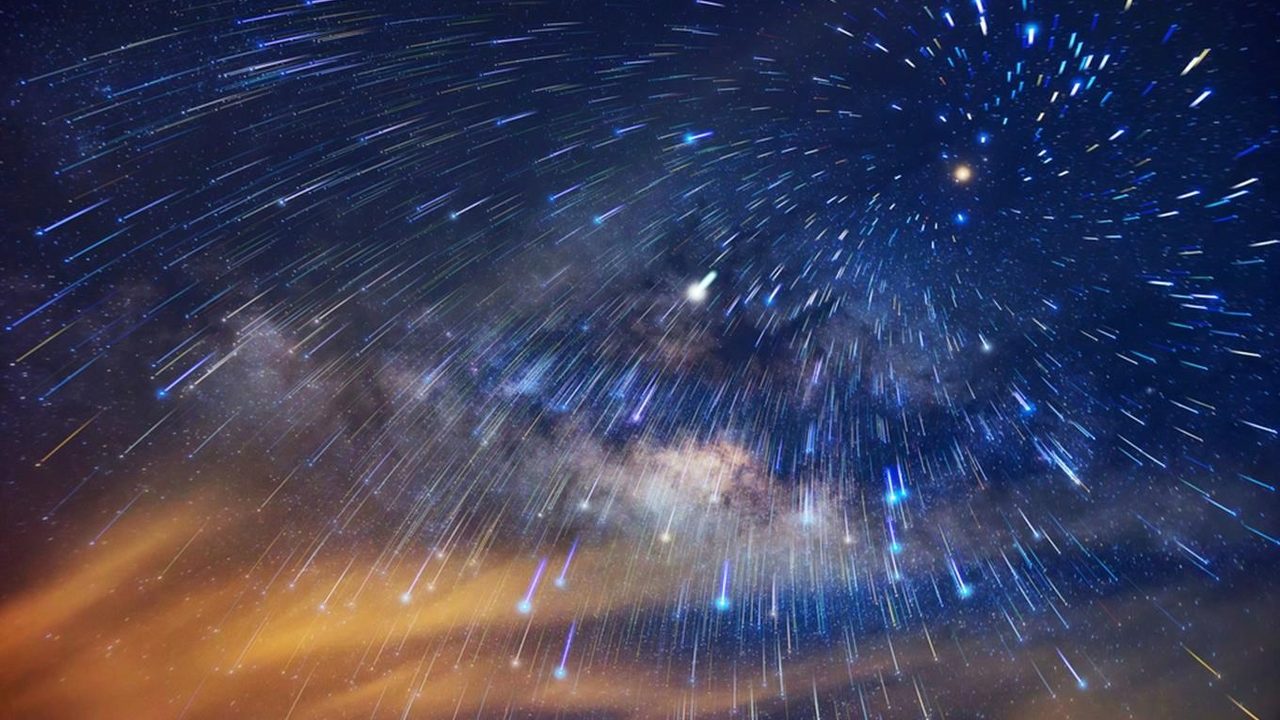
The annual Perseid meteor shower is one of summer's most beautiful celestial spectacles. On clear nights, you can spot dozens of "shooting stars" per hour, especially if you watch from somewhere away from city light pollution — hills, meadows, or other spots with dark skies. All you need is a blanket, patience, and a gaze turned upward.
Not Stars, But Cosmic Dust
The Perseids are one of the most prominent annual meteor showers. Their source is dust from periodic comet 109P/Swift-Tuttle, discovered independently in 1862 by astronomers Lewis Swift and Horace Parnell Tuttle. According to current data, the comet's nucleus measures 26 km across, making it one of the largest objects that regularly comes close to Earth. However, its orbital period is a full 130 years, so such close encounters are rare.
It's the Perseid shower that reminds us of the comet's existence: every year between 17 July and 24 August, Earth's orbit carries it near the trail of dust left behind by the comet. These dust particles — meteoroids — burn up in the atmosphere, flaring briefly as meteors.
After the comet's last close approach to Earth in 1992, some speculated about a potential threat to our planet. However, precise orbital calculations have shown that there is no danger, either now or in the future. The comet will make its closest approach to Earth in the year 3044 — and even then, the distance will be 1.6 million kilometers.
When and How to Watch
Perseids become visible after nightfall, but the best conditions occur in the second half of the night — between midnight and 4 a.m., when the constellation Perseus, home to the shower's radiant, climbs higher above the horizon.
Choose a spot with sufficiently dark skies, ideally outside towns and cities, since streetlights significantly reduce the number of visible meteors. Dress for the weather, get comfortable, and be patient. Experienced observers recommend giving your eyes at least half an hour to adjust to the darkness — this allows you to spot fainter meteors as well. This year, the most popular cosmic "fireworks show" of the year is once again expected under favorable viewing conditions.
For photographing the Perseids, it's recommended to set your camera to a high ISO (1600 or above), use a low aperture value (ideally below f/4), and shoot with a wide-angle lens.
What Else to See in the Summer Sky
In the evening, before darkness fully falls, three bright stars can be seen high near the zenith among the first stars to appear — forming the so-called Summer Triangle: Altair, Deneb, and Vega, the brightest stars of the summer constellations. The constellation Lyra forms a small but distinctive diamond shape, with Vega at its upper right corner — the second-brightest star in the northern sky, located 25 light-years away.
The constellation Aquila is recognizable by its characteristic trio of stars, the brightest of which is Altair. The third notable summer constellation is Cygnus, the Swan, with its wings spread wide as it flies along the Milky Way toward Aquila; its brightest star, Deneb, shines at the tip of its tail.
Jupiter and Saturn currently offer an impressive sight in the sky as well — very bright objects visible for nearly the entire night and positioned fairly close together. Jupiter is impossible to miss — it's the brightest object in the sky for almost the whole night, while Saturn shines more faintly. Mars appears around 2 a.m., and a fairly bright Venus rises at around 3:30 a.m.
In the evening and at night, you can also spot the yellow-orange Arcturus — the brightest star in the constellation Boötes. It's easy to find: simply follow the curve of the Big Dipper's handle to its end, where the star awaits. Arcturus is 30 times larger than the Sun, but cooler — its surface temperature is roughly 2,000 degrees lower than the Sun's. Near this constellation lies Corona Borealis, a small arc of stars whose brightest member is Gemma, whose name translates as "gem" or "jewel."
Source: kudyznudy.cz