President Pavel: talks with Babiš are businesslike, not friendly
USD 22,31
Popular
Czech President Petr Pavel has called his meetings with Prime Minister Andrej Babiš businesslike and correct, but not friendly. The two have met one-on-one twice since September, and according to the president, the government's approach, at least that of the prime minister and most ministers, has changed.
Pavel's relations with the cabinet were not easy last year. He now says he is glad the government seems to have understood that confrontation leads nowhere. He says he always wanted to communicate with the cabinet, so he sees no fundamental change in his own approach. Talking about practical matters pragmatically is possible, he says, even when positions differ.
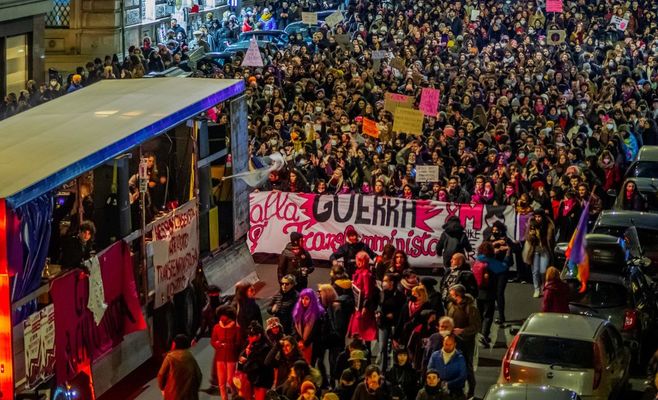
Protests over the public media reform
In recent weeks the country has seen a series of protests against the government's attempt to change the funding of public media. Pavel Rychetský, a former chairman of the Constitutional Court, called it unconstitutional that the Chamber of Deputies pushed the bill through its first reading at 4:36 a.m. Pavel said he is not a constitutional expert, but found it “very unusual.” Much of the public read it as government arrogance, and it became one of the main themes of the large demonstration on Letná.
In the president's view, the debate has fixated on the details of funding instead of the substance: the role of public media in society, their independence, transparency and stable funding. If there are serious reasons for change, he says, it should be carried out in the standard way, by first discussing it with the public and experts.
After the protests, Pavel expects the government not to brush them aside. Given the number of people and how clearly some of the objections were stated, he says, the cabinet should at least pay attention internally and adjust some of its steps. In his view, the proposals heard in recent days are motivated by a wish to meet the protesters halfway.
A hard 2027 and beyond
The Czech National Bank has worsened its outlook for the economy, inflation is rising, and economists warn of higher food and energy prices. Pavel fears that not only 2027 will be difficult, but also the years after it: the security and economic environment will not get easier. It is already clear that energy and other commodity prices will rise, and in Czechia food and heating prices will rise as well.
At the same time, the president stresses, the Czech economy is still growing despite the difficulties, and doing better than the EU average and than its closest neighbors and trading partners, such as Germany. In this situation, raising the deficit while introducing across-the-board measures is, in his words, “a bit of a gamble.” Sooner or later, he says, economic necessity will force the country to target aid more precisely, drop blanket discounts, incentives and one-off benefit payments, and focus on systemic solutions.
The growth in the deficit does not match the growth in investment, especially strategic investment that would boost growth, Pavel believes. He does not agree with everything the finance minister says: in particular, he disagrees with her claim that next year's budget is purely pro-investment. He called the support for citizens saving for retirement through the so-called third pillar a positive step.
In his assessment, the government still has a lot to deliver and will face the same problems next year, for example the growing demands of the health care system: at the start of this year the figure was more than 30 billion crowns, and next year, without systemic change, it may be even higher. The same goes for the pension system, education and defense. If the cabinet does not set a few strategic priorities and then scale back and explain the rest to citizens, serious problems will remain in the years to come.
Around Prague, based on reporting by novinky.cz