Prague still hasn't removed outdated radio-frequency road signs
USD 21,65
Popular
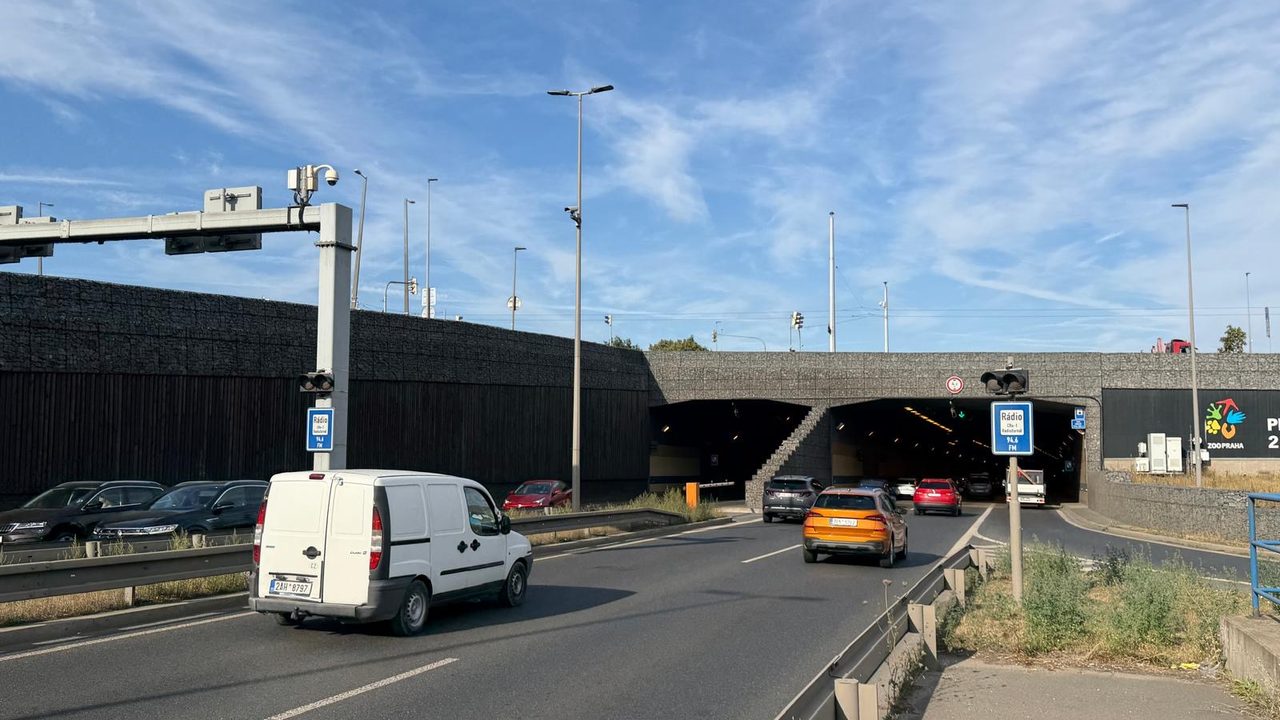
Drivers in Prague can still spot road signs displaying the names and frequencies of radio stations like "Radiožurnál" or "Regina," even though the legal deadline for using them expired at the end of last year. According to the Technical Road Administration (TSK), such signs remain in place, for instance, at the entrance to the Blanka Tunnel.
These signs were allowed to live out their final years under a regulation from January 2016, which gave authorities a ten-year window to replace or remove them. "During this period, road signs had to be brought into compliance with the requirements of the new set of rules. For this category of signs, the transition period has already ended," explained Alena Mühl, spokesperson for the Ministry of Transport.
According to Prague City Hall, this kind of signage is simply redundant today. "What's more, they often display outdated station names and obsolete broadcast frequencies," noted city hall representative Vít Hofman. In spring two years ago, Prague had 67 such signs.
Not all signs have been taken down
Responsibility for removal lies with the Technical Road Administration. Signs have already disappeared from, among other places, the main railway station and Cínovecká Street, but some remain in place — for example, near the Blanka Tunnel. According to TSK representative Barbora Lišková, 54 radio-frequency signs have been removed in total, while the remaining ten to thirteen aren't even listed in the organization's registry. "We consider this part of the project fully completed," she says. Signs that aren't in the database get taken down whenever staff spot them during routine street inspections.
Štěpán Fiala, who has spent more than fifteen years tackling visual pollution from advertising in the urban environment, believes Prague's biggest problem is precisely this kind of negligence and inaction by city authorities. "The road's owner should be checking that signs are still relevant. In my view, advertisements for radio stations or signs pointing to vehicle inspection stations became pointless long ago," says Fiala, founder of the websites "We Don't Want Billboards" and "Illegal Advertising."
Broken parking display boards
Fiala sees another problem in the confusion surrounding signs whose owner or operator is unclear — namely, the city's public information displays (PIT), which are supposed to show in real time how many free parking spots are available, for example near shopping centers. According to him, many of these simply don't work.
"They hang there for years, and nobody dares to take them down. In my opinion, P+R signage still serves its purpose, since not everyone has access to modern technology showing available spots. But maintenance here is poor, the displays are often broken, and nobody deals with it," Fiala adds, noting that the malfunctioning P+R "Chodov" display has been hanging at the entrance to the D1 highway for about five years now.
The 2016 regulation doesn't apply to parking signage. As the Ministry of Transport clarifies, it all depends on whether the display indicates the direction to a parking lot. "In terms of purpose and design, it may resemble an information direction sign, specifically the IS 5 type — a directional sign serving another purpose, which remains in force," Mühl added.
An inspection of broken displays was also carried out in Smíchov: faulty signs belonging to a private company were found on Radlická and Na Knížecí streets, where asterisks light up instead of the number of available spots — a sign of malfunction. A similar situation was found on the nearby Hořejší Embankment, where a privately owned display is simply switched off.
It was precisely in Smíchov, on V Botanice Street, that TSK launched a pilot project two years ago to remove displays owned by private parties. "The equipment was declared ownerless, which by law requires it to be stored for at least six months in case an owner comes forward. That period has expired, and nobody has claimed the device," said Lišková, adding that TSK plans to gradually extend this practice to other parts of the city.
Removal of the displays is also being delayed because some of them are technically linked to traffic lights. "Most parking displays are directly connected via power cabling to traffic-light infrastructure," Lišková explains.
However, Prague has no plans to remove the bed-icon signs that direct drivers to hotels — they remain valid under a 2015 regulation. Moreover, over the past year, TSK hasn't received a single complaint about such signs from any city district or from city hall. "There is currently no systematic monitoring or coordinated demand for removal from the road authorities," Lišková concluded.
Source: seznamzpravy.cz