Remains of Two WWII Soldiers Found in Drought-Shrunken Danube in Budapest
USD 21,01
Popular
In Budapest, the remains of two German soldiers from the Second World War have been discovered on the bed of the Danube, exposed by drought. Alongside the remains, searchers found a wedding ring and a "Kuban Shield" badge — a decoration awarded to German troops who fought their way into the Kuban region in 1943 and continued fighting there until the retreat. The find was reported by the German War Graves Commission.
"Now the work of piecing the puzzle together begins — we will try to identify both of the deceased," said Arne Schrader, a representative of the commission. According to him, identification should not be difficult, since the recovered identity tags bear the soldier's service number and an abbreviated designation of the unit in which he served.
How the Tags Could Help Find Relatives
"The names of the original owners of the tags can probably be established fairly quickly, but that's only the first step," the commission noted. If relatives can be traced using the information on the tags, a DNA test would be needed to confirm identity conclusively, the BBC reports.
The tags were perforated so that, in the event of a soldier's death, they could be snapped in half — one half stayed with the body, while the other was sent back to the unit so that his death could be recorded. Until the unit received its half of the tag, the soldier was not officially considered dead. As a result, many families of the missing lived for decades not knowing what had happened to their loved ones. Now two more families will finally learn the truth. Both soldiers will be buried at Budapest's Budaörs cemetery, where other German war dead are also interred.
A Motorcycle and Anti-Tank Mines on the Riverbed
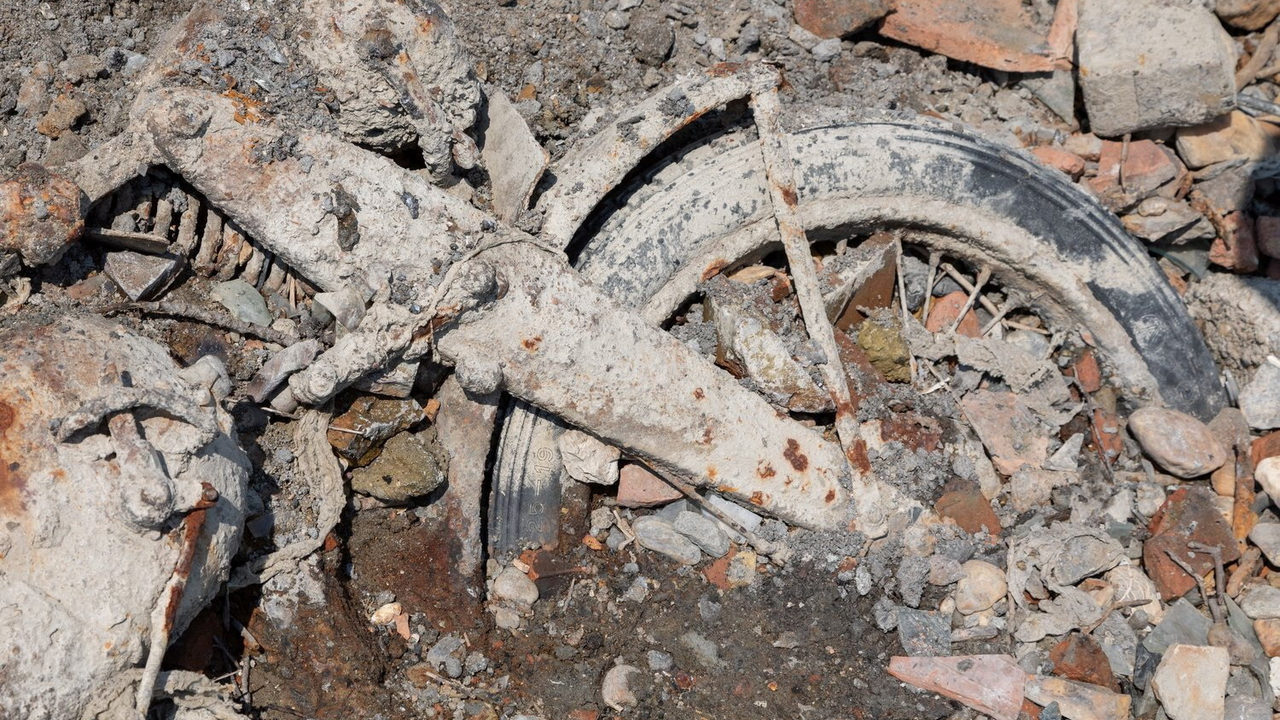
Passers-by first noticed the wreckage of a DKW motorcycle on 2 August, after the water level in the Danube dropped sharply due to the drought. A team of experts later lifted the motorcycle from the riverbed and, in the process, discovered anti-tank mines nearby. The embankment along Hungary's largest river was temporarily closed off until bomb disposal experts had neutralized the explosive finds.
The motorcycle turned out to be a DKW NZ350-1, a model produced for military use in 1944. It was used during the fierce fighting for the Hungarian capital, which raged from 29 October 1944 to 13 February 1945.
The Bloody Battle for Budapest
In 1944, Hungary's leadership under Miklós Horthy had been negotiating with the Allies about switching sides, following Romania's example. However, the Germans caught wind of the plan and forced Horthy to abdicate. In mid-October, power was seized by the fascist Arrow Cross Party.
The Red Army launched the Budapest Offensive on 29 October 1944, but the city was not fully encircled until the end of December, and street fighting continued until 13 February. In early 1945, Adolf Hitler ordered an attempt to break the encirclement from outside while simultaneously holding on to the oil fields — none of the counterattacks succeeded, although German forces did manage to advance to within 20 kilometers of the city.
The fighting resulted in enormous losses on both sides. According to available data, between 3 November and 15 February, Germany lost nearly 140,000 troops (killed, wounded, and missing). Of the Budapest garrison, 30,000 German and 9,000 Hungarian soldiers were killed. The Red Army and the Romanian forces fighting alongside it lost 320,000 men. During the siege, 38,000 civilians died, including 7,000 who were executed, while another 38,000 perished in camps.
Source: novinky.cz