Science & Space By

A $10 Chip Smaller Than a Coin Could Read Blood Sugar Without a Needle
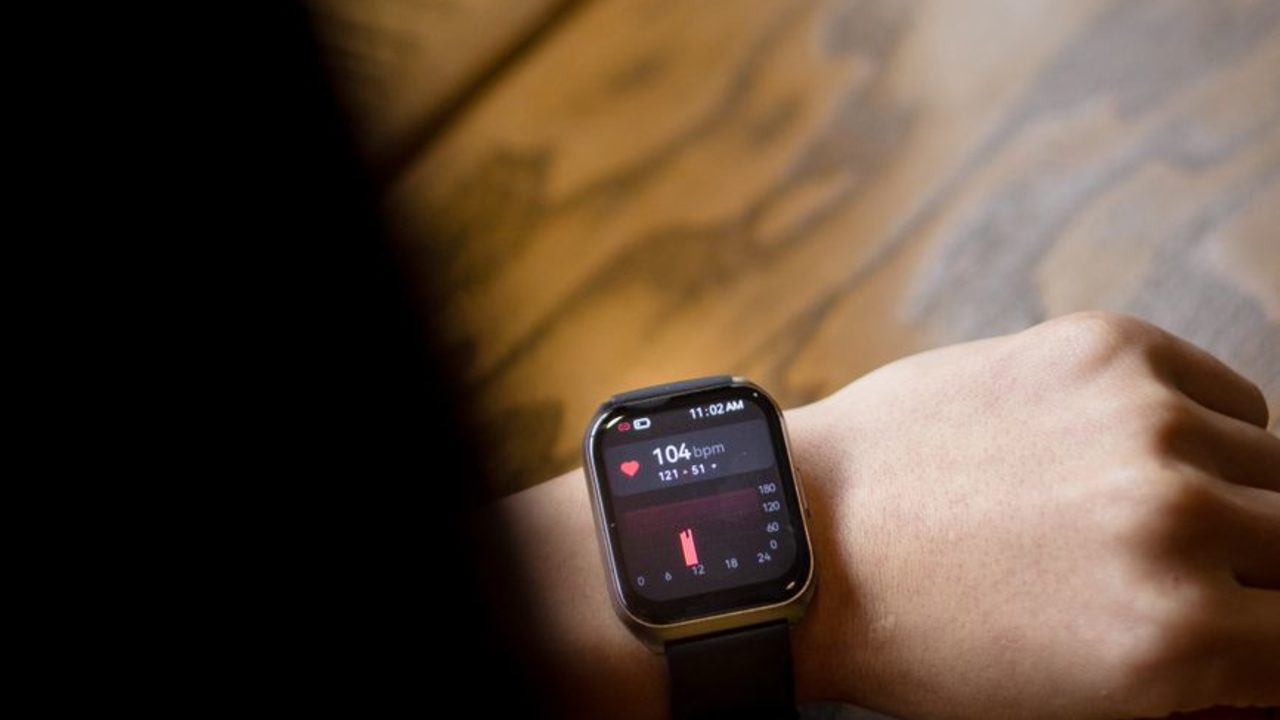
A new light sensor costing about $10 could one day bring laboratory-grade measurements to wearable devices, including a way to follow blood sugar without piercing the skin, according to ScienceDaily, which summarized work from the University of Cambridge. The researchers say the same technology could also be used to test food, check industrial quality and monitor the environment.

The device was developed by a team at Cambridge together with GlitterinTech, a start-up founded by the same research group. It is only centimeters across, small enough to fit into portable electronics. The glucose result, however, comes from a single participant, and the team says more testing is needed before it can become a medical product.

What this means for wearables and health tracking

Many people with diabetes still rely on finger-prick tests or sensors worn under the skin. The Cambridge team points to a possible alternative: a compact optical sensor that reads the body's chemistry from light alone. In their experiments, the device measured skin moisture, blood alcohol, blood lactate and blood glucose under conditions designed to resemble real physiological environments.

The researchers also tracked glucose over an extended period in one participant without invasive procedures. That is an early demonstration, not a clinical trial, and nothing in the report suggests a product is close to reaching shoppers.

Price is part of the story. Small spectrometers have usually forced a trade-off between size and performance, with limited measurement range, lower resolution or reduced accuracy. A $10 part that avoids that trade-off could make precise optical sensing practical in consumer gadgets, food-safety checks and factory lines that now depend on larger, costlier instruments.

How the sensor works

An optical spectrometer analyzes light to learn about the substances it has passed through or bounced off. Conventional designs either split light into its separate wavelengths or rely on heavy computation to rebuild the spectrum.

The Cambridge device, called a convolutional spectrometer, takes a different route. It applies a mathematical operation known as convolution directly to the incoming light, using a series of optical components whose responses repeat. Fast Fourier transforms then recover the spectrum. Dr. Chunhui Yao, a lead author, said the approach delivers high precision and strong noise tolerance with very little computing overhead.

The team built the chip on a silicon nitride photonic platform and combined it with onboard electronics. It works across near-infrared wavelengths from 1200-1700 nm and can collect and process a measurement in less than a second. Because the design uses repeating patterns, the researchers say its spectral range could in theory be extended almost without limit, and adding components in sequence could raise its resolution exponentially.

What the tests showed

The researchers tested the sensor on a range of materials. It identified plastics, pharmaceuticals, coffee, flour and tea with a 100% classification success rate in the reported tests. It measured concentrations in water-based and organic solutions with accuracy of approximately 0.01%, which the team says beat commercial benchtop spectrometers in those experiments.

The sensor also kept working between -20°C and 80°C, an unusually wide range for a miniature spectrometer. Prof. Qixiang Cheng, who led the project, said the work stands out for its technical readiness, not only its laboratory performance, because the system operates reliably in real-world conditions.

What remains unproven

The results come from the research group's own experiments, and the summary does not describe independent replication. The health demonstrations are promising but limited, and the glucose tracking involved a single person. Turning a lab prototype into an approved medical device would require substantially more testing, and no timeline was given.

Around Prague, based on reporting by ScienceDaily
Share: Telegram WhatsApp

More science news

Euclid Telescope Maps More Than 900m Galaxies and 15,000 Cosmic Lenses
The European Space Agency's Euclid mission has published its first major batch of data, and it contains more than 900m galaxies, The Guardian reported. The release also includes about 15,000 potential
Rare Elite Shoe and Slave-Trade Rings Found on Danish Ship Sunk After Mutiny
Maritime archaeologists working on a 17th-century shipwreck off the coast of Sweden have recovered the rear half of an unusually fine man's shoe and two metal rings once used as currency in the transa
Earth May Have Made Its Own Oceans: Hundreds' Worth Brewed in Fiery Air
Earth may have made much of its own water while it was still forming, instead of relying on icy comets or meteorites to deliver it, according to new research in Nature Geoscience reported by ScienceDa
Physicists Measure Gravity Between Two Specks Weighing 7.6 Milligrams Each
Physicists in China have measured the gravitational attraction between the smallest pair of masses yet, and Newton's law of gravity still held, ScienceAlert reported. The team, led by Shan-Qing Yang o
First Land Animals Could Barely Turn Their Heads, Study Finds
The first animals to move from water to land nearly 380 million years ago may have been able to barely turn their heads, according to a study published Oct. 14 in the journal Nature. The result challe
Supercomputer Simulation Recreates 2 Billion Years of the Early Universe
Researchers at MIT, Harvard University and other institutions have built a supercomputer simulation that follows how the first stars, galaxies and black holes pulled the universe out of its cosmic dar

Related news

The European Space Agency's Euclid mission has published its first major batch of data, and it contains more than 900m galaxies, The Guardian reported. The release also includes about 15,000 potential cases of strong gravitational lensing,
Maritime archaeologists working on a 17th-century shipwreck off the coast of Sweden have recovered the rear half of an unusually fine man's shoe and two metal rings once used as currency in the transatlantic slave trade, Live Science report
Earth may have made much of its own water while it was still forming, instead of relying on icy comets or meteorites to deliver it, according to new research in Nature Geoscience reported by ScienceDaily. Lab experiments suggest that rocky
Physicists in China have measured the gravitational attraction between the smallest pair of masses yet, and Newton's law of gravity still held, ScienceAlert reported. The team, led by Shan-Qing Yang of Sun Yat-sen University, used two silic
The first animals to move from water to land nearly 380 million years ago may have been able to barely turn their heads, according to a study published Oct. 14 in the journal Nature. The result challenges a decades-old explanation for why n
Researchers at MIT, Harvard University and other institutions have built a supercomputer simulation that follows how the first stars, galaxies and black holes pulled the universe out of its cosmic dark age. The model, called Lumina, covers
A gap of 1.2 billion years in the rock record of the Grand Canyon may have been caused by slow movements deep inside the planet, according to new research published Nov. 4 in the journal Nature. Live Science reported that a model of Earth's
A single nuclear explosion high above Earth could knock out almost every satellite in low-Earth orbit within a month, according to a new study reported by ScienceAlert. The work, by researchers at the University of Wisconsin–Madison and Pri
NASA has started a fresh effort to work out how to bring Mars rock samples back to Earth, Space.com reported. The effort is called the Perseverance Sample Retrieval Architecture, or PSRA, and it follows years of cost concerns that have trou
The magnetic fields of Uranus and Neptune may change dramatically within a few decades, according to new computer modeling reported by Universe Today. If the models are right, the fields that Voyager 2 measured on its flybys were a snapshot
Archaeologists in Kazakhstan have found a gold figurine of a bear in a burial mound that is about 2,200 years old, Live Science reported. The mound had been looted in ancient times, but the thieves did not empty it completely. The bear is d
Tiny grains of dust that drifted to Earth from the Kuiper Belt carry the chemical fingerprint of ancient water that looks nothing like the water in our oceans, according to ScienceAlert. A team led by planetary scientist Lindsay Keller of N