Science & Space By

A Giant Planet Vanished From NASA's View, and a Hidden Neighbor Is Why
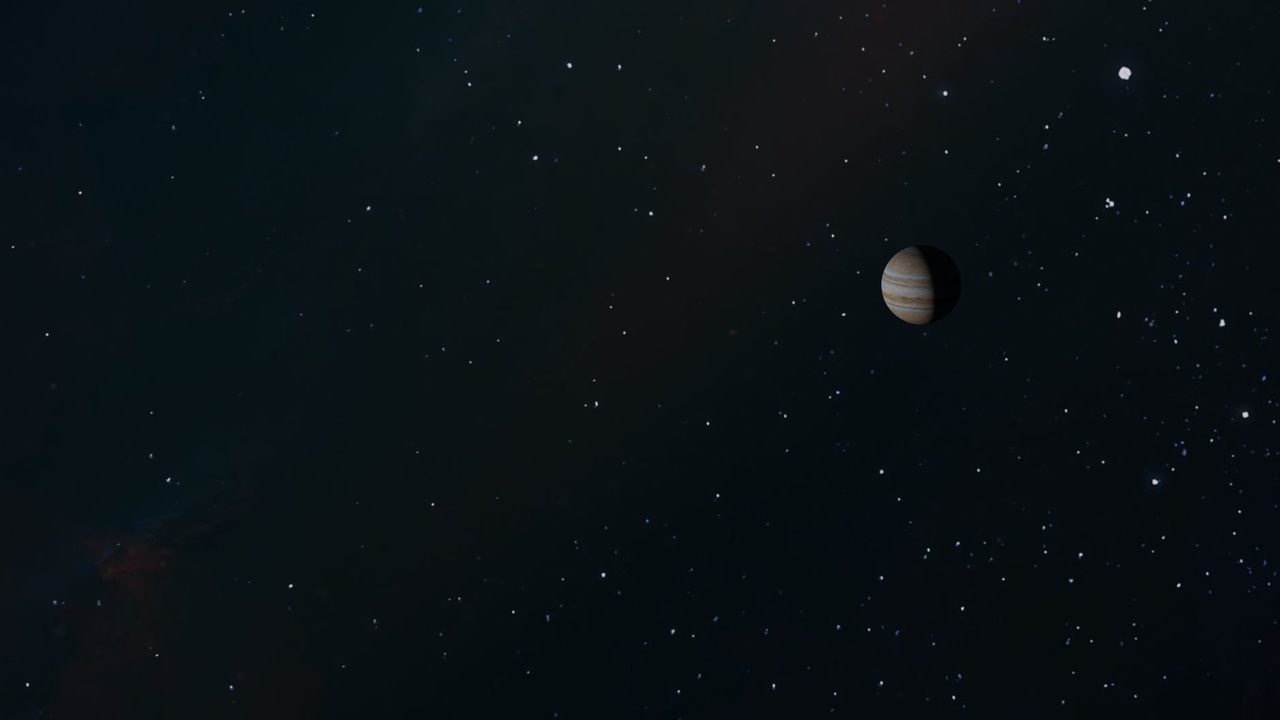
A giant planet about 1,000 light years away has dropped out of sight in data from NASA's TESS space telescope, and astronomers now think a hidden neighbor is the reason, according to Universe Today. The planet, a hot Jupiter named TOI-2535b, did not actually vanish. Its orbit is tilting so quickly that it no longer passes in front of its star as seen from Earth.

The finding, published in The Astrophysical Journal Letters, is the first confirmed case of a planet around a single star whose transits were watched disappearing, the study's authors say.

How a planet can leave the frame

TESS finds planets by the transit method: it watches for the small dip in a star's light when a planet crosses in front of it. That only works when the orbit lines up almost edge-on with our view. The authors write that a planet is seen to transit only when its orbit is within a few degrees of that alignment, so even small changes in tilt can alter the shape of a transit.

TESS observed multiple transits of TOI-2535b over seven years. Then the signal faded. By following the planet over several years, astronomers saw that the change was gradual: both the timing and the shape of the transit shifted slowly rather than the planet disappearing at once.

The neighbor pulling on the orbit

The researchers conclude that another planet, with a mass of at least that of Saturn, is tugging on TOI-2535b and tilting its orbit. The study's corresponding author, Samuel Yee of UCLA, said the two planets are interacting so strongly that the orbit tilts fast enough for the transit to disappear while astronomers were watching.

Yee said people tend to picture the universe as regular clockwork, but planets in a system with several worlds can affect each other's orbits. He called this the most extreme example he and his colleagues have seen.

The study points to several records for this system. According to the authors, it has the largest changes in transit duration and the largest orbital tilt change ever observed for a planet orbiting a single star, with a precession period of decades, shorter than in other known systems. It also shows some of the largest variations in transit timing ever detected, and the largest ever for a hot Jupiter.

Why this system is surprising

Hot Jupiters are not expected to have close neighbors, and when they do, the neighbors are usually much less massive. Universe Today reported that TOI-2535b is one of only a handful of hot Jupiters known to have a nearby planetary companion. The likely companion here is a second short-period giant planet. In all but one of the other known cases, the companions are sub-Neptunes or super-Earths.

A pair of massive gas giants circling one star in resonance is also not something current planet-formation models predict.

Why it matters for planet hunting

The result is a reminder that a planet missing from the data is not necessarily missing from the sky. Transit surveys depend on a lucky alignment, and the study shows that alignment can be temporary. Some worlds that once showed up in survey data may later slip out of view, and others that were never seen could drift into it.

The result also arrives as TESS continues its work. Universe Today reported that, as of mid-October 2026, the mission has identified more than 8,100 candidate exoplanets, with just over 1,000 confirmed. Astronomers are also finding more planets in its archive using new machine learning techniques.

Around Prague, based on reporting by Universe Today
Share: Telegram WhatsApp

More science news

Antarctic Ozone Hole Swells to Its Biggest Size in a Decade, NASA Says
The Antarctic ozone hole grew in 2026 to a size scientists have not seen in a decade, but NASA and NOAA say the ozone layer is still healing and remains on track to recover later this century, accordi
SpaceX Plans First Full Starship Recovery With Back-to-Back Catches on Nov. 13
SpaceX plans to launch Starship Flight 15 on Friday, Nov. 13, in an attempt to bring both stages of its giant rocket back to the launch pad, Space.com reported. If it works, it would be the first full
Two Remote Pacific Atolls Teem With Sharks and Turtles, a Rare Look at Intact Reefs
Scientists who surveyed two far-flung coral atolls in the Pacific say the sites hold some of the most intact ocean ecosystems left in the region, according to ScienceAlert's report on a new study in F
Scotland's Rare Atlantic Rainforest Wins Nearly £6 Million Lottery Grant
A five-year project to restore Scotland's rare Atlantic rainforest has been awarded almost £6 million from the National Lottery Heritage Fund, the BBC reported. The money will pay for three community
Physicists Find a Math Fix for Time-Travel Paradoxes, With a Catch
Two physicists at the University of New Hampshire have built a gravity model in which time can only run forward, which would rule out looping back into your own past. The catch, according to ScienceAl
Tiny Asteroid Becomes Earth's Mini-Moon, Circling Farther Out Than the Moon
Earth has a temporary new companion: a tiny asteroid called 2026 QQ8 that is circling the planet as a so-called mini-moon. According to Meteored's YourWeather, the Minor Planet Center, the clearinghou

Related news

The Antarctic ozone hole grew in 2026 to a size scientists have not seen in a decade, but NASA and NOAA say the ozone layer is still healing and remains on track to recover later this century, according to ScienceDaily. The cause was weathe
SpaceX plans to launch Starship Flight 15 on Friday, Nov. 13, in an attempt to bring both stages of its giant rocket back to the launch pad, Space.com reported. If it works, it would be the first full recovery of an orbital rocket in histor
Scientists who surveyed two far-flung coral atolls in the Pacific say the sites hold some of the most intact ocean ecosystems left in the region, according to ScienceAlert's report on a new study in Frontiers in Marine Science. The atolls,
A five-year project to restore Scotland's rare Atlantic rainforest has been awarded almost £6 million from the National Lottery Heritage Fund, the BBC reported. The money will pay for three community hubs, and for training and work for loca
Two physicists at the University of New Hampshire have built a gravity model in which time can only run forward, which would rule out looping back into your own past. The catch, according to ScienceAlert, is that the model is unstable in it
Earth has a temporary new companion: a tiny asteroid called 2026 QQ8 that is circling the planet as a so-called mini-moon. According to Meteored's YourWeather, the Minor Planet Center, the clearinghouse for small-body observations run under
The dire wolf was not brought back from extinction, two U.S. scientists argue in a new paper. According to ScienceAlert, the animals that biotech company Colossal Biosciences announced in 2025 were gray wolves with a handful of dire wolf tr
Astronomers have made the first direct measurement of the large-scale structure of cosmic hydrogen, the gas that fed the first stars and galaxies, according to Universe Today. The team from the MeerKLASS Collaboration says the hydrogen foll
A giant planet that astronomers had tracked for seven years has dropped out of sight, and a new study says the cause is a second, unseen planet pulling it off course. The world, called TOI-2535 b, is about 1,000 light-years away. According
A team of Japanese astronomers has found a jet of cold molecular gas stretching 26 light-years from LMC P3, a strong gamma-ray source in the Large Magellanic Cloud, according to Universe Today. The finding strengthens the case that the obje
Astronomers at Johns Hopkins University say one of the James Webb Space Telescope's puzzling Little Red Dots could have started life as a primordial black hole, a type of black hole that would have formed in the first moments after the Big
Voyager 1, the most distant human-made object, will have traveled one light-day from Earth on Wednesday, Nov. 18, NASA said. That is more than 16 billion miles (25.9 billion kilometers), and it means any light sent from Earth would need 24