Science & Space By

Ancient Virus Switched Off a Chimp Brain Gene Humans Still Use
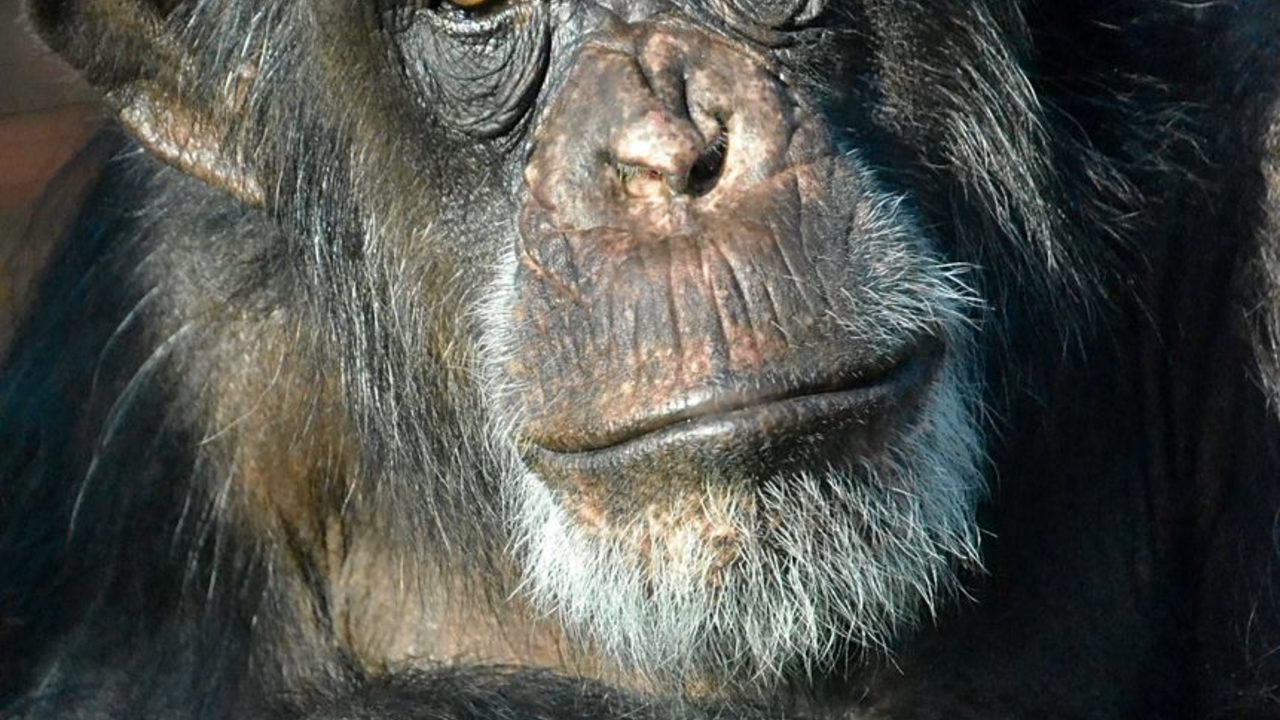
An ancient virus may have left chimpanzees with a quieter version of a gene that helps human brain cells mature. According to ScienceAlert, a new study in Science Advances reports that a retrovirus called PTERV1 inserted DNA into the chimpanzee genome that switches off a gene known as LINC00662. The findings come from lab experiments on cells, not from studies of living animals or people.

What did the researchers want to know?

Humans and chimpanzees diverged from a common ancestor after about 5-6 million years of evolution, and only 1.2 percent of our DNA differs. Lead author Patricia Gerdes, a molecular neurogeneticist at Lund University in Sweden, told ScienceAlert the team wanted to understand how brains could evolve differently when so many protein-making genes are similar.

She said ancient viruses can leave DNA behind in the genome, and those remnants can affect nearby genes. PTERV1 was a strong candidate because it is found in chimpanzees and other African apes but not in humans. ScienceAlert says the virus infected chimpanzees about 4 million years ago.

What did the study find?

LINC00662 is a molecule made from DNA that gives cells instructions for building a particular protein. Both humans and chimpanzees have it. Gerdes said the team found it active during early human brain development, and its experiments suggest it helps brain cells mature and grow extensions.

In chimpanzees, the virus’s DNA insertion switches the gene off. In human brain organoids, which are tiny clusters of cells grown in a lab, switching off LINC00662 meant neurons and their extensions did not mature and grow as prolifically. In chimpanzee stem cells, removing the insertion restored the gene’s activity.

Does this explain why human brains are bigger?

Not on its own. Human brains are about three times larger than chimpanzee brains, but Gerdes cautioned that the work does not show removing the insertion would transform brain development. She said brain differences arise from many genetic and developmental influences, and that removing the insertion from an adult brain would not undo earlier development.

She also said that if humans had the same insertion, it probably would have switched off LINC00662 and altered brain cell development. But she said the team cannot predict a particular brain shape, ability or behavior, since the effect could depend on the surrounding human DNA and other genes. The researchers do not yet know all of the gene’s roles in the human body, or what its loss means for chimpanzees as a whole.

Why didn’t humans catch the virus?

That is unclear, and the study does not try to answer it. ScienceAlert reports a few theories: an antiviral protein called TRIM5α may have protected humans, or the ancestors of chimps and humans may have lived in different places when the infection spread.

Why does it matter?

The study adds evidence that insertions of viral DNA contributed to differences between humans and chimpanzees, and it points to one specific gene affected. For general readers, it shows how much ancient infections can shape evolution. It does not suggest any change to chimpanzees today, and it offers no immediate medical use.

Around Prague, based on reporting by ScienceAlert
Share: Telegram WhatsApp

More science news

Star That Faked 27 Supernovas Is Being Fed On by a Hidden Black Hole or Neutron Star
A star that has imitated a supernova 27 times and counting is being drained by an unseen companion, either a black hole or a neutron star, according to Space.com. NASA's Chandra X-ray Observatory caug
Hubble Images Cosmic Lenses That Could Test a Dark Matter Theory
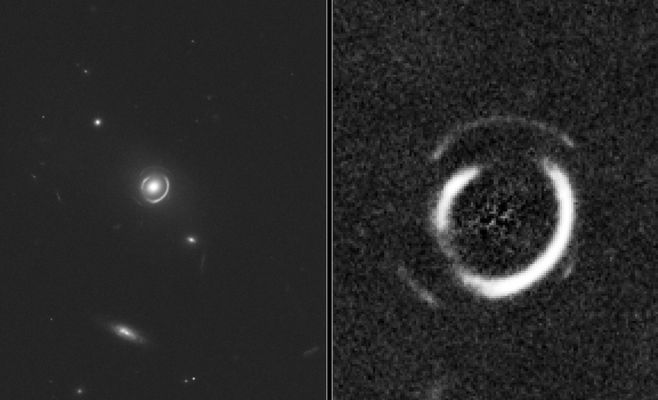
NASA has released a gallery of gravitational lenses photographed by the Hubble Space Telescope, and the images are meant to prepare the ground for the new Nancy Grace Roman Space Telescope. Astronomer
Committee Confirms AI-Built Proof That Yang-Mills Theory Exists, Not the Mass Gap
A committee led by 2004 Nobel laureate in physics David Gross has confirmed that computer code delivered by OpenAI proves pure Yang-Mills theory, the version involving only gluons, exists in four dime
Black Holes Show Warning Signs 1 to 10 Days Before Launching Jets
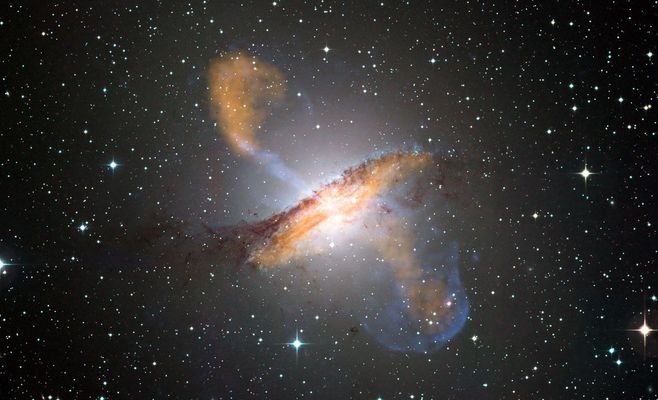
Black holes can fire narrow streams of superheated material into space, and astrophysicists may now have a way to see one coming. A new study in The Astrophysical Journal found that in four black hole
Plant-Based Coating Could Replace Plastic Lining in Paper Coffee Cups
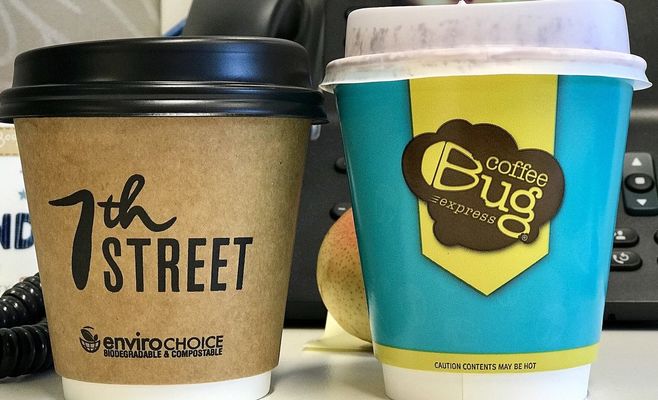
Researchers at the University of Waterloo in Canada have developed a coating made entirely from plant cellulose that can stand in for the polyethylene lining found inside paper coffee cups, ScienceAle
Euclid Telescope Maps More Than 900m Galaxies and 15,000 Cosmic Lenses
The European Space Agency's Euclid mission has published its first major batch of data, and it contains more than 900m galaxies, The Guardian reported. The release also includes about 15,000 potential

Related news

A star that has imitated a supernova 27 times and counting is being drained by an unseen companion, either a black hole or a neutron star, according to Space.com. NASA's Chandra X-ray Observatory caught the telltale X-rays that point to the
NASA has released a gallery of gravitational lenses photographed by the Hubble Space Telescope, and the images are meant to prepare the ground for the new Nancy Grace Roman Space Telescope. Astronomers plan to use them to weigh the invisibl
A committee led by 2004 Nobel laureate in physics David Gross has confirmed that computer code delivered by OpenAI proves pure Yang-Mills theory, the version involving only gluons, exists in four dimensions, according to the Pasquale Pillit
Black holes can fire narrow streams of superheated material into space, and astrophysicists may now have a way to see one coming. A new study in The Astrophysical Journal found that in four black hole systems, telltale changes in X-ray ligh
Researchers at the University of Waterloo in Canada have developed a coating made entirely from plant cellulose that can stand in for the polyethylene lining found inside paper coffee cups, ScienceAlert reported. The team says it could make
The European Space Agency's Euclid mission has published its first major batch of data, and it contains more than 900m galaxies, The Guardian reported. The release also includes about 15,000 potential cases of strong gravitational lensing,
Maritime archaeologists working on a 17th-century shipwreck off the coast of Sweden have recovered the rear half of an unusually fine man's shoe and two metal rings once used as currency in the transatlantic slave trade, Live Science report
Earth may have made much of its own water while it was still forming, instead of relying on icy comets or meteorites to deliver it, according to new research in Nature Geoscience reported by ScienceDaily. Lab experiments suggest that rocky
Physicists in China have measured the gravitational attraction between the smallest pair of masses yet, and Newton's law of gravity still held, ScienceAlert reported. The team, led by Shan-Qing Yang of Sun Yat-sen University, used two silic
The first animals to move from water to land nearly 380 million years ago may have been able to barely turn their heads, according to a study published Oct. 14 in the journal Nature. The result challenges a decades-old explanation for why n
Researchers at MIT, Harvard University and other institutions have built a supercomputer simulation that follows how the first stars, galaxies and black holes pulled the universe out of its cosmic dark age. The model, called Lumina, covers
A gap of 1.2 billion years in the rock record of the Grand Canyon may have been caused by slow movements deep inside the planet, according to new research published Nov. 4 in the journal Nature. Live Science reported that a model of Earth's