Science & Space By

Artemis II Commander Feared the Crew Had Flown Too Far to Ever Return Home
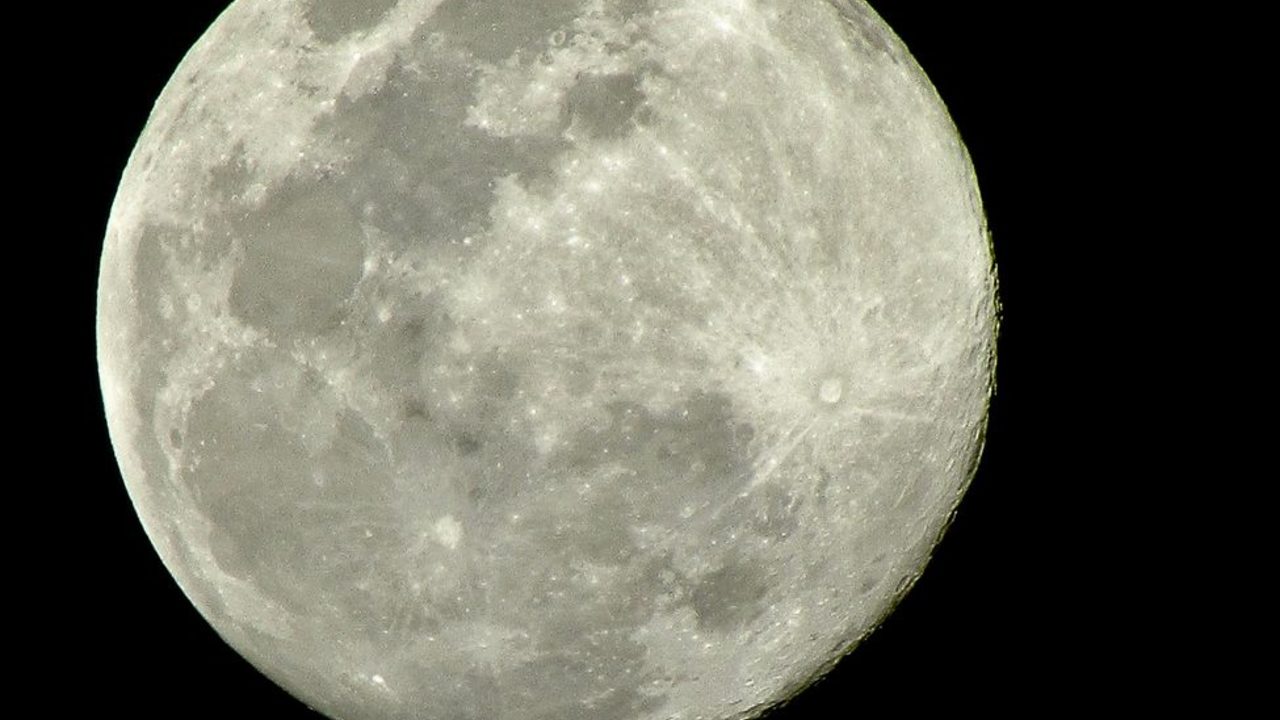
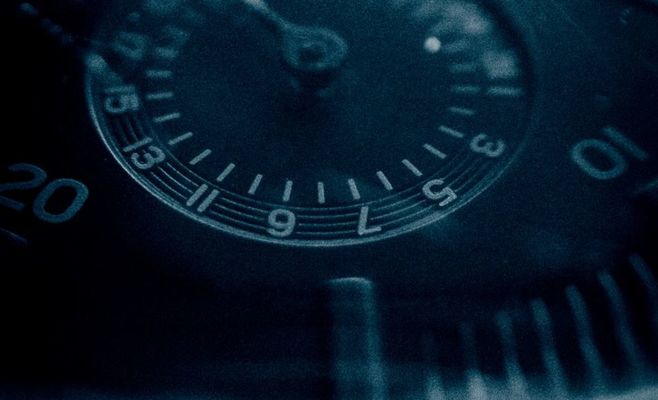
For a few minutes during NASA's Artemis II flight around the moon, the mission's commander believed something had gone badly wrong. Reid Wiseman told an audience at the Starmus VIII festival in Tenerife, Spain, earlier this week that the distance counter on the Integrity spacecraft kept rising after it should have started to fall, according to Live Science.

The crew was supposed to reach 219,667 nautical miles from Earth, then turn back. For a short time, the number did not behave as expected, and Wiseman feared the worst.

What was the crew supposed to do at the farthest point?

Mission control in Houston had given the astronauts a maximum distance of 219,667 nautical miles, which is 252,788 standard miles, or 406,823 kilometers. That is farther than any humans have ever traveled from their home planet, Live Science reported. The plan called for the crew to turn back toward Earth on the sixth day of the 10-day mission.

Wiseman was watching the odometer as the spacecraft approached that figure. He expected a simple sequence: the counter would reach 219,667 and the next number would be 219,666, a sign that the trip home had begun.

What actually happened on the display?

Wiseman said the counter hit 219,667, as planned. About three minutes later, he said, it did not drop to 219,666. It showed 219,668 instead. He recalled thinking that was odd.

About three minutes after that, the display read 219,669. That, Wiseman said, was when he felt real fear. He told the audience he thought the crew had gone too far and would never make it back, and that he was very scared.

Then the counter started to fall. When it clicked back to 219,668 nautical miles, Wiseman said the crew was going home, and the crew cheered. He added that he had known there was a good chance they would make it.

Did the rest of the crew notice?

No. According to Live Science, his moment of terror went unnoticed. NASA astronauts Victor Glover and Christina Koch were at the window making science observations of the moon. Jeremy Hansen of the Canadian Space Agency was sending reports back to mission control.

What did Wiseman say about the people on the ground?

In an interview with The Week Junior Science+Nature, a sister publication of Live Science, Wiseman credited NASA's Earth-based teams for the mission's success. He said getting home safely was a testament to the engineering rigor of the flight control teams and the people who built the rocket and then controlled it on the way to the moon and back. He called them the true heroes of the mission and said they have real courage.

What is Artemis II?

The mission launched from NASA's Kennedy Space Center in Florida on April 1. It was the first crewed flight of the Orion space capsule. It was also the first crewed mission to travel to the moon since Apollo 17 in 1972. The trip took nearly 10 days and carried the crew around the lunar far side and back to Earth.

Nearly every moment of the crew's activities in the Orion capsule was livestreamed to the world, which drew massive public interest in the mission, according to Live Science.

Why does it matter?

The story is a human footnote to a landmark flight, and it shows how the crew experienced the journey in real time. A number on a display that moved in an unexpected direction was enough to make an experienced commander fear for the crew's return, even though, in the end, the spacecraft came home as planned.

It also shows how closely the crew relied on mission control and the engineering teams behind the spacecraft. Wiseman himself pointed to those teams when he explained why the flight succeeded.

For the public, the flight was unusually visible. Because nearly everything the astronauts did in the capsule was livestreamed, many people followed the mission as it happened. The crew members were awarded the Stephen Hawking Medal for Science Communication at the Starmus VIII festival, which is held to celebrate achievements in science, exploration and creativity.

The account comes from Wiseman's own recollection at the festival, as reported by Live Science. It describes how the odometer reading looked to him in the moment and what he thought it meant, and it does not describe a failure of the spacecraft.

Around Prague, based on reporting by Live Science
Share: Telegram WhatsApp

More science news

Magnetic Fields of Uranus and Neptune May Swing by Tens of Degrees
The magnetic fields of Uranus and Neptune may change dramatically within a few decades, according to new computer modeling reported by Universe Today. If the models are right, the fields that Voyager
Gold Bear Figurine Found in 2,200-Year-Old Kazakhstan Burial Mound
Archaeologists in Kazakhstan have found a gold figurine of a bear in a burial mound that is about 2,200 years old, Live Science reported. The mound had been looted in ancient times, but the thieves di
Dust From Beyond Neptune Carries Water Unlike Anything on Earth
Tiny grains of dust that drifted to Earth from the Kuiper Belt carry the chemical fingerprint of ancient water that looks nothing like the water in our oceans, according to ScienceAlert. A team led by
Three Mosquito Species Each Chase Different People, Study Finds
Whether you are a mosquito magnet may depend on which mosquito is biting. A new study from Florida International University found that three of the world's most dangerous mosquito species each go afte
Asteroid Mining Could Cut Platinum Prices by Over 75%, MIT Model Says
If companies ever bring platinum-group metals back from asteroids, the market for those metals could collapse, and a new simulation suggests that might benefit everyone except miners. Two system dynam
Hubble Image Shows Thousands of Stars Nearly as Old as the Universe
The Hubble Space Telescope has captured a view of thousands of stars shining in shades of blue, gold and orange, according to Space.com. The image shows a dense ball of stars called Messier 30, or M30

Related news

Archaeologists in Kazakhstan have found a gold figurine of a bear in a burial mound that is about 2,200 years old, Live Science reported. The mound had been looted in ancient times, but the thieves did not empty it completely. The bear is d
Tiny grains of dust that drifted to Earth from the Kuiper Belt carry the chemical fingerprint of ancient water that looks nothing like the water in our oceans, according to ScienceAlert. A team led by planetary scientist Lindsay Keller of N
Whether you are a mosquito magnet may depend on which mosquito is biting. A new study from Florida International University found that three of the world's most dangerous mosquito species each go after a different set of people, and not one
If companies ever bring platinum-group metals back from asteroids, the market for those metals could collapse, and a new simulation suggests that might benefit everyone except miners. Two system dynamicists from MIT modeled the outcome, and
The Hubble Space Telescope has captured a view of thousands of stars shining in shades of blue, gold and orange, according to Space.com. The image shows a dense ball of stars called Messier 30, or M30, and was released by the European Space
A giant planet about 1,000 light years away has dropped out of sight in data from NASA's TESS space telescope, and astronomers now think a hidden neighbor is the reason, according to Universe Today. The planet, a hot Jupiter named TOI-2535b
The Antarctic ozone hole grew in 2026 to a size scientists have not seen in a decade, but NASA and NOAA say the ozone layer is still healing and remains on track to recover later this century, according to ScienceDaily. The cause was weathe
SpaceX plans to launch Starship Flight 15 on Friday, Nov. 13, in an attempt to bring both stages of its giant rocket back to the launch pad, Space.com reported. If it works, it would be the first full recovery of an orbital rocket in histor
Scientists who surveyed two far-flung coral atolls in the Pacific say the sites hold some of the most intact ocean ecosystems left in the region, according to ScienceAlert's report on a new study in Frontiers in Marine Science. The atolls,
A five-year project to restore Scotland's rare Atlantic rainforest has been awarded almost £6 million from the National Lottery Heritage Fund, the BBC reported. The money will pay for three community hubs, and for training and work for loca
Two physicists at the University of New Hampshire have built a gravity model in which time can only run forward, which would rule out looping back into your own past. The catch, according to ScienceAlert, is that the model is unstable in it
Earth has a temporary new companion: a tiny asteroid called 2026 QQ8 that is circling the planet as a so-called mini-moon. According to Meteored's YourWeather, the Minor Planet Center, the clearinghouse for small-body observations run under