Science & Space By

Artemis II Crew Faced a Cabin Leak Warning Minutes Before the Moon Burn
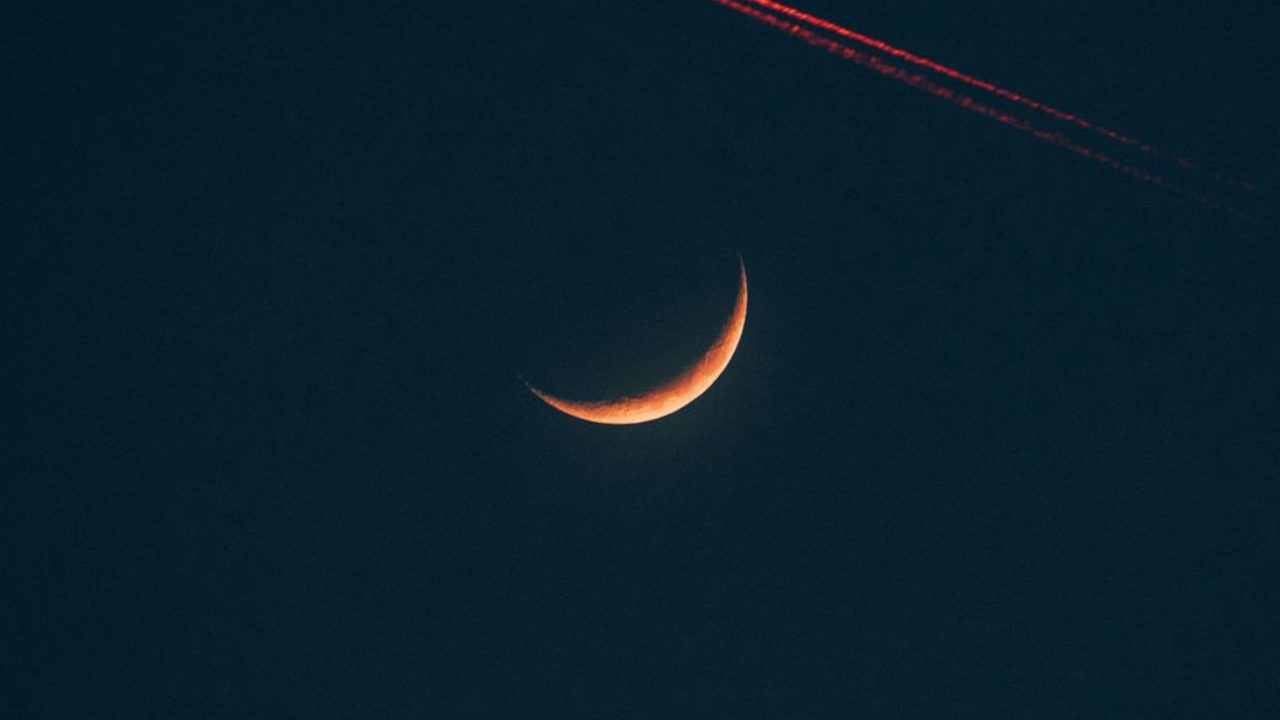
A cabin leak warning came close to cutting short NASA’s Artemis II mission to the moon, pilot Victor Glover said, according to Space.com. The alarm sounded around 15 minutes before the engine burn that would send the crew toward the moon, and it turned out to be false.

Glover described the episode on Oct. 18 in a discussion with former Canadian astronaut Chris Hadfield at the Starmus VIII festival in Tenerife in the Canary Islands. “If it had happened five minutes later, we may not have been able to have that burn,” he said.

What happened on the second day

The incident took place on April 2, the second day of the mission. Space.com reported that the Orion spacecraft had traveled some 38,000 miles (61,000 kilometers) from Earth in a highly elliptical orbit, a stage that gave the crew and mission control a chance to test the capsule’s systems before committing to the lunar trip.

Orion was then swooping back toward Earth, approaching its closest point of roughly 100 miles (160 km) above the surface, ahead of the translunar injection burn. Glover said mission specialist Jeremy Hansen of the Canadian Space Agency looked out the window and remarked that they were about to run into the middle of Earth, because the spacecraft was getting so low.

The low pass also took Orion through a region with orbital debris and satellites. Glover said the density of objects rises there, along with radiation.

The decision the crew faced

When the leak warning appeared, the crew and mission control had to decide whether it was real. Glover recalled the choice as whether to do the burn and head for the moon, or to put on spacesuits and prepare to return to Earth right away.

NASA flight director Judd Frieling told Space.com at an April 2 media briefing that the warning was a false alarm. Artemis II received the go-ahead, and Orion fired its main engine for approximately five minutes and 50 seconds. Glover recalled watching the timer count down and the velocity numbers climb, saying everything was tracking and looking good.

What this means for the mission’s legacy

The burn marked the first time astronauts had headed toward the moon since the Apollo era, according to Space.com. With the engine firing complete, the crew broke free of Earth’s gravitational hold and moved toward the moon at around 24,500 mph (39,430 kph).

The mission then made history. NASA astronauts Reid Wiseman, the commander, Glover and Christina Koch, together with Hansen, traveled farther from Earth than any humans before them, reaching a maximum distance of 252,756 miles (406,771 km).

The four returned safely on April 10, splashing down in the Pacific Ocean off the coast of San Diego after nearly 10 days in space. Glover’s account shows how close the lunar leg came to a different outcome, and how much depended on quickly judging whether a spacecraft warning was real.

Around Prague, based on reporting by Space.com

Share: Telegram WhatsApp

More science news

Physicists Measure Gravity Between Two Specks Weighing 7.6 Milligrams Each
Physicists in China have measured the gravitational attraction between the smallest pair of masses yet, and Newton's law of gravity still held, ScienceAlert reported. The team, led by Shan-Qing Yang o
First Land Animals Could Barely Turn Their Heads, Study Finds
The first animals to move from water to land nearly 380 million years ago may have been able to barely turn their heads, according to a study published Oct. 14 in the journal Nature. The result challe
Supercomputer Simulation Recreates 2 Billion Years of the Early Universe
Researchers at MIT, Harvard University and other institutions have built a supercomputer simulation that follows how the first stars, galaxies and black holes pulled the universe out of its cosmic dar
New Study Says Rising Mantle Erased 1.2 Billion Years of Grand Canyon Rock
A gap of 1.2 billion years in the rock record of the Grand Canyon may have been caused by slow movements deep inside the planet, according to new research published Nov. 4 in the journal Nature. Live
One Nuclear Blast in Space Could Cripple Nearly Every Low-Orbit Satellite
A single nuclear explosion high above Earth could knock out almost every satellite in low-Earth orbit within a month, according to a new study reported by ScienceAlert. The work, by researchers at the
NASA Opens New Review of Mars Sample Return as China Aims for 2031
NASA has started a fresh effort to work out how to bring Mars rock samples back to Earth, Space.com reported. The effort is called the Perseverance Sample Retrieval Architecture, or PSRA, and it follo

Related news

Physicists in China have measured the gravitational attraction between the smallest pair of masses yet, and Newton's law of gravity still held, ScienceAlert reported. The team, led by Shan-Qing Yang of Sun Yat-sen University, used two silic
The first animals to move from water to land nearly 380 million years ago may have been able to barely turn their heads, according to a study published Oct. 14 in the journal Nature. The result challenges a decades-old explanation for why n
Researchers at MIT, Harvard University and other institutions have built a supercomputer simulation that follows how the first stars, galaxies and black holes pulled the universe out of its cosmic dark age. The model, called Lumina, covers
A gap of 1.2 billion years in the rock record of the Grand Canyon may have been caused by slow movements deep inside the planet, according to new research published Nov. 4 in the journal Nature. Live Science reported that a model of Earth's
A single nuclear explosion high above Earth could knock out almost every satellite in low-Earth orbit within a month, according to a new study reported by ScienceAlert. The work, by researchers at the University of Wisconsin–Madison and Pri
NASA has started a fresh effort to work out how to bring Mars rock samples back to Earth, Space.com reported. The effort is called the Perseverance Sample Retrieval Architecture, or PSRA, and it follows years of cost concerns that have trou
The magnetic fields of Uranus and Neptune may change dramatically within a few decades, according to new computer modeling reported by Universe Today. If the models are right, the fields that Voyager 2 measured on its flybys were a snapshot
Archaeologists in Kazakhstan have found a gold figurine of a bear in a burial mound that is about 2,200 years old, Live Science reported. The mound had been looted in ancient times, but the thieves did not empty it completely. The bear is d
Tiny grains of dust that drifted to Earth from the Kuiper Belt carry the chemical fingerprint of ancient water that looks nothing like the water in our oceans, according to ScienceAlert. A team led by planetary scientist Lindsay Keller of N
Whether you are a mosquito magnet may depend on which mosquito is biting. A new study from Florida International University found that three of the world's most dangerous mosquito species each go after a different set of people, and not one
If companies ever bring platinum-group metals back from asteroids, the market for those metals could collapse, and a new simulation suggests that might benefit everyone except miners. Two system dynamicists from MIT modeled the outcome, and
The Hubble Space Telescope has captured a view of thousands of stars shining in shades of blue, gold and orange, according to Space.com. The image shows a dense ball of stars called Messier 30, or M30, and was released by the European Space