Asteroid Mining Could Cut Platinum Prices by Over 75%, MIT Model Says
USD 21,91
Popular
If companies ever bring platinum-group metals back from asteroids, the market for those metals could collapse, and a new simulation suggests that might benefit everyone except miners. Two system dynamicists from MIT modeled the outcome, and their results show prices falling by more than 75% over the course of fifteen years, according to Universe Today.
The paper is titled “Will AstroForge Collapse the PGM Market?” It is a computer model of a hypothetical future, not a measurement of anything that has happened. No asteroid material has yet been returned to Earth by the company it names.
Why platinum-group metals are so expensive
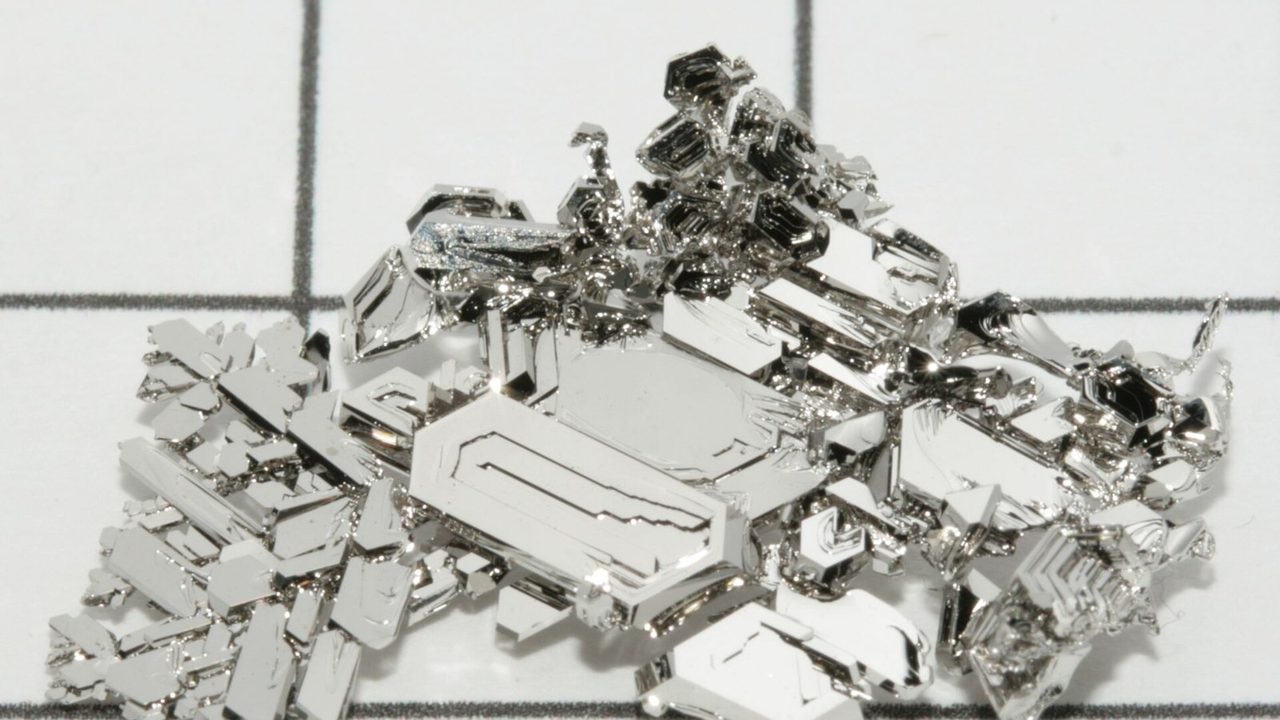
Platinum group metals, or PGMs, include platinum and palladium. Universe Today describes them as critical to modern industry, from automotive catalytic converters to hydrogen fuel cells. More than 80% of the known planetary reserves are in deep-shaft mines in South Africa and Russia.
Prices run to tens of millions of dollars a ton, which the outlet attributes at least in part to how hard the metals are to extract. Even at those mines, workers recover only a few grams of material per ton of rock, and the work requires ventilation, cooling, heavy machinery and laborers deep underground.
How AstroForge plans to get them from space
Metallic, or M-type, asteroids are the leftover metallic cores of protoplanets. Universe Today reports that they carry PGM concentrations dozens of times higher than the richest mines on Earth, and that a single kilometer-wide asteroid of this type holds more PGMs than humans have extracted in all recorded history.
AstroForge, a California start-up, is one of a second round of asteroid mining companies aimed at the PGM market. Instead of multibillion-dollar spacecraft, it uses small probes that cost only a few million dollars each to launch. Per the report, a probe would latch onto an asteroid with magnets, vaporize the crust with high-power lasers and separate the PGMs from nickel and iron in an onboard refinery. A heat-shielded capsule would then return the refined metal to Earth.
What the model predicts in two phases
Researchers Robert Nachtrieb and Steven Smith built a simulation that tracks the PGM market for 20 years after the first successful return of material from an asteroid. It shows a two-phase transition.
In the first phase, which Universe Today calls a “space gold rush”, prices stay high at first because supply is still limited. Space-based metals could sell at normal prices, giving the new companies very large profit margins. According to the paper, that would attract private investment and expand production capacity, and industry profits would rise to eight times current levels.
In the second phase, which the authors describe as an equilibrium collapse, global PGM supply far exceeds the original amount from Earth and prices fall sharply. High-cost mines, such as those in North America, would be the first to close. The Russian and South African mines would follow because they could not stay profitable at lower prices. Within fifteen years, space-mined metal would completely replace supply from Earth mines, and prices would drop by over 75%.
Why it matters beyond the mining industry
The outlet notes that the outcome would be bad news for terrestrial mining companies. For everyone else, it argues, cheaper PGMs would mean less expensive hydrogen electrolyzers and a cheaper shift to a green economy. Space mining would also avoid the acid mine drainage, arsenic pollution and hazardous underground labor tied to PGM mining on Earth.
These are projections from a model, and they depend on a technology that has not yet been proven. Universe Today says AstroForge has had a few high-profile failures during development, though it describes that as common for fast-moving new space companies. The report says the company is getting closer to its goal, but gives no date for a first return of asteroid material.
Read next
Asteroid 1998 KY26 Too Warm to Be a Dark Comet, New Heat Model Finds
Nuclear Blast vs. Asteroid: Which Side You Hit Changes the Push Nearly Fivefold
Cape Cod Fireball Traced to Meter-Wide Asteroid Jupiter Likely Flung
Around Prague, based on reporting by Universe Today
Cover photo: Periodictableru / Wikimedia Commons, CC BY 3.0, cropped