Black Holes Show Warning Signs 1 to 10 Days Before Launching Jets
USD 22,01
Popular
Black holes can fire narrow streams of superheated material into space, and astrophysicists may now have a way to see one coming. A new study in The Astrophysical Journal found that in four black hole systems, telltale changes in X-ray light showed up 1-10 days before radio activity signaled that jets had been launched, according to Universe Today.
That lead time matters because astronomers want to point their telescopes at a jet as it starts, not after it has already begun. The work is a step toward a forecasting model, though it rests on a small sample of systems.
What black hole jets are and why scientists want to catch them
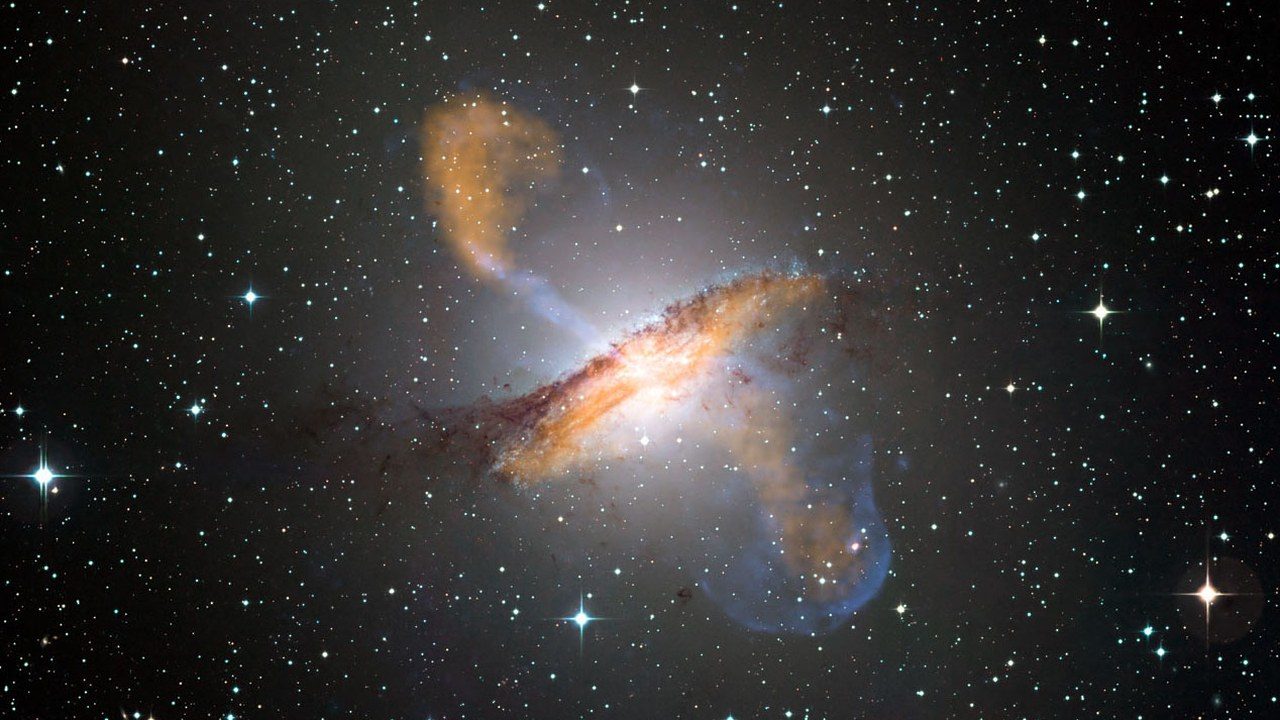
Black holes pull in nearby material, and when a star strays too close, a black hole can strip gas from it. That gas does not necessarily fall straight in. It first collects in a fast-rotating accretion disk, where the temperature climbs to extreme levels. Some of the superheated material is then ejected in a pair of tightly focused jets along the black hole's axis of rotation.
The jets are streams of plasma and particles that can reach relativistic speeds. The largest come from supermassive black holes and can stretch for millions of parsecs, Universe Today reported. Researchers have seen many jets, but their exact causes remain uncertain, with gravity, magnetic fields and extreme temperatures all playing a part.
The jets also shape their surroundings. They heat star-forming gas and move it around on a massive scale, working against star formation, and they can inflate bubbles where gas is too thin to collapse into stars.
How the researchers looked for a warning signal
The study, titled “Jet Forecast: Timing of Discrete Jet Ejections of Stellar-mass Black Holes Anticipated via X-Ray Properties,” is by Toshihiro Kawaguchi of the University of Toyama and Kazutaka Yamaoka of Nagoya University. It builds on their 2025 paper, which examined one X-ray binary, a system in which a black hole pulls material from a donor star. That paper used observations from an outburst in 1999-2000.
The earlier work linked the disk to jet activity: the jets appeared to launch as the inner edge of the accretion disk shrank toward the innermost stable circular orbit, the closest path material can follow around the black hole. In that paper the authors said more X-ray and radio observations were needed.
Astrophysicists had already noticed that an X-ray binary's emissions change before jets appear: the spectrum shifts and the variability drops. Those signs have not been clear or reliable enough to schedule follow-up observations. The new study tests whether the disk-shrinking pattern holds up across more systems, using four black hole binaries: the one from 2025 and three new ones.
What the study found
The results indicate that a rapid drop in the inner disk radius, together with a decline in X-ray variability, is a reliable predictor of a jet launch. The authors wrote that all four sources showed these precursors 1-10 days before radio activity.
They also found no reliably detected surge in the amount of matter flowing onto the black hole before jets were launched. In the system studied in 2025, known as XTE J1859+226, the rate decayed exponentially during the outburst, with a timescale of about 30 days, and showed no big jumps around the ejections. The authors noted only a hint of an increase of about 20% just before jet production, which Universe Today described as no more than a hint.
Why it matters: from after-the-fact observations to planned ones
For astronomers, a reliable early warning would change how they observe these events. Rather than catching a jet after it is under way, they could arrange complete observations in advance. The researchers hope to develop a forecasting model for jet launches in X-ray binaries so that more complete data can be gathered.
For general readers, the finding does not point to any practical effect on daily life. Its value is in basic science: a better view of how jets form helps researchers understand the extreme physics near black holes and how such jets influence star formation around them.
What the study does not yet show
The finding comes from only four systems, and these are stellar-mass black holes in X-ray binaries, not the supermassive black holes that produce the largest jets. The authors have previously stressed that fast-changing disk states require dense X-ray and radio coverage, so further observations will be needed to confirm how well the pattern forecasts jets.
Read next
Black Hole Jets Light Up Gas Far Beyond a Galaxy’s Stars, Study Finds
Hidden Black Hole or Neutron Star Blamed for Star's Eruptions Every 113 Days
Three Feeding Black Holes Found in One Galaxy 12.5 Billion Light-Years Away
Around Prague, based on reporting by Universe Today
Cover photo: NASA