Science & Space By

Capella, the Flickering Goat Star, Lights Up Autumn Evening Skies
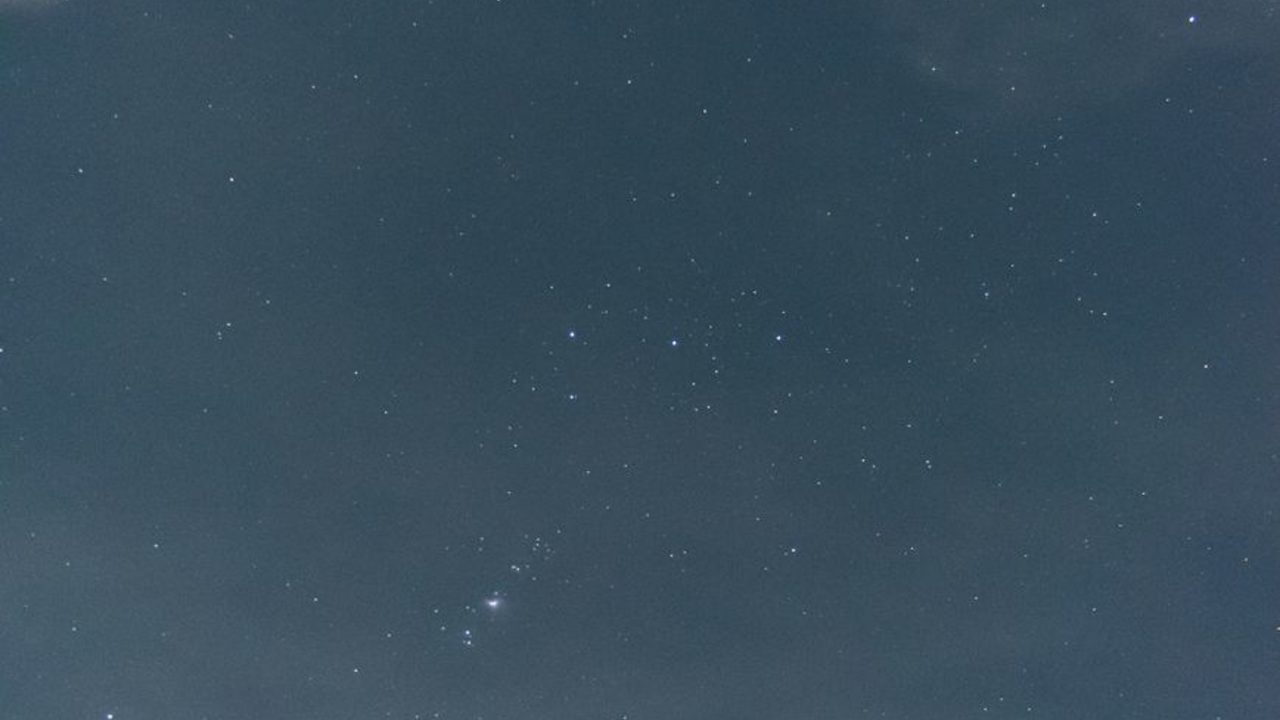
Northern Hemisphere skywatchers have an easy target on autumn evenings: Capella, a bright star that flashes red, green and blue as it hangs low over the horizon. According to EarthSky, it is the brightest star in the constellation Auriga the Charioteer, and it points the way to a small triangle of stars and three star clusters you can hunt down with binoculars.

The color show is not the star changing. EarthSky explains that Capella's light passes through a thick layer of Earth's wavering atmosphere when the star sits near the horizon, which makes the light jump around and flash.

The numbers behind Capella and Auriga

What kind of star Capella is

EarthSky describes Capella as golden and somewhat similar to our sun. The outlet says that from a distance of light-years, our sun might look much the way Capella looks to us. Capella marks the Charioteer's left shoulder and is nicknamed the Goat Star.

It is actually a pair of binary stars. Both are yellow giants, and each has a small red dwarf companion, according to EarthSky. Capella is also the closest first-magnitude star to Polaris, the star that currently marks the north celestial pole, and it forms one corner of the Winter Circle.

How to confirm you have found it

If you are unsure you have the right star, EarthSky suggests looking nearby for a small triangle of stars called The Kids. This asterism, a small named pattern of stars, represents baby goats that the Charioteer carries.

Another landmark is Elnath, at the southern tip of Auriga. EarthSky reports that it once belonged to both Auriga and Taurus the Bull, but in the last century the International Astronomical Union assigned it to Taurus alone.

Three clusters to try with binoculars

The three clusters fall nearly in a line, with M36 in the middle, EarthSky says. All three are open star clusters, and each looks different under magnification.

What this means for your evening sky-watching

For readers in the northern U.S., Canada and similar latitudes, Auriga is circumpolar, according to EarthSky. That means all or part of it is visible on any night of the year. The best views of the whole constellation start in Northern Hemisphere autumn, the outlet says.

Capella's flashing is most dramatic now because it sits low in the sky. On winter evenings it moves near the zenith, the point directly overhead. There, EarthSky says, the thinner layer of atmosphere dampens the flashiness. Learning the constellation in autumn leaves observers familiar with its stars and clusters by the time it climbs higher in winter and is better placed for viewing.

Spotting Capella needs no equipment, while the three clusters call for binoculars and a dark sky.

Around Prague, based on reporting by EarthSky

Share: Telegram WhatsApp

More science news

Physicists Find a Math Fix for Time-Travel Paradoxes, With a Catch
Two physicists at the University of New Hampshire have built a gravity model in which time can only run forward, which would rule out looping back into your own past. The catch, according to ScienceAl
Tiny Asteroid Becomes Earth's Mini-Moon, Circling Farther Out Than the Moon
Earth has a temporary new companion: a tiny asteroid called 2026 QQ8 that is circling the planet as a so-called mini-moon. According to Meteored's YourWeather, the Minor Planet Center, the clearinghou
Dire Wolves Weren't Really Revived, Researchers Say: They Were Edited Gray Wolves
The dire wolf was not brought back from extinction, two U.S. scientists argue in a new paper. According to ScienceAlert, the animals that biotech company Colossal Biosciences announced in 2025 were gr
Astronomers Map Cosmic Hydrogen From 4.5 Billion Years Ago in a First
Astronomers have made the first direct measurement of the large-scale structure of cosmic hydrogen, the gas that fed the first stars and galaxies, according to Universe Today. The team from the MeerKL
A Hot Jupiter Vanished From View After Seven Years. A Hidden Planet Did It
A giant planet that astronomers had tracked for seven years has dropped out of sight, and a new study says the cause is a second, unseen planet pulling it off course. The world, called TOI-2535 b, is
Telescope Finds a 26-Light-Year Gas Jet, Hinting at a Black Hole Next Door
A team of Japanese astronomers has found a jet of cold molecular gas stretching 26 light-years from LMC P3, a strong gamma-ray source in the Large Magellanic Cloud, according to Universe Today. The fi

Related news

Two physicists at the University of New Hampshire have built a gravity model in which time can only run forward, which would rule out looping back into your own past. The catch, according to ScienceAlert, is that the model is unstable in it
Earth has a temporary new companion: a tiny asteroid called 2026 QQ8 that is circling the planet as a so-called mini-moon. According to Meteored's YourWeather, the Minor Planet Center, the clearinghouse for small-body observations run under
The dire wolf was not brought back from extinction, two U.S. scientists argue in a new paper. According to ScienceAlert, the animals that biotech company Colossal Biosciences announced in 2025 were gray wolves with a handful of dire wolf tr
Astronomers have made the first direct measurement of the large-scale structure of cosmic hydrogen, the gas that fed the first stars and galaxies, according to Universe Today. The team from the MeerKLASS Collaboration says the hydrogen foll
A giant planet that astronomers had tracked for seven years has dropped out of sight, and a new study says the cause is a second, unseen planet pulling it off course. The world, called TOI-2535 b, is about 1,000 light-years away. According
A team of Japanese astronomers has found a jet of cold molecular gas stretching 26 light-years from LMC P3, a strong gamma-ray source in the Large Magellanic Cloud, according to Universe Today. The finding strengthens the case that the obje
Astronomers at Johns Hopkins University say one of the James Webb Space Telescope's puzzling Little Red Dots could have started life as a primordial black hole, a type of black hole that would have formed in the first moments after the Big
Voyager 1, the most distant human-made object, will have traveled one light-day from Earth on Wednesday, Nov. 18, NASA said. That is more than 16 billion miles (25.9 billion kilometers), and it means any light sent from Earth would need 24
NASA will hold a public homecoming event for the Expedition 74 crew at Space Center Houston at 6 p.m. CST on Tuesday, Nov. 17, the agency announced. Six astronauts and cosmonauts from the International Space Station mission will share highl
Gravity may be able to break and reconnect in new arrangements, much like the magnetic fields that power solar flares, according to a new theoretical study reported by ScienceAlert and Live Science. The work comes from physicists Luca Comis
A robot in orbit has assembled a structure without a human working the controls, which Caltech researchers and DARPA describe as a first for space construction, Space.com reported. The robot built part of a reflective antenna, and the finis
A new study argues that millions of small whirlpools of hot gas, churning across the Sun's surface, could supply the energy that keeps its outer atmosphere, the corona, far hotter than the surface below it. Universe Today reported on the pa