Science & Space By

Chernobyl Dust Grains Still Hold Their Fuel Crystals After 40 Years
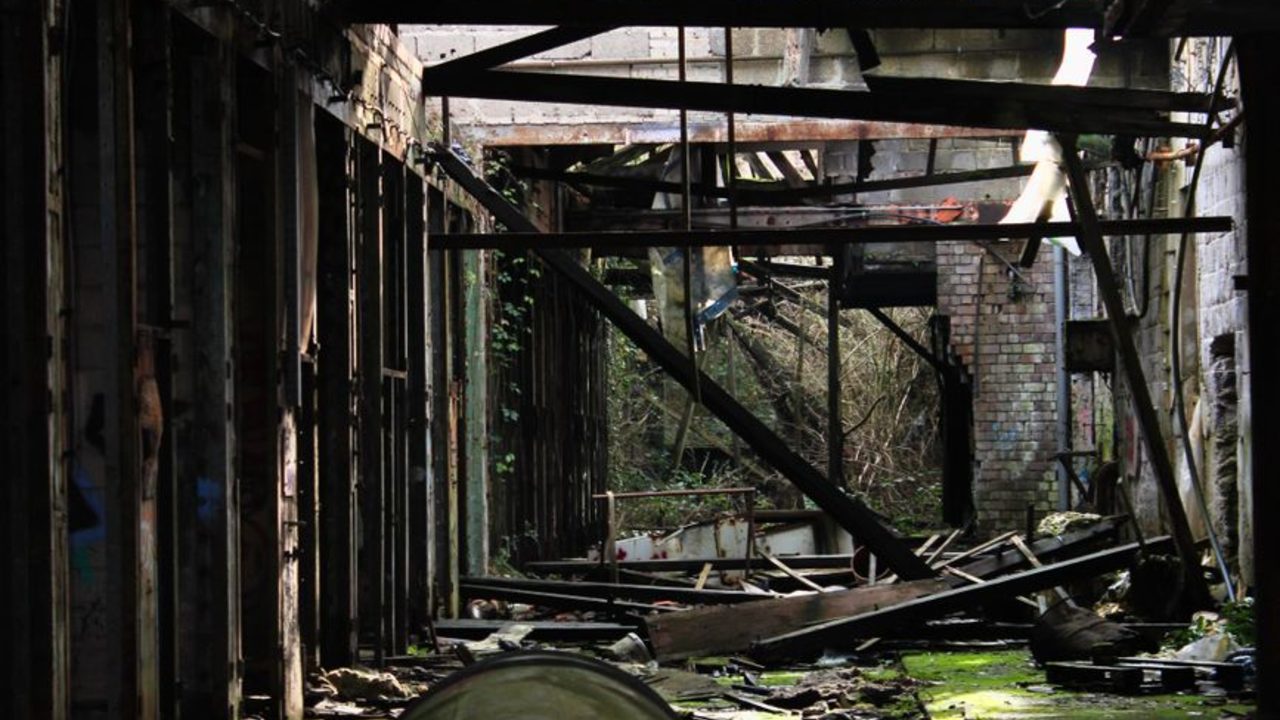
Forty years after the Chornobyl disaster, researchers have found that some of the tiny radioactive particles left in the soil are more chemically stable than expected, according to ScienceDaily. The fuel inside six particles studied with powerful X-rays had kept much of its original crystal structure, which suggests these grains may hold on to radioactive material instead of freeing it quickly.

The scientists stress that this does not mean the contamination is becoming harmless. The sample was small, and each particle turned out to have its own structure.

The numbers behind the study

Three kinds of particles

Tobias Weissenborn, a physicist and doctoral candidate at Leibniz University Hannover, described three classes of particles. Some are still chemically and physically close to the original uranium dioxide fuel. Others are partly or fully wrapped in, or fused with, a layer of zirconium, a resistant metal used in the fuel's protective casing. That group formed when the melting fuel combined with the zirconium at extreme temperatures.

The third type formed when the graphite caught fire. In that process the fuel oxidized into various uranium oxides, such as U3O8. This material is mechanically fragile and can crumble into microscopic fragments, which wind can carry and which are hazardous if inhaled.

How the particles were examined

Scientists have long struggled to explain why Chornobyl particles break down at different speeds. As they weather, they can form several kinds of uranium oxide, which makes their long-term behavior hard to predict.

To look inside, Dr. Christoph Hennig, a crystallographer at the Helmholtz-Zentrum Dresden-Rossendorf, used synchrotron X-ray diffraction, a method that reveals how atoms are arranged in crystals. The work was done at the Rossendorf Beamline in Grenoble and is described as the first successful structural analysis of fragments of this kind. Weissenborn and colleagues in Hannover isolated the particles and attached them to tungsten electrodes. Because the samples were so radioactive, they were sealed in several layers of containment for transport.

What it means for the contaminated land

If the particles behave this way more widely, they could limit how much radioactive material seeps into nearby soil and water, since they appear able to keep fission products locked inside. That would be relevant for anyone assessing long-term risks in the affected region.

The researchers are cautious. Weissenborn warned that every single particle has a different structure and that the experiment covered only six of them from two places. Establishing how particles behave across the whole area would require many more samples from a much wider range of locations.

For now, the finding adds one piece to a puzzle that remains unsolved. Predicting how Chornobyl's debris will behave over the long term is still difficult, and the particles that crumble easily remain a hazard.

Around Prague, based on reporting by ScienceDaily

Share: Telegram WhatsApp

More science news

Rare Elite Shoe and Slave-Trade Rings Found on Danish Ship Sunk After Mutiny
Maritime archaeologists working on a 17th-century shipwreck off the coast of Sweden have recovered the rear half of an unusually fine man's shoe and two metal rings once used as currency in the transa
Earth May Have Made Its Own Oceans: Hundreds' Worth Brewed in Fiery Air
Earth may have made much of its own water while it was still forming, instead of relying on icy comets or meteorites to deliver it, according to new research in Nature Geoscience reported by ScienceDa
Physicists Measure Gravity Between Two Specks Weighing 7.6 Milligrams Each
Physicists in China have measured the gravitational attraction between the smallest pair of masses yet, and Newton's law of gravity still held, ScienceAlert reported. The team, led by Shan-Qing Yang o
First Land Animals Could Barely Turn Their Heads, Study Finds
The first animals to move from water to land nearly 380 million years ago may have been able to barely turn their heads, according to a study published Oct. 14 in the journal Nature. The result challe
Supercomputer Simulation Recreates 2 Billion Years of the Early Universe
Researchers at MIT, Harvard University and other institutions have built a supercomputer simulation that follows how the first stars, galaxies and black holes pulled the universe out of its cosmic dar
New Study Says Rising Mantle Erased 1.2 Billion Years of Grand Canyon Rock
A gap of 1.2 billion years in the rock record of the Grand Canyon may have been caused by slow movements deep inside the planet, according to new research published Nov. 4 in the journal Nature. Live

Related news

Maritime archaeologists working on a 17th-century shipwreck off the coast of Sweden have recovered the rear half of an unusually fine man's shoe and two metal rings once used as currency in the transatlantic slave trade, Live Science report
Earth may have made much of its own water while it was still forming, instead of relying on icy comets or meteorites to deliver it, according to new research in Nature Geoscience reported by ScienceDaily. Lab experiments suggest that rocky
Physicists in China have measured the gravitational attraction between the smallest pair of masses yet, and Newton's law of gravity still held, ScienceAlert reported. The team, led by Shan-Qing Yang of Sun Yat-sen University, used two silic
The first animals to move from water to land nearly 380 million years ago may have been able to barely turn their heads, according to a study published Oct. 14 in the journal Nature. The result challenges a decades-old explanation for why n
Researchers at MIT, Harvard University and other institutions have built a supercomputer simulation that follows how the first stars, galaxies and black holes pulled the universe out of its cosmic dark age. The model, called Lumina, covers
A gap of 1.2 billion years in the rock record of the Grand Canyon may have been caused by slow movements deep inside the planet, according to new research published Nov. 4 in the journal Nature. Live Science reported that a model of Earth's
A single nuclear explosion high above Earth could knock out almost every satellite in low-Earth orbit within a month, according to a new study reported by ScienceAlert. The work, by researchers at the University of Wisconsin–Madison and Pri
NASA has started a fresh effort to work out how to bring Mars rock samples back to Earth, Space.com reported. The effort is called the Perseverance Sample Retrieval Architecture, or PSRA, and it follows years of cost concerns that have trou
The magnetic fields of Uranus and Neptune may change dramatically within a few decades, according to new computer modeling reported by Universe Today. If the models are right, the fields that Voyager 2 measured on its flybys were a snapshot
Archaeologists in Kazakhstan have found a gold figurine of a bear in a burial mound that is about 2,200 years old, Live Science reported. The mound had been looted in ancient times, but the thieves did not empty it completely. The bear is d
Tiny grains of dust that drifted to Earth from the Kuiper Belt carry the chemical fingerprint of ancient water that looks nothing like the water in our oceans, according to ScienceAlert. A team led by planetary scientist Lindsay Keller of N
Whether you are a mosquito magnet may depend on which mosquito is biting. A new study from Florida International University found that three of the world's most dangerous mosquito species each go after a different set of people, and not one