Science & Space By

Europe's Summer Heat Killed More Than 50,000 People, Study Finds
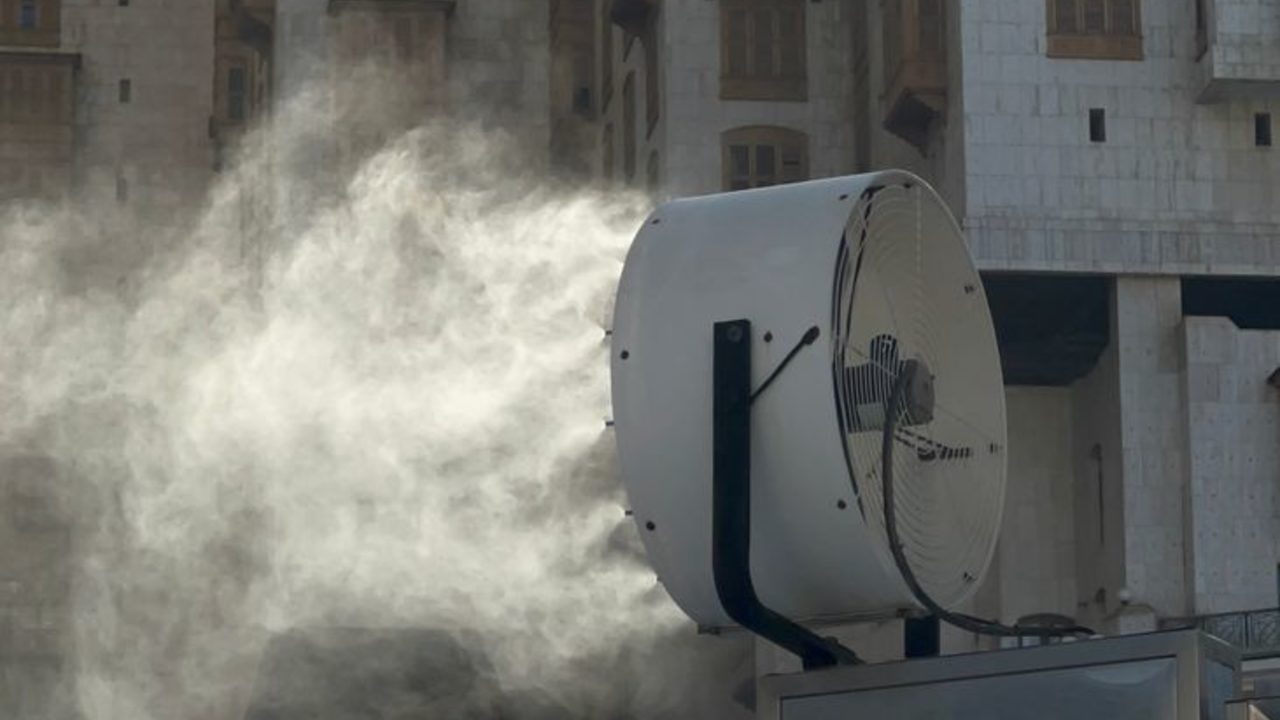
Record heat across Europe this summer contributed to the deaths of more than 50,000 people, and researchers say about two-thirds of those deaths trace back to human-caused climate change, according to NPR's report on a new study.

The research, set to appear in an upcoming issue of Nature Health, modeled heat-related deaths by age group in 854 European cities across repeated heat waves in June, July and August. It estimated that 50,391 people died because of warm temperatures, and that 32,619 of those deaths resulted from the additional heat produced by burning coal, oil and gas.

How the toll compares with earlier summers

The same research team found that this year's toll is 71% higher than that of the previous deadliest summer, 2022, when the figure was 29,480, NPR reported. The authors also said the new number is an undercount. It leaves out a deadly heat wave in May, and it covers only the 854 cities, which hold about 40% of Europe's population.

About one-third of the deaths came between June 17 and July 1, during an especially intense heat wave. Co-author Garyfallos Konstantinoudis, a biostatistician at Imperial College London, said temperatures in that stretch ran 9.5 degrees Fahrenheit (5.3 degrees Celsius) above normal. Italy, France, Spain and Germany recorded the highest death tolls, according to the study.

Lead author Clair Barnes, a climate scientist at Imperial College London, said some cities saw temperatures 21.6 F (12 C) warmer than normal this summer. She said Europe is the fastest-warming continent and is 4.5 F (2.5 C) hotter than in pre-industrial times, although the Arctic is warming faster still.

Who was most at risk

More than half of those who died were 85 or older, Konstantinoudis said. Younger adults were not spared: the heat also killed more than 800 people between the ages of 20 and 44.

How researchers arrived at the numbers

Heat deaths are underreported and often missing from death certificates, so the team relied on statistical modeling to establish the base count, Konstantinoudis said. The calculation draws on each city's age profile and on a local temperature at which the fewest deaths occur. Above or below that point, the model counts excess deaths.

To separate the role of climate change, the researchers simulated a world without it and compared those results with the deaths that actually occurred this summer. The gap between the two is the share attributed to global warming. Barnes said that share has grown from about 45% in the early 2000s to 65% now.

The team also checked its figures against real-time estimates from government agencies. They mostly matched, though not always, Konstantinoudis said. For the May and June heat waves in Britain, the model produced 2,700 excess deaths, while the United Kingdom's health statistics agency reported 2,800. Several outside experts, NPR reported, called the methods state-of-the-art.

Dr. Howard Frumkin, a former director of the National Center for Environmental Health in the U.S. who was not part of the study, said hotter summers and more accurate attribution tools are together producing higher and more reliable counts.

Why it matters: heat that infrastructure was not built for

Barnes said much of Western and Northern Europe has infrastructure that was not designed for the temperatures now being seen. In her view, the extra 2.5 degrees Celsius of warming can be what turns uncomfortable weather into dangerous, and potentially deadly, conditions for many people.

The findings point to a risk that reaches beyond the oldest residents and beyond any single country, since the highest tolls were spread across four of the continent's largest nations.

What experts say should happen next

Outside researchers who praised the study called for action on two fronts. Dr. Courtney Howard, a Canadian emergency room physician and president-elect of the Canadian Medical Association, urged urgent investment in heat early-warning systems, fair access to low-carbon cooling and neighborhood buddy systems that check on people at greatest risk, alongside rapid cuts in fossil fuel use.

Dr. Jonathan Patz of the University of Wisconsin-Madison, a professor of health and the environment, said adaptation alone is not enough. He argued that better cooling and protection for vulnerable groups must be paired with efforts to address the burning of fossil fuels at its root.

Around Prague, based on reporting by NPR

Share: Telegram WhatsApp

More science news

Rare Elite Shoe and Slave-Trade Rings Found on Danish Ship Sunk After Mutiny
Maritime archaeologists working on a 17th-century shipwreck off the coast of Sweden have recovered the rear half of an unusually fine man's shoe and two metal rings once used as currency in the transa
Earth May Have Made Its Own Oceans: Hundreds' Worth Brewed in Fiery Air
Earth may have made much of its own water while it was still forming, instead of relying on icy comets or meteorites to deliver it, according to new research in Nature Geoscience reported by ScienceDa
Physicists Measure Gravity Between Two Specks Weighing 7.6 Milligrams Each
Physicists in China have measured the gravitational attraction between the smallest pair of masses yet, and Newton's law of gravity still held, ScienceAlert reported. The team, led by Shan-Qing Yang o
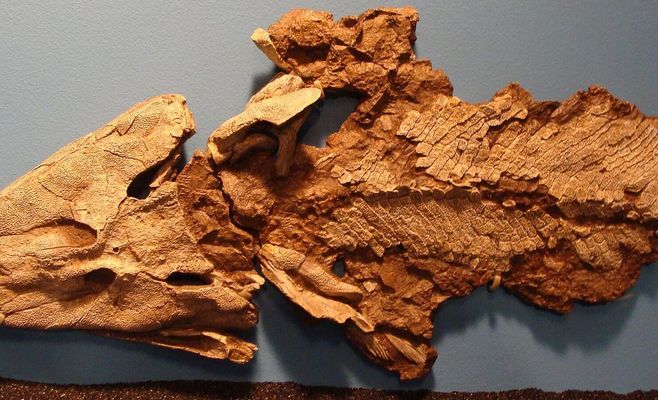
First Land Animals Could Barely Turn Their Heads, Study Finds
The first animals to move from water to land nearly 380 million years ago may have been able to barely turn their heads, according to a study published Oct. 14 in the journal Nature. The result challe
Supercomputer Simulation Recreates 2 Billion Years of the Early Universe
Researchers at MIT, Harvard University and other institutions have built a supercomputer simulation that follows how the first stars, galaxies and black holes pulled the universe out of its cosmic dar
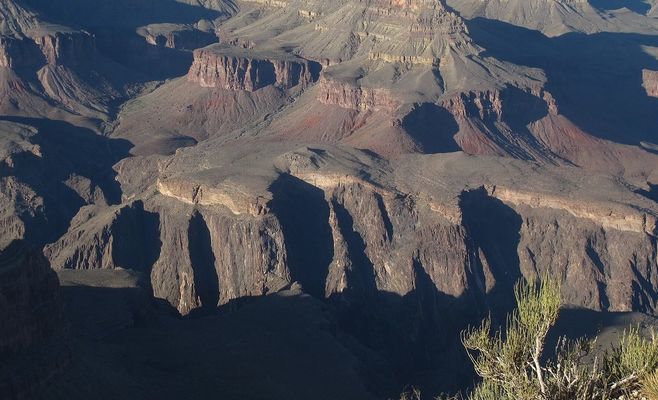
New Study Says Rising Mantle Erased 1.2 Billion Years of Grand Canyon Rock
A gap of 1.2 billion years in the rock record of the Grand Canyon may have been caused by slow movements deep inside the planet, according to new research published Nov. 4 in the journal Nature. Live

Related news

Maritime archaeologists working on a 17th-century shipwreck off the coast of Sweden have recovered the rear half of an unusually fine man's shoe and two metal rings once used as currency in the transatlantic slave trade, Live Science report
Earth may have made much of its own water while it was still forming, instead of relying on icy comets or meteorites to deliver it, according to new research in Nature Geoscience reported by ScienceDaily. Lab experiments suggest that rocky
Physicists in China have measured the gravitational attraction between the smallest pair of masses yet, and Newton's law of gravity still held, ScienceAlert reported. The team, led by Shan-Qing Yang of Sun Yat-sen University, used two silic
The first animals to move from water to land nearly 380 million years ago may have been able to barely turn their heads, according to a study published Oct. 14 in the journal Nature. The result challenges a decades-old explanation for why n
Researchers at MIT, Harvard University and other institutions have built a supercomputer simulation that follows how the first stars, galaxies and black holes pulled the universe out of its cosmic dark age. The model, called Lumina, covers
A gap of 1.2 billion years in the rock record of the Grand Canyon may have been caused by slow movements deep inside the planet, according to new research published Nov. 4 in the journal Nature. Live Science reported that a model of Earth's
A single nuclear explosion high above Earth could knock out almost every satellite in low-Earth orbit within a month, according to a new study reported by ScienceAlert. The work, by researchers at the University of Wisconsin–Madison and Pri
NASA has started a fresh effort to work out how to bring Mars rock samples back to Earth, Space.com reported. The effort is called the Perseverance Sample Retrieval Architecture, or PSRA, and it follows years of cost concerns that have trou
The magnetic fields of Uranus and Neptune may change dramatically within a few decades, according to new computer modeling reported by Universe Today. If the models are right, the fields that Voyager 2 measured on its flybys were a snapshot
Archaeologists in Kazakhstan have found a gold figurine of a bear in a burial mound that is about 2,200 years old, Live Science reported. The mound had been looted in ancient times, but the thieves did not empty it completely. The bear is d
Tiny grains of dust that drifted to Earth from the Kuiper Belt carry the chemical fingerprint of ancient water that looks nothing like the water in our oceans, according to ScienceAlert. A team led by planetary scientist Lindsay Keller of N
Whether you are a mosquito magnet may depend on which mosquito is biting. A new study from Florida International University found that three of the world's most dangerous mosquito species each go after a different set of people, and not one