Science & Space By

Hunting Lone Black Holes Within 50 Light-Years of Earth, Hidden in Gas Clouds
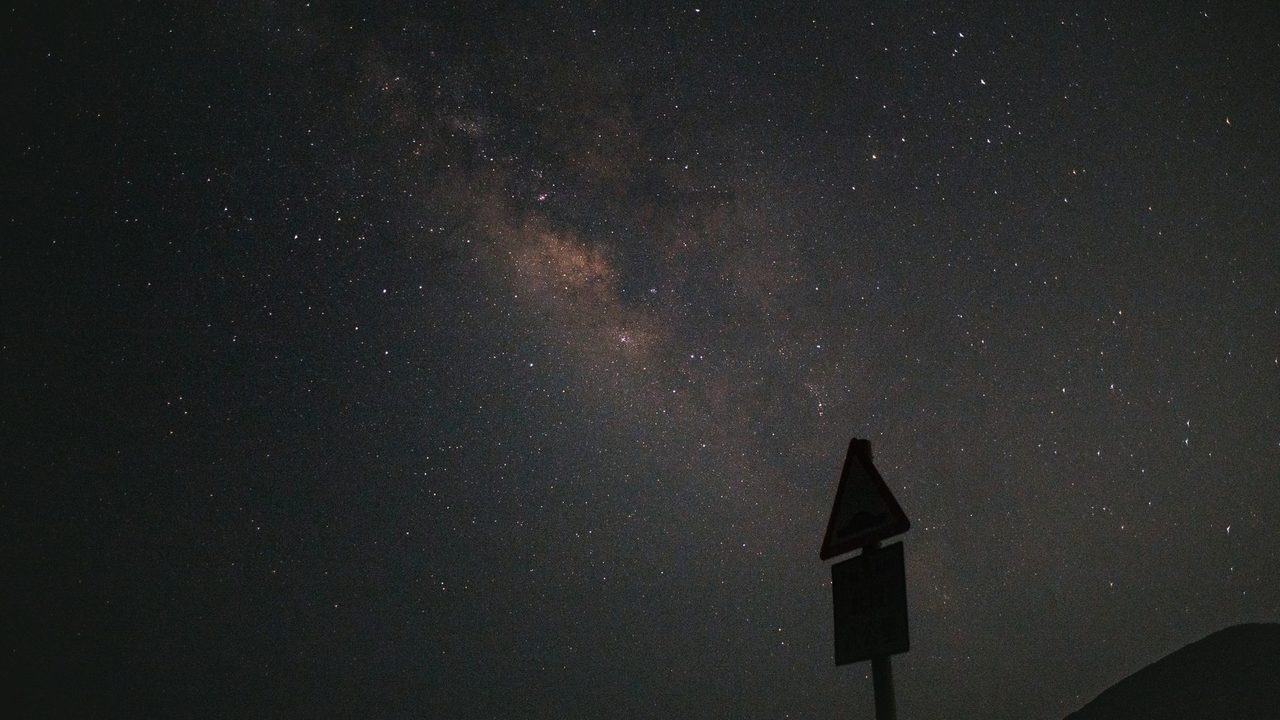
Astronomers think the Milky Way holds between about 100 million and 1 billion black holes left behind by collapsed massive stars, and a few of them may sit in the Sun's immediate neighborhood. A new study in The Astrophysical Journal describes an attempt to find such lone black holes nearby, Universe Today reported. The search turned up five candidates, none of them confirmed.

The key idea is that the best place to look is not empty space but the thin gas clouds the Solar System is passing through.

Why the Milky Way's quiet black holes are so hard to spot

Supermassive black holes at the centers of galaxies are comparatively easy to find. When one actively swallows material, the gas heats up and glows, and the brightest examples, called quasars, can be seen from vast distances. The Milky Way's own supermassive black hole, Sgr A*, is quiet and gives off almost no radiation. Astronomers detected it through its gravity, which speeds up the stars closest to it and shapes their orbits.

Black holes formed from single collapsed stars are far more numerous but more subdued, according to Universe Today. Models predict that many of them are isolated, with no companion star to feed them or give them away.

What the new study looked at

The paper is titled “Searching for Isolated Black Hole Candidates within 15 pc of the Solar System in Gaia DR3.” Its lead author is Abdurakhmon Nosirov of Fudan University in Shanghai, China. The authors say there may be a few black holes within 15 parsecs of the Solar System, a distance of roughly 50 light-years.

The team argues that location matters. If a black hole sits inside one of the Local Interstellar Clouds, which fill 5% to 20% of this local volume, it could pull in gas from the surrounding material and produce emission that current or near-future observatories can detect. The Solar System is moving through one of these clouds, a mass of partially ionized gas, near its edge.

Outside the clouds, the picture changes. The authors say the rate at which a black hole could gather gas would be too low, and the resulting signal well below what current and near-future instruments can pick up.

Another method, tracking how a black hole tugs on nearby stars, is also unlikely to work here. The authors write that the local density of stars is too low for that approach to succeed.

Five candidates, and why they are not confirmed

The researchers turned to the third data release of Gaia, the space observatory that maps the positions of stars. Gaia flagged six sources, but one was excluded because it is a brown dwarf, leaving five. All of them lie close to the Galactic plane, which the authors say makes them likely to be spurious results of Gaia's position measurements, for example from unmodeled background sources or hidden binary companions.

Because Gaia's data can suggest candidates but not confirm them, the team compared the sources with predicted infrared and radio emission. The surveys involved include CatWISE, an infrared catalogue from NASA's Wide-field Infrared Survey, and two radio surveys, RACS and VLASS. RACS has repeatedly observed the radio sky with all 36 dishes of the ASKAP telescope in Western Australia, and VLASS has cataloged 10 million individual radio sources. The authors note large uncertainties in the expected emission from such black holes, which makes predictions difficult.

Why it matters

The study does not claim a discovery, and nothing in the report suggests a danger to Earth. Its value is in narrowing where to look. If black holes really number in the hundreds of millions or more, finding even one that is isolated and nearby would test the models that predict them, and would show whether black holes can be detected through the gas they pull in.

For now the work is a search strategy and a short list of candidates. Whether radio and infrared data can turn any of the five into a confirmed black hole is the question the surveys are meant to answer.

Around Prague, based on reporting by Universe Today

Share: Telegram WhatsApp

More science news

Supercomputer Simulation Recreates 2 Billion Years of the Early Universe
Researchers at MIT, Harvard University and other institutions have built a supercomputer simulation that follows how the first stars, galaxies and black holes pulled the universe out of its cosmic dar
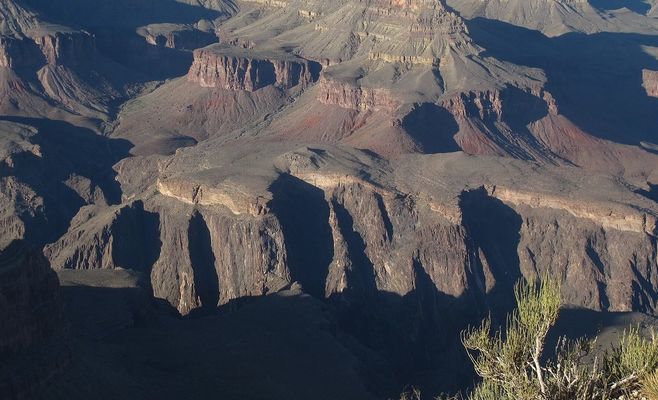
New Study Says Rising Mantle Erased 1.2 Billion Years of Grand Canyon Rock
A gap of 1.2 billion years in the rock record of the Grand Canyon may have been caused by slow movements deep inside the planet, according to new research published Nov. 4 in the journal Nature. Live
One Nuclear Blast in Space Could Cripple Nearly Every Low-Orbit Satellite
A single nuclear explosion high above Earth could knock out almost every satellite in low-Earth orbit within a month, according to a new study reported by ScienceAlert. The work, by researchers at the
NASA Opens New Review of Mars Sample Return as China Aims for 2031
NASA has started a fresh effort to work out how to bring Mars rock samples back to Earth, Space.com reported. The effort is called the Perseverance Sample Retrieval Architecture, or PSRA, and it follo
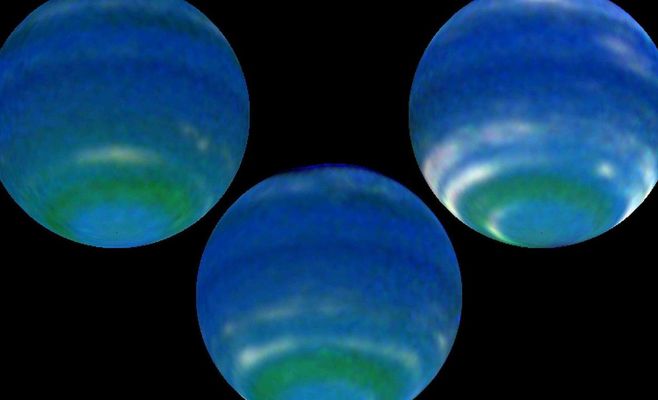
Magnetic Fields of Uranus and Neptune May Swing by Tens of Degrees
The magnetic fields of Uranus and Neptune may change dramatically within a few decades, according to new computer modeling reported by Universe Today. If the models are right, the fields that Voyager
Gold Bear Figurine Found in 2,200-Year-Old Kazakhstan Burial Mound
Archaeologists in Kazakhstan have found a gold figurine of a bear in a burial mound that is about 2,200 years old, Live Science reported. The mound had been looted in ancient times, but the thieves di

Related news

Researchers at MIT, Harvard University and other institutions have built a supercomputer simulation that follows how the first stars, galaxies and black holes pulled the universe out of its cosmic dark age. The model, called Lumina, covers
A gap of 1.2 billion years in the rock record of the Grand Canyon may have been caused by slow movements deep inside the planet, according to new research published Nov. 4 in the journal Nature. Live Science reported that a model of Earth's
A single nuclear explosion high above Earth could knock out almost every satellite in low-Earth orbit within a month, according to a new study reported by ScienceAlert. The work, by researchers at the University of Wisconsin–Madison and Pri
NASA has started a fresh effort to work out how to bring Mars rock samples back to Earth, Space.com reported. The effort is called the Perseverance Sample Retrieval Architecture, or PSRA, and it follows years of cost concerns that have trou
The magnetic fields of Uranus and Neptune may change dramatically within a few decades, according to new computer modeling reported by Universe Today. If the models are right, the fields that Voyager 2 measured on its flybys were a snapshot
Archaeologists in Kazakhstan have found a gold figurine of a bear in a burial mound that is about 2,200 years old, Live Science reported. The mound had been looted in ancient times, but the thieves did not empty it completely. The bear is d
Tiny grains of dust that drifted to Earth from the Kuiper Belt carry the chemical fingerprint of ancient water that looks nothing like the water in our oceans, according to ScienceAlert. A team led by planetary scientist Lindsay Keller of N
Whether you are a mosquito magnet may depend on which mosquito is biting. A new study from Florida International University found that three of the world's most dangerous mosquito species each go after a different set of people, and not one
If companies ever bring platinum-group metals back from asteroids, the market for those metals could collapse, and a new simulation suggests that might benefit everyone except miners. Two system dynamicists from MIT modeled the outcome, and
The Hubble Space Telescope has captured a view of thousands of stars shining in shades of blue, gold and orange, according to Space.com. The image shows a dense ball of stars called Messier 30, or M30, and was released by the European Space
A giant planet about 1,000 light years away has dropped out of sight in data from NASA's TESS space telescope, and astronomers now think a hidden neighbor is the reason, according to Universe Today. The planet, a hot Jupiter named TOI-2535b
The Antarctic ozone hole grew in 2026 to a size scientists have not seen in a decade, but NASA and NOAA say the ozone layer is still healing and remains on track to recover later this century, according to ScienceDaily. The cause was weathe