Science & Space By

Japan’s Buried Supervolcano Is Quietly Refilling With Fresh Magma 7,300 Years After Its Giant Eruption
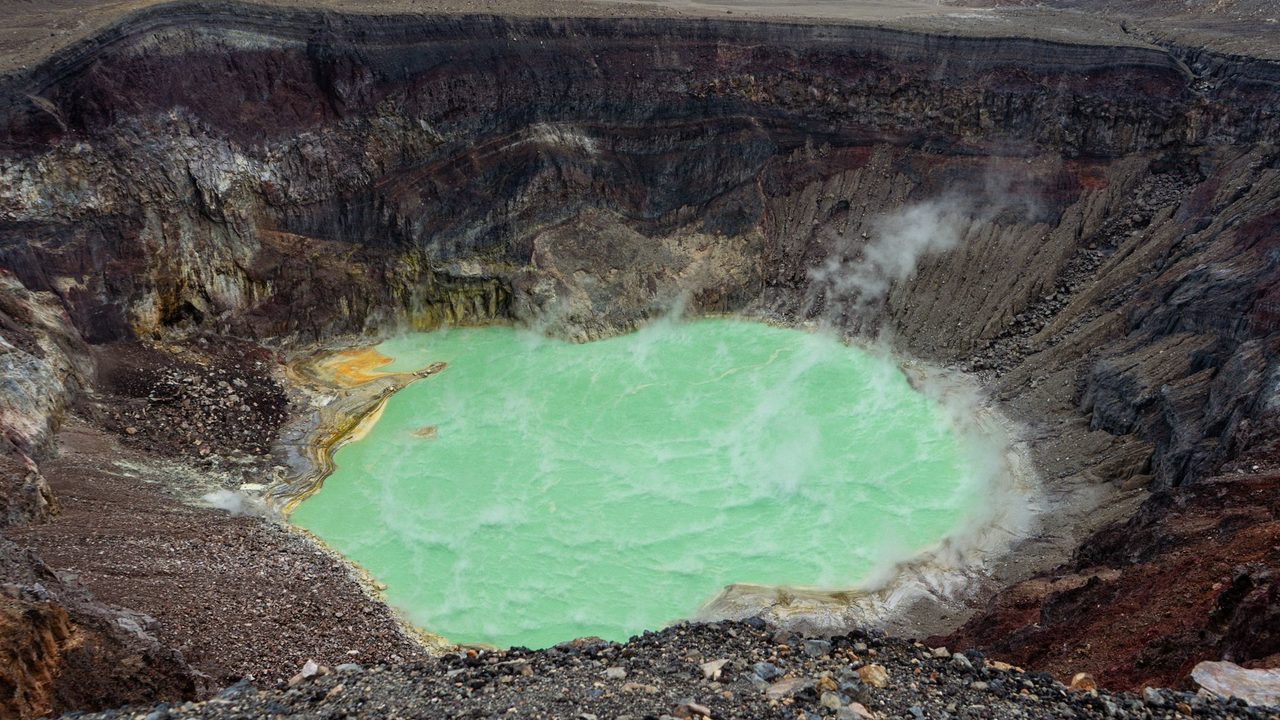
Scientists at Kobe University say fresh magma is slowly accumulating beneath Japan’s Kikai caldera, about 7,300 years after the volcano produced the largest known eruption of the Holocene, according to ScienceDaily. The study appears in Communications Earth & Environment.

The reservoir’s refilling does not mean another catastrophic eruption is imminent, the report said. Instead, it offers a rare look at how giant volcanic systems rebuild their magma supplies over thousands of years.

What is a caldera, and why is Kikai special?

When an enormous volume of magma escapes during an eruption, the rock above the emptied reservoir can collapse and leave a broad, relatively shallow depression called a caldera. ScienceDaily gave Yellowstone, Toba and Kikai as famous examples.

Most of Kikai lies beneath the ocean. Its last giant eruption, about 7,300 years ago, was the largest known volcanic eruption of the Holocene, the geological epoch that began roughly 11,700 years ago and continues today. To illustrate the scale of such eruptions, the report said the magma released can be enough to bury New York City’s Central Park beneath a layer roughly 12 kilometers (7.5 miles) thick.

How did researchers look inside the volcano?

The Kobe University team worked with the Japan Agency for Marine-Earth Science and Technology. They used airgun arrays to send seismic pulses through the crust beneath the ocean floor, and ocean bottom seismometers recorded how the waves traveled through the rock.

Seismic waves move differently through solid rock and through regions containing molten material, so the recordings let scientists study structures that cannot be seen directly. Kobe University geophysicist Nobukazu Seama said the underwater setting is an advantage because it allows systematic, large-scale surveys.

What did they find?

The survey revealed a substantial region with a high proportion of magma directly beneath the site of the ancient eruption. From the measurements, the team estimated the reservoir’s approximate size and shape. Seama said its extent and location make it clear that this is the same magma reservoir involved in the earlier eruption.

Is this leftover magma or new magma?

The researchers think it is new. Earlier investigations found that a lava dome has been growing near the center of the caldera over approximately the past 3,900 years, and chemical analyses showed that material from the dome and other recent activity differs in composition from what the giant eruption released.

That suggests the magma now stored under the volcano was supplied by new injections of molten rock from deeper in the crust or mantle, rather than remaining unchanged since the big eruption. Seama said the magma under the lava dome is likely newly injected magma.

Why it matters: what does this mean for other supervolcanoes?

Scientists know giant caldera volcanoes can erupt more than once, but ScienceDaily said they still understand little about how the huge quantities of magma needed for such events build up underground. That gap makes it hard to anticipate when another major eruption might occur.

Seama said researchers must understand how such large quantities of magma accumulate to understand how giant caldera eruptions happen. The report said the findings could help explain how systems such as Yellowstone in the United States and Toba in Indonesia rebuild their magma supplies, and potentially help scientists improve their ability to recognize warning signs of future eruptions.

For now, the work adds a data point on how a reservoir can be recharged over thousands of years, a process the report described as important to understand before the long-term behavior of supervolcanoes can be reliably assessed.

Around Prague, based on reporting by ScienceDaily
Share: Telegram WhatsApp

More science news

Euclid Telescope Maps More Than 900m Galaxies and 15,000 Cosmic Lenses
The European Space Agency's Euclid mission has published its first major batch of data, and it contains more than 900m galaxies, The Guardian reported. The release also includes about 15,000 potential
Rare Elite Shoe and Slave-Trade Rings Found on Danish Ship Sunk After Mutiny
Maritime archaeologists working on a 17th-century shipwreck off the coast of Sweden have recovered the rear half of an unusually fine man's shoe and two metal rings once used as currency in the transa
Earth May Have Made Its Own Oceans: Hundreds' Worth Brewed in Fiery Air
Earth may have made much of its own water while it was still forming, instead of relying on icy comets or meteorites to deliver it, according to new research in Nature Geoscience reported by ScienceDa
Physicists Measure Gravity Between Two Specks Weighing 7.6 Milligrams Each
Physicists in China have measured the gravitational attraction between the smallest pair of masses yet, and Newton's law of gravity still held, ScienceAlert reported. The team, led by Shan-Qing Yang o
First Land Animals Could Barely Turn Their Heads, Study Finds
The first animals to move from water to land nearly 380 million years ago may have been able to barely turn their heads, according to a study published Oct. 14 in the journal Nature. The result challe
Supercomputer Simulation Recreates 2 Billion Years of the Early Universe
Researchers at MIT, Harvard University and other institutions have built a supercomputer simulation that follows how the first stars, galaxies and black holes pulled the universe out of its cosmic dar

Related news

The European Space Agency's Euclid mission has published its first major batch of data, and it contains more than 900m galaxies, The Guardian reported. The release also includes about 15,000 potential cases of strong gravitational lensing,
Maritime archaeologists working on a 17th-century shipwreck off the coast of Sweden have recovered the rear half of an unusually fine man's shoe and two metal rings once used as currency in the transatlantic slave trade, Live Science report
Earth may have made much of its own water while it was still forming, instead of relying on icy comets or meteorites to deliver it, according to new research in Nature Geoscience reported by ScienceDaily. Lab experiments suggest that rocky
Physicists in China have measured the gravitational attraction between the smallest pair of masses yet, and Newton's law of gravity still held, ScienceAlert reported. The team, led by Shan-Qing Yang of Sun Yat-sen University, used two silic
The first animals to move from water to land nearly 380 million years ago may have been able to barely turn their heads, according to a study published Oct. 14 in the journal Nature. The result challenges a decades-old explanation for why n
Researchers at MIT, Harvard University and other institutions have built a supercomputer simulation that follows how the first stars, galaxies and black holes pulled the universe out of its cosmic dark age. The model, called Lumina, covers
A gap of 1.2 billion years in the rock record of the Grand Canyon may have been caused by slow movements deep inside the planet, according to new research published Nov. 4 in the journal Nature. Live Science reported that a model of Earth's
A single nuclear explosion high above Earth could knock out almost every satellite in low-Earth orbit within a month, according to a new study reported by ScienceAlert. The work, by researchers at the University of Wisconsin–Madison and Pri
NASA has started a fresh effort to work out how to bring Mars rock samples back to Earth, Space.com reported. The effort is called the Perseverance Sample Retrieval Architecture, or PSRA, and it follows years of cost concerns that have trou
The magnetic fields of Uranus and Neptune may change dramatically within a few decades, according to new computer modeling reported by Universe Today. If the models are right, the fields that Voyager 2 measured on its flybys were a snapshot
Archaeologists in Kazakhstan have found a gold figurine of a bear in a burial mound that is about 2,200 years old, Live Science reported. The mound had been looted in ancient times, but the thieves did not empty it completely. The bear is d
Tiny grains of dust that drifted to Earth from the Kuiper Belt carry the chemical fingerprint of ancient water that looks nothing like the water in our oceans, according to ScienceAlert. A team led by planetary scientist Lindsay Keller of N