NASA Opens New Review of Mars Sample Return as China Aims for 2031
USD 21,91
Popular
NASA has started a fresh effort to work out how to bring Mars rock samples back to Earth, Space.com reported. The effort is called the Perseverance Sample Retrieval Architecture, or PSRA, and it follows years of cost concerns that have troubled the agency's Mars Sample Return program.
Tiffany Morgan, director of the NASA Mars Exploration Program, described the initiative on Nov. 9 during a virtual meeting of the Mars Exploration Program Analysis Group.
The key numbers and dates
- January 2027: the planned kickoff of the PSRA strategy team, according to Morgan.
- Winter 2027-2028: when the team's final report is due.
- About $11 billion: one earlier price tag for the sample return project, with samples reaching Earth in 2040. NASA itself judged that too costly and too slow.
- $8 billion and 2035: the estimate from another review group, which found it feasible to return samples as early as 2035 at a lower cost.
- About 500 grams and 2031: what China's Tianwen-3 mission aims to bring back to Earth, with launch around 2028.
What the new review will do
The PSRA team is meant to produce impartial recommendations on retrieving the samples collected by NASA's Perseverance rover and delivering them to Earth. It will assess proposed mission requirements, review lessons learned from earlier efforts, and evaluate current capabilities and ways of acquiring them.
How the review will handle the cost of the program, along with many other concerns, has not been decided, Space.com reported.
Samples waiting on Mars
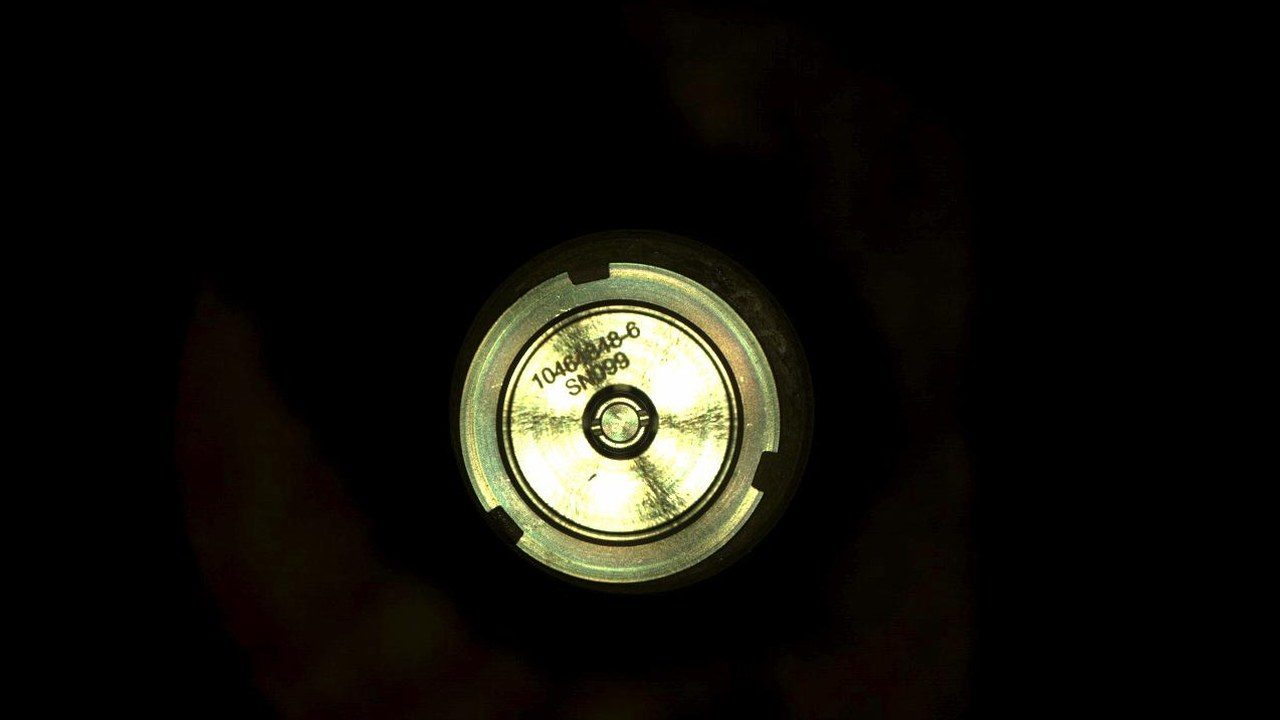
Perseverance landed in Jezero Crater in February 2021 and has been collecting selected samples since. It has dropped some sealed samples on the surface and stored others inside the rover. Space.com noted that the samples may hold signs of past life on Mars.
NASA and the European Space Agency have spent years planning future missions to carry that material to Earth, where it could be examined with advanced laboratory equipment.
Why it matters: safety for future astronauts
Bruce Jakosky, of the Laboratory for Atmospheric and Space Physics at the University of Colorado Boulder and the University of Washington, also spoke at the meeting. He argued that returning samples before any human mission would help reduce risk, and he said the purpose is to understand hazards to astronauts and hardware, not only to advance science.
Jakosky pointed to compounds in Martian soil that could harm astronauts if breathed in, naming perchlorates and chloromethanes, which have already been identified. He also cited fine dust that could cause breathing problems and wear down equipment.
According to Jakosky, samples could also help with spacesuit design, allow a search for living organisms that might interact with life from Earth, and provide practice with a round trip to Mars, including entry, descent, landing and ascent. They could also test planetary protection procedures. Those recommendations came from a workshop held last May and organized by Explore Mars, Inc.
The competition from China
Space.com described China's progress as another reason for NASA to take a new look. According to the China National Space Administration, the Tianwen-3 probe will include a lander, an ascender, a service capsule, an orbiter and an Earth reentry module.
The mission appears on track to leave around 2028 on two Long March-5 rockets from the Wenchang Space Launch Site in Hainan province, and it aims to return roughly 500 grams of Martian material in 2031.
What happens next
The strategy team is due to begin work in January 2027, and its final report is expected in winter 2027-2028. Until then, the path for bringing the Perseverance samples home remains open.
Read next
China Reveals Four-Step Moon Plan as NASA Aims for a 2028 Landing
NASA's Twin Mars Probes Swing Past Earth for a 9-Minute Speed Boost
Twin NASA Probes Fire Engines Near Earth in a First for Mars Missions
Around Prague, based on reporting by Space.com
Cover photo: NASA/JPL-Caltech