Science & Space By

Nearly 3,000 Exploding Stars Add Weight to the Idea That Dark Energy Shifts
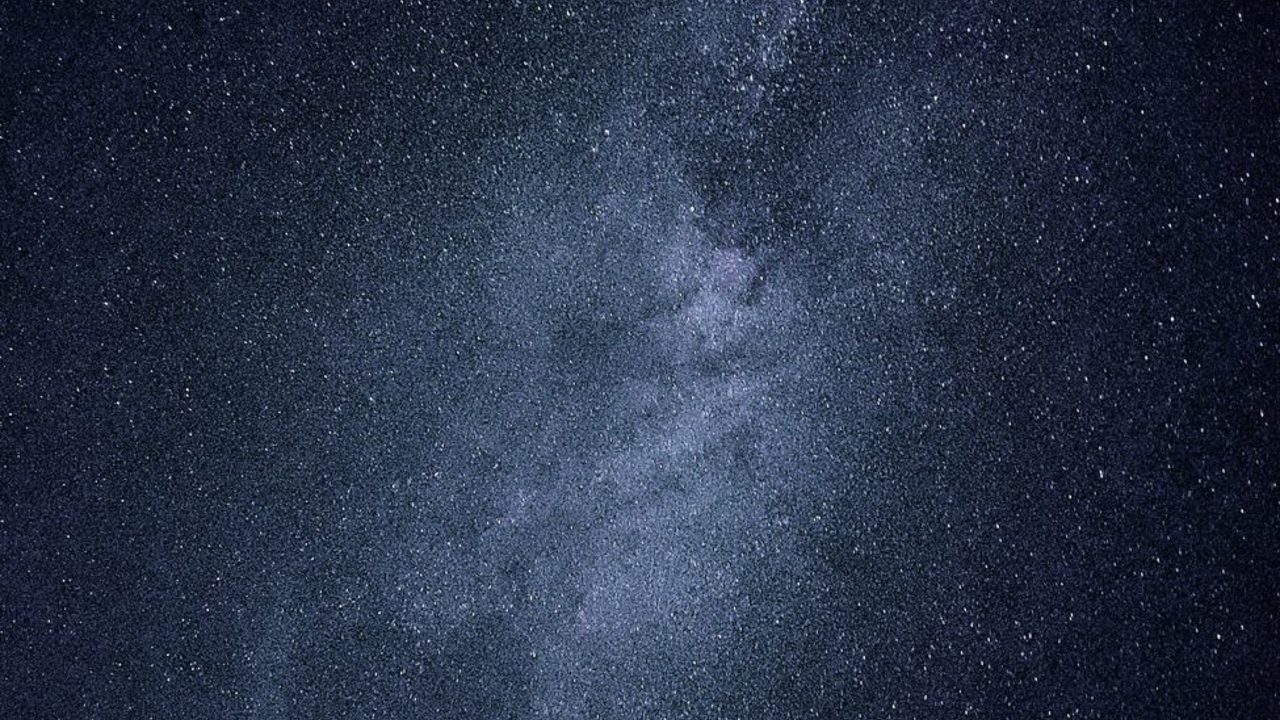
The largest collection of exploding white dwarf stars ever assembled offers fresh evidence that dark energy, the mysterious force speeding up the expansion of the Universe, may not be constant, according to ScienceDaily. The finding is a hint, not a proof, but it pushes against a central assumption of standard cosmology.

An international team led by scientists at the University of Queensland combined observations of 2,884 Type Ia supernovae. These stellar explosions help astronomers measure distances across the Universe, which in turn lets them trace how its expansion has changed over time.

What the researchers did

The team pulled together three decades of supernova measurements, along with results from the Dark Energy Survey (DES) published in 2024. PhD candidate Ryan Camilleri said the project rebuilt those decades of observations into one consistent framework and sets a new international standard for supernova cosmology.

That took considerable work. Older data were reanalyzed using what scientists have since learned about how supernovae behave. The team also had to link observations from different telescopes and correct for cosmic dust and the masses of galaxies, both of which can alter the light that reaches Earth. They even included subtler effects such as gravitational lensing, the bending and magnification of light by large objects on its way from a supernova to us.

The supernova data were then combined with other cosmic measurements, including relic light from the Big Bang and maps of how galaxies are spread through space.

Why the result is notable

The standard model of cosmology treats dark energy as a fixed, unchanging property of the Universe. Camilleri said the combined analysis did not confirm that picture and instead added evidence that dark energy may change over time.

Professor Tamara Davis, an astrophysicist on the project, noted that the 2024 DES supernova data first showed hints of time-varying dark energy. The new compilation also departs from the standard model, she said, although in a slightly different direction.

A separate effort points the same way. Davis said the Dark Energy Spectroscopic Instrument (DESI) found hints of variation in dark energy in its surveys of relic sound waves from the early Universe. She described the two measurements as completely independent. They do not show exactly the same departure from the standard model, but together they give scientists more reason to ask whether dark energy changes as the Universe ages.

Why it matters beyond cosmology

Dark energy is one of the biggest open questions in physics, and the researchers say it may connect to another. Davis said the work could hold a clue to how gravity and quantum physics fit together, two theories that each succeed in their own realms. Joining them, she said, would be a huge step in theoretical physics.

Nothing here changes everyday life, and the results do not settle the question. The team describes the evidence as pointing toward time variation, and the two datasets do not agree on its exact form.

What comes next

The researchers plan to expand the dataset as more observations arrive. One important addition will be the Dark Energy Bedrock All-Sky Supernova program (DEBASS), which is identifying hundreds of supernovae closer to Earth than those surveyed by DES. Including these nearby explosions will give scientists more measurements for testing whether dark energy truly changes.

The cosmology findings and a companion set of host galaxy mass measurements are available on the preprint server arXiv. The new results build on the work of hundreds of astronomers and researchers around the world.

Around Prague, based on reporting by ScienceDaily
Share: Telegram WhatsApp

More science news

Committee Confirms AI-Built Proof That Yang-Mills Theory Exists, Not the Mass Gap
A committee led by 2004 Nobel laureate in physics David Gross has confirmed that computer code delivered by OpenAI proves pure Yang-Mills theory, the version involving only gluons, exists in four dime
Black Holes Show Warning Signs 1 to 10 Days Before Launching Jets
Black holes can fire narrow streams of superheated material into space, and astrophysicists may now have a way to see one coming. A new study in The Astrophysical Journal found that in four black hole
Plant-Based Coating Could Replace Plastic Lining in Paper Coffee Cups
Researchers at the University of Waterloo in Canada have developed a coating made entirely from plant cellulose that can stand in for the polyethylene lining found inside paper coffee cups, ScienceAle
Euclid Telescope Maps More Than 900m Galaxies and 15,000 Cosmic Lenses
The European Space Agency's Euclid mission has published its first major batch of data, and it contains more than 900m galaxies, The Guardian reported. The release also includes about 15,000 potential
Rare Elite Shoe and Slave-Trade Rings Found on Danish Ship Sunk After Mutiny
Maritime archaeologists working on a 17th-century shipwreck off the coast of Sweden have recovered the rear half of an unusually fine man's shoe and two metal rings once used as currency in the transa
Earth May Have Made Its Own Oceans: Hundreds' Worth Brewed in Fiery Air
Earth may have made much of its own water while it was still forming, instead of relying on icy comets or meteorites to deliver it, according to new research in Nature Geoscience reported by ScienceDa

Related news

A committee led by 2004 Nobel laureate in physics David Gross has confirmed that computer code delivered by OpenAI proves pure Yang-Mills theory, the version involving only gluons, exists in four dimensions, according to the Pasquale Pillit
Black holes can fire narrow streams of superheated material into space, and astrophysicists may now have a way to see one coming. A new study in The Astrophysical Journal found that in four black hole systems, telltale changes in X-ray ligh
Researchers at the University of Waterloo in Canada have developed a coating made entirely from plant cellulose that can stand in for the polyethylene lining found inside paper coffee cups, ScienceAlert reported. The team says it could make
The European Space Agency's Euclid mission has published its first major batch of data, and it contains more than 900m galaxies, The Guardian reported. The release also includes about 15,000 potential cases of strong gravitational lensing,
Maritime archaeologists working on a 17th-century shipwreck off the coast of Sweden have recovered the rear half of an unusually fine man's shoe and two metal rings once used as currency in the transatlantic slave trade, Live Science report
Earth may have made much of its own water while it was still forming, instead of relying on icy comets or meteorites to deliver it, according to new research in Nature Geoscience reported by ScienceDaily. Lab experiments suggest that rocky
Physicists in China have measured the gravitational attraction between the smallest pair of masses yet, and Newton's law of gravity still held, ScienceAlert reported. The team, led by Shan-Qing Yang of Sun Yat-sen University, used two silic
The first animals to move from water to land nearly 380 million years ago may have been able to barely turn their heads, according to a study published Oct. 14 in the journal Nature. The result challenges a decades-old explanation for why n
Researchers at MIT, Harvard University and other institutions have built a supercomputer simulation that follows how the first stars, galaxies and black holes pulled the universe out of its cosmic dark age. The model, called Lumina, covers
A gap of 1.2 billion years in the rock record of the Grand Canyon may have been caused by slow movements deep inside the planet, according to new research published Nov. 4 in the journal Nature. Live Science reported that a model of Earth's
A single nuclear explosion high above Earth could knock out almost every satellite in low-Earth orbit within a month, according to a new study reported by ScienceAlert. The work, by researchers at the University of Wisconsin–Madison and Pri
NASA has started a fresh effort to work out how to bring Mars rock samples back to Earth, Space.com reported. The effort is called the Perseverance Sample Retrieval Architecture, or PSRA, and it follows years of cost concerns that have trou