New Study Says Rising Mantle Erased 1.2 Billion Years of Grand Canyon Rock
USD 21,91
Popular
A gap of 1.2 billion years in the rock record of the Grand Canyon may have been caused by slow movements deep inside the planet, according to new research published Nov. 4 in the journal Nature. Live Science reported that a model of Earth's mantle, the layer beneath the crust, shows three continental regions being pushed upward just as the missing rock was lost to erosion.
The gap is known as the Great Unconformity, and geologists have debated its cause for a long time. The study's authors say the answer lies far below the surface, not only in ice or weather.
What is the Great Unconformity?
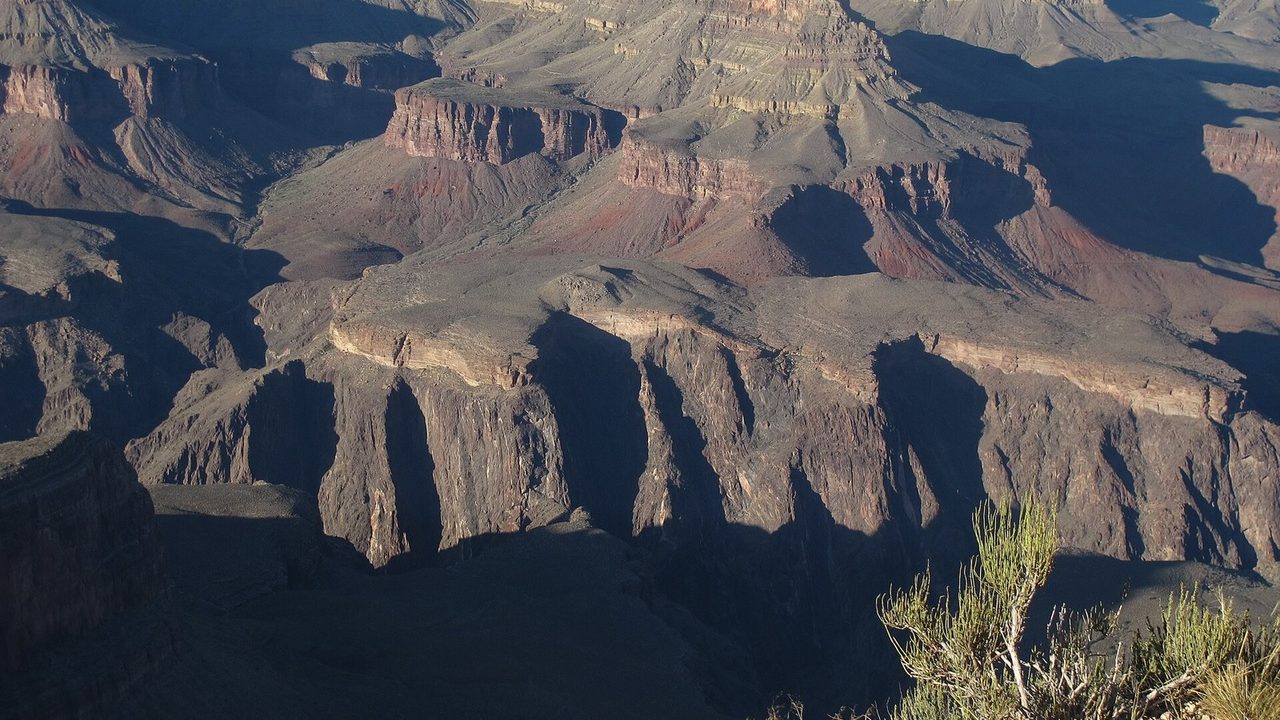
In the walls of the Grand Canyon, metamorphic and igneous rocks that formed 1.7 billion years ago lie directly beneath sedimentary rocks laid down 500 million years ago. The 1.2 billion years in between left no rock behind, so the layers simply jump from one era to a much later one.
The break is not unique to Arizona. Live Science reported that similar gaps from the same time appear across North America, the Baltic region and northern China.
What did the new study find?
Researchers built a model of how the mantle circulates slowly as heat drives it. According to the study, that circulation pushed North America, the Baltic region and northern China upward during the period when the Great Unconformity formed.
Uplift would have made erosion easier, so sediments formed in that period washed off the continents and into the ocean. The model also shows that over the past 540 million years the same areas began to sink. That created basins where sediment could collect and build up in tidy layers, which marks the point where the unconformity ends.
Study co-author Nicolas Flament, a geoscientist at the University of Wollongong in Australia, told Live Science the team looked for the places where the mantle would be most likely to create a Great Unconformity. Those three regions, he said, matched places where the gap is known to be widespread.
What about Snowball Earth?
Some researchers have argued that a global deep freeze known as Snowball Earth scraped sediment off the continents. Flament said glaciation probably did play a major role in erosion. But he said the new study points to the mantle as the key driver, because without the continents being pushed upward, glaciers and other erosive forces would have had no slope to carry sediment downhill.
Is the missing rock really missing information?
Shanan Peters, a geologist at the University of Wisconsin-Madison who was not involved in the study, told Live Science that the phrase is not quite accurate. In his view, the absence of rock in those places at that time is itself evidence of the processes at work back then, and it hints at how geology may have influenced the atmosphere and the evolution of life.
Peters said the study explains both the erosion and the later return of sediment deposition. He called the mantle explanation the only reasonable way to move back and forth between those two states over time.
Why it matters: what this could tell us about early life
The Great Unconformity covers a period just before and during the Cambrian explosion, a time when life on Earth diversified dramatically. Peters said the rocks exposed at the surface then may have released elements such as potassium, iron, manganese and carbon into the seas at a higher rate. Marine life may have responded by developing biomineralization, the ability to build shells, and the change may also have pushed the atmosphere toward more oxygen.
Flament agreed that the geological changes had knock-on effects for living things. He said the changes contribute to the environment in which complex life evolved. These links are proposals from researchers, not settled findings.
What happens next?
The model still needs checking against rock records from more places. Peters leads an effort called Macrostrat that is pulling together observations of rock layers around the world. Flament said he hopes the database will help test the model's results, but coverage is not yet as thorough in Africa and Russia. Once it is, he said, researchers can check whether the idea works there.
Until then, the explanation remains a model-based proposal. The Grand Canyon's missing billion years, it suggests, were not lost so much as shaped by the planet's deep interior.
Read next
Sahara Rock Is a Martian Meteorite Among the Oldest Ever Found, Study Says
A Marsquake Deep Under Mars' Giant Canyon Shows the Planet Still Cracks
Earliest Planet-Building Rocks Were Up to 92 Percent Heat-Formed Beads
Around Prague, based on reporting by Live Science
Cover photo: Mikenorton / Wikimedia Commons, CC BY-SA 4.0, cropped