Science & Space By

Quantum Chip Learns to Tame Chaos by Checking and Resetting Its Own Qubits
A team of U.S. researchers has shown on a real quantum processor that repeated checking and resetting of qubits can pull a system out of chaos and into order. The work, published in Nature Physics, is described by ScienceAlert as a partial demonstration of how real-time error correction could work, a capability future quantum computers will need.

The result does not produce a practical machine. But it tests the basic feedback loop that fault-tolerant quantum computing depends on, and it did so on current hardware.

What problem were the researchers trying to address?

Quantum computers are still small, limited prototypes. One of the main obstacles to scaling them up, according to ScienceAlert, is fault tolerance: spotting and fixing errors while a calculation is still running.

The difficulty is that qubits, the quantum counterpart of the 1s and 0s in ordinary computers, are very delicate. They can be knocked off course by environmental factors such as heat or motion.

What did the team actually do?

The researchers used a 156-qubit IBM Quantum Heron processor and linked as many as 100 qubits at once. They set up a two-stage system with alternating tasks: scrambling, which spreads chaos through the system, and controlling, which resets qubits where needed.

They then shifted the balance between the two during their experiments. Across nearly 5,000 qubit operations and almost 5,000 checks and resets, order returned when the checks and resets made up more than half of the operations overall.

IBM physicist Maika Takita said the challenge was to measure qubits repeatedly while the rest of the processor kept operating. She said the experiment shows that today’s hardware can coordinate operations, measurements and resets thousands of times across a large system.

Why does the tipping point matter?

As the team added more qubits, the tipping point between chaos and order became sharper in the data. The researchers read this as evidence of a true quantum effect and a phase transition, comparable to water turning into ice in a unified way.

Haining Pan of the University of Florida said the match between experiment and theory showed this was not an accident of a small circuit, but collective behavior across the quantum system. Justin Wilson of Louisiana State University said it was not obvious that the transition between chaos and control would survive in quantum physics, and that the results show it does.

The finding also indicates that the same mathematical checks and balances used in chaos theory for classical systems can work in a quantum setting, ScienceAlert reported.

Why it matters: what does this mean for everyday computing?

Not much in the short term. ScienceAlert noted that quantum computers will not become household gadgets any time soon. They are expected to help with highly complex information processing, such as testing drug development, forecasting the weather, simulating materials and powering AI.

For those uses to become practical, error correction has to work reliably at scale. Rutgers University physicist Jedediah Pixley said a fault-tolerant machine will need such checks and corrections to happen a huge number of times during a calculation, and called the experiment a landmark on that road.

What are the limits of the result?

The checking-and-resetting system shown here will need to be scaled up and use rules of greater complexity before it is useful for real quantum computing, according to ScienceAlert. For now it serves as a stress test of feedback loops that can keep quantum systems running smoothly and in an ordered way.

The experiment demonstrates part of the picture rather than a complete error-correcting computer. Further work will be needed to show whether the approach holds up as systems grow and tasks become more complex.

Around Prague, based on reporting by ScienceAlert

Share: Telegram WhatsApp

More science news

280 Ice Age Carvings Found in Spanish Cave Tourists Walked Past for Decades
Researchers have documented 280 Paleolithic motifs engraved on the walls of Cova de la Font Major, a cave in Catalonia, northeastern Spain, ScienceAlert reported. The figures sat in plain view for dec
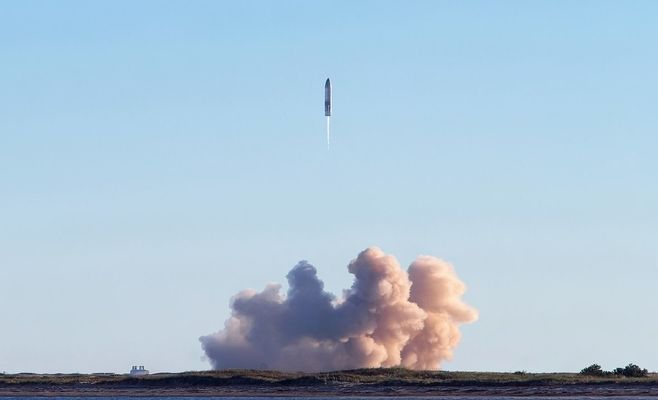
Starship Heads to Orbit Nov. 13 With 26 Starlink Satellites You Might See
SpaceX is aiming to launch its Starship megarocket on its 15th flight test as soon as Friday, Nov. 13, and the mission may give people across much of the United States something to look up for. Space.
Physicists Beat a Quantum Fuzziness Limit by Using Hindsight, Study Claims
A team of physicists led by researchers at Shanxi University in China says it has found a way to get around a quantum measurement limit that has stood since 1927, by using information from both before
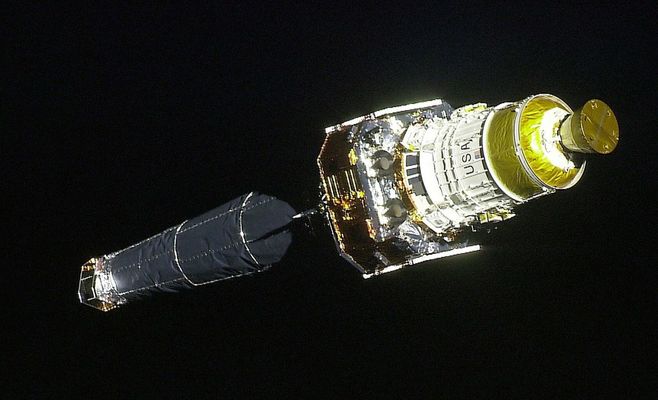
Star That Faked 27 Supernovas Is Being Fed On by a Hidden Black Hole or Neutron Star
A star that has imitated a supernova 27 times and counting is being drained by an unseen companion, either a black hole or a neutron star, according to Space.com. NASA's Chandra X-ray Observatory caug
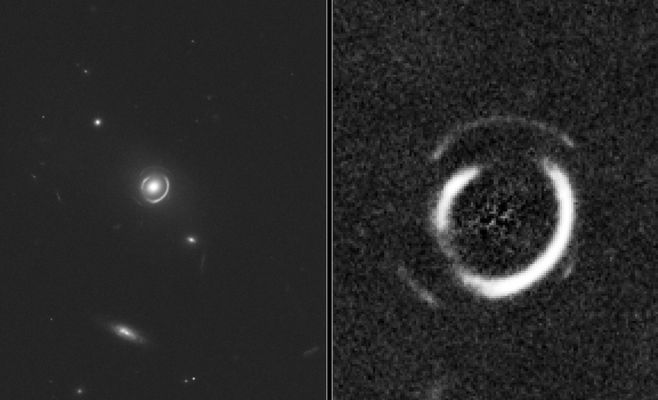
Hubble Images Cosmic Lenses That Could Test a Dark Matter Theory
NASA has released a gallery of gravitational lenses photographed by the Hubble Space Telescope, and the images are meant to prepare the ground for the new Nancy Grace Roman Space Telescope. Astronomer
Committee Confirms AI-Built Proof That Yang-Mills Theory Exists, Not the Mass Gap
A committee led by 2004 Nobel laureate in physics David Gross has confirmed that computer code delivered by OpenAI proves pure Yang-Mills theory, the version involving only gluons, exists in four dime

Related news

Scientists have set a new record for the coldest temperature ever recorded, according to Live Science: 10 picokelvins, barely above absolute zero. The measurement came from an experiment aboard China's Tiangong space station, where a laser
Researchers have documented 280 Paleolithic motifs engraved on the walls of Cova de la Font Major, a cave in Catalonia, northeastern Spain, ScienceAlert reported. The figures sat in plain view for decades while cave enthusiasts, treasure hu
SpaceX is aiming to launch its Starship megarocket on its 15th flight test as soon as Friday, Nov. 13, and the mission may give people across much of the United States something to look up for. Space.com reported that the upper stage, calle
A team of physicists led by researchers at Shanxi University in China says it has found a way to get around a quantum measurement limit that has stood since 1927, by using information from both before and after the moment being measured, Sc
A star that has imitated a supernova 27 times and counting is being drained by an unseen companion, either a black hole or a neutron star, according to Space.com. NASA's Chandra X-ray Observatory caught the telltale X-rays that point to the
NASA has released a gallery of gravitational lenses photographed by the Hubble Space Telescope, and the images are meant to prepare the ground for the new Nancy Grace Roman Space Telescope. Astronomers plan to use them to weigh the invisibl
A committee led by 2004 Nobel laureate in physics David Gross has confirmed that computer code delivered by OpenAI proves pure Yang-Mills theory, the version involving only gluons, exists in four dimensions, according to the Pasquale Pillit
Black holes can fire narrow streams of superheated material into space, and astrophysicists may now have a way to see one coming. A new study in The Astrophysical Journal found that in four black hole systems, telltale changes in X-ray ligh
Researchers at the University of Waterloo in Canada have developed a coating made entirely from plant cellulose that can stand in for the polyethylene lining found inside paper coffee cups, ScienceAlert reported. The team says it could make
The European Space Agency's Euclid mission has published its first major batch of data, and it contains more than 900m galaxies, The Guardian reported. The release also includes about 15,000 potential cases of strong gravitational lensing,
Maritime archaeologists working on a 17th-century shipwreck off the coast of Sweden have recovered the rear half of an unusually fine man's shoe and two metal rings once used as currency in the transatlantic slave trade, Live Science report
Earth may have made much of its own water while it was still forming, instead of relying on icy comets or meteorites to deliver it, according to new research in Nature Geoscience reported by ScienceDaily. Lab experiments suggest that rocky