Science & Space By

Skeleton in a Recycled Roman Coffin Likely a Medieval Abbot of Westminster
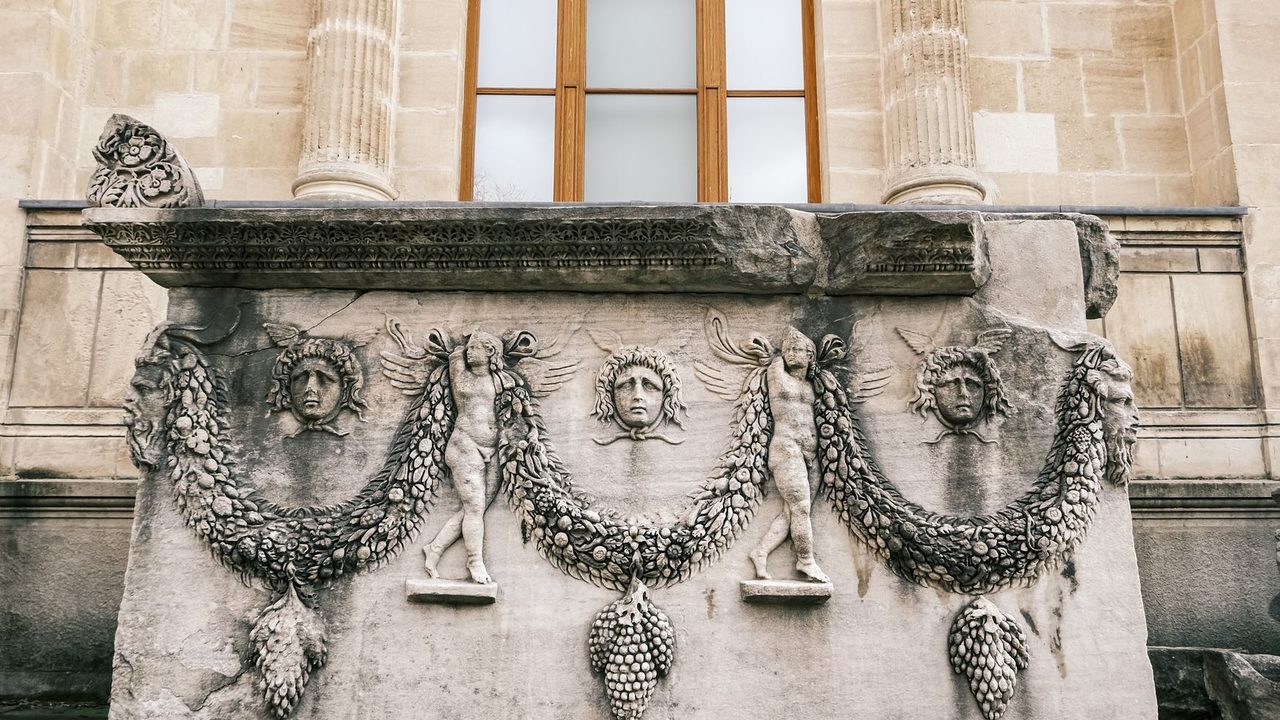
A puzzle that has lingered at Westminster Abbey for roughly 150 years may be close to an answer. A skeleton buried in a Roman-era stone coffin, with a medieval cross carved on its lid, was almost certainly an abbot, according to a new study reported by Live Science. The author names two possible candidates and leans toward one of them.

The study was written by Warwick Rodwell, the abbey's consultant archaeologist, and published Oct. 21 in the Journal of the British Archaeological Association.

A coffin with two lives

Westminster's chief mason found the sarcophagus in 1869. Experts then discovered that the burial had been looted earlier in that century. The side of the coffin carries a Roman-style carving and a Latin inscription dated to the fourth century. It says that two men, Valerius Superventor and Marcellus, made the coffin for their father, Valerius Amandinus. The lid, however, bears a large Anglo-Saxon cross from the 11th century.

The mismatch suggested that the Roman coffin had been reused hundreds of years later for an important religious figure. For generations, though, nobody expected any bones to remain inside, so the identity question stalled.

What the skeleton revealed

That changed in 2016, when the sarcophagus was opened for conservation and a full skeleton turned up. Bioarchaeologist James Langthorne of Pre-Construct Archaeology examined it and wrote in a 2016 report that the person was a middle-aged man of average height. The bones showed signs of osteoarthritis, gout and two healed rib injuries.

The remains had been disturbed over time. A hole had been accidentally made in the skull, and arm and leg bones were mixed up. Radiocarbon dating placed the bones between 987 and 1052, confirming that the Roman coffin was reused in the Middle Ages.

How the candidates were narrowed down

No grave goods were found, which Rodwell suggests may have been stolen in the early 19th century. Even so, he concluded that the man was "almost certainly an abbot" given the dignified burial in a stone coffin with a large cross.

Using the dates of the abbots of Westminster and their time in office, Rodwell identified three possibilities: Wulfsige, abbot from 988 to 993; Ælfwig, abbot from 993 to 1020; and Wulfnoth, abbot from 1020 to 1049. Wulfsige left Westminster to become a bishop elsewhere, so Rodwell considers it unlikely that he was buried at the abbey. That leaves two viable contenders. Rodwell wrote that Ælfwig's earlier life as a monk of Westminster might favor him.

What this means for the case

The finding is an informed assessment from a single researcher, not a confirmed identification. Without a name on the tomb, the choice between Ælfwig and Wulfnoth rests on circumstantial reasoning. The study does not claim certainty.

For the public, the result gives a human story to an object that visitors can see. The sarcophagus is on display in the Queen's Diamond Jubilee Galleries at Westminster Abbey. It is also a reminder of how a find from the 1800s can yield new answers when it is re-examined with modern methods such as radiocarbon dating and bone analysis.

Questions that remain open

Rodwell noted that several mysteries persist. It is unclear why an 11th-century abbot was placed in a recycled Roman coffin. Reusing Roman coffins in this way is extremely unusual, he wrote, and nothing comparable has been found.

One possible explanation lies in the inscription. Its first word, "memoriae," meaning "to the memory," hints that Valerius Amandinus may have been an early Christian. Rodwell wrote that he may have been a significant figure in Roman London, but that nothing is known about his career.

The coffin's origin is also uncertain. It was made from limestone sourced from Oxfordshire, a county in southern England. Rodwell suggested it might once have stood in a Roman mausoleum that was later dug up and moved. He also noted that a villa and its cemetery could lie somewhere near the abbey, still awaiting discovery.

Around Prague, based on reporting by Live Science
Share: Telegram WhatsApp

More science news

Asteroid Mining Could Cut Platinum Prices by Over 75%, MIT Model Says
If companies ever bring platinum-group metals back from asteroids, the market for those metals could collapse, and a new simulation suggests that might benefit everyone except miners. Two system dynam
Hubble Image Shows Thousands of Stars Nearly as Old as the Universe
The Hubble Space Telescope has captured a view of thousands of stars shining in shades of blue, gold and orange, according to Space.com. The image shows a dense ball of stars called Messier 30, or M30
A Giant Planet Vanished From NASA's View, and a Hidden Neighbor Is Why
A giant planet about 1,000 light years away has dropped out of sight in data from NASA's TESS space telescope, and astronomers now think a hidden neighbor is the reason, according to Universe Today. T
Antarctic Ozone Hole Swells to Its Biggest Size in a Decade, NASA Says
The Antarctic ozone hole grew in 2026 to a size scientists have not seen in a decade, but NASA and NOAA say the ozone layer is still healing and remains on track to recover later this century, accordi
SpaceX Plans First Full Starship Recovery With Back-to-Back Catches on Nov. 13
SpaceX plans to launch Starship Flight 15 on Friday, Nov. 13, in an attempt to bring both stages of its giant rocket back to the launch pad, Space.com reported. If it works, it would be the first full
Two Remote Pacific Atolls Teem With Sharks and Turtles, a Rare Look at Intact Reefs
Scientists who surveyed two far-flung coral atolls in the Pacific say the sites hold some of the most intact ocean ecosystems left in the region, according to ScienceAlert's report on a new study in F

Related news

If companies ever bring platinum-group metals back from asteroids, the market for those metals could collapse, and a new simulation suggests that might benefit everyone except miners. Two system dynamicists from MIT modeled the outcome, and
The Hubble Space Telescope has captured a view of thousands of stars shining in shades of blue, gold and orange, according to Space.com. The image shows a dense ball of stars called Messier 30, or M30, and was released by the European Space
A giant planet about 1,000 light years away has dropped out of sight in data from NASA's TESS space telescope, and astronomers now think a hidden neighbor is the reason, according to Universe Today. The planet, a hot Jupiter named TOI-2535b
The Antarctic ozone hole grew in 2026 to a size scientists have not seen in a decade, but NASA and NOAA say the ozone layer is still healing and remains on track to recover later this century, according to ScienceDaily. The cause was weathe
SpaceX plans to launch Starship Flight 15 on Friday, Nov. 13, in an attempt to bring both stages of its giant rocket back to the launch pad, Space.com reported. If it works, it would be the first full recovery of an orbital rocket in histor
Scientists who surveyed two far-flung coral atolls in the Pacific say the sites hold some of the most intact ocean ecosystems left in the region, according to ScienceAlert's report on a new study in Frontiers in Marine Science. The atolls,
A five-year project to restore Scotland's rare Atlantic rainforest has been awarded almost £6 million from the National Lottery Heritage Fund, the BBC reported. The money will pay for three community hubs, and for training and work for loca
Two physicists at the University of New Hampshire have built a gravity model in which time can only run forward, which would rule out looping back into your own past. The catch, according to ScienceAlert, is that the model is unstable in it
Earth has a temporary new companion: a tiny asteroid called 2026 QQ8 that is circling the planet as a so-called mini-moon. According to Meteored's YourWeather, the Minor Planet Center, the clearinghouse for small-body observations run under
The dire wolf was not brought back from extinction, two U.S. scientists argue in a new paper. According to ScienceAlert, the animals that biotech company Colossal Biosciences announced in 2025 were gray wolves with a handful of dire wolf tr
Astronomers have made the first direct measurement of the large-scale structure of cosmic hydrogen, the gas that fed the first stars and galaxies, according to Universe Today. The team from the MeerKLASS Collaboration says the hydrogen foll
A giant planet that astronomers had tracked for seven years has dropped out of sight, and a new study says the cause is a second, unseen planet pulling it off course. The world, called TOI-2535 b, is about 1,000 light-years away. According