Science & Space By

SpaceX Sends 27 More Starlink Satellites Up as Falcon 9 Launches Grow Less Frequent
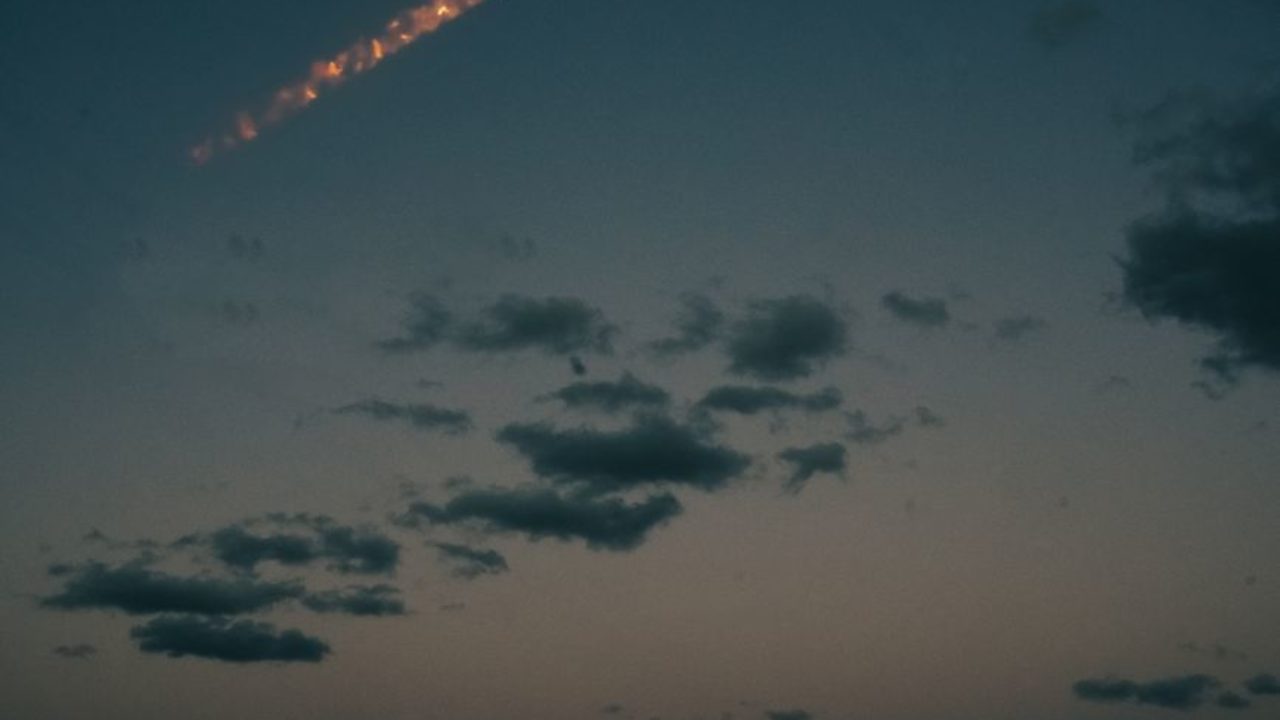
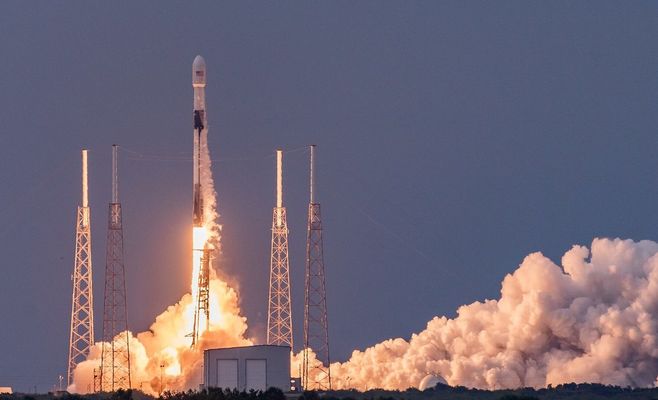
SpaceX launched another batch of Starlink internet satellites from the California coast on Oct. 23, Space.com reported. The flight carried the Starlink Group 15-15 satellites, 27 in all, and it came as the company flies its workhorse Falcon 9 rocket less often than before.

The Falcon 9 lifted off from Pad 4E at Vandenberg Space Force Base at 6:48 p.m. EDT, which was 3:48 p.m. local time in California, according to Space.com.

How the launch unfolded

About 2.5 minutes into the flight, the rocket's first-stage booster, designated B1063, shut down its main engine and separated from the second stage, which continued toward low Earth orbit. The two-piece payload fairing that protected the satellites was jettisoned just before T+3 minutes.

The booster then turned around for its trip back to Earth. After the mission clock passed 8 minutes it fired its engines for the landing burn, and it touched down roughly 20 seconds later on the droneship Of Course I Still Love You. Space.com noted that this was the 36th launch and landing for B1063, a booster that also launched NASA's DART asteroid-smashing mission in November 2021.

The upper stage finished its first engine burn shortly after the landing. It was due to coast for about 45 minutes before a second and final burn to reach orbit. Deployment of the 27 satellites was scheduled to begin 62 minutes after liftoff.

Why Starlink launches are becoming less frequent

The new satellites join a constellation that Space.com says numbers more than 11,000 active spacecraft. But Starlink missions are no longer flying as often as they once did. At their peak, these flights left the pad every two to three days. The most recent one before Oct. 23 flew 11 days earlier, and that mission was itself the first Starlink launch in more than three weeks.

One reason is a shift in SpaceX's priorities. The company is turning its attention from the Falcon 9 to Starship, its larger, more powerful and fully reusable rocket. Starship has a payload bay built to carry SpaceX's upgraded Version 3 Starlink satellites, which are too big for the Falcon 9. Starship is still in development, but Space.com reported that once it begins operational flights, SpaceX plans to phase out the Falcon 9 and the Falcon Heavy almost entirely.

The change is already visible in Florida. The Falcon 9's 100th launch of 2026 was the Starlink 10-49 mission from Cape Canaveral Space Force Station, which was later revealed to be the last Falcon 9 Starlink mission to fly from Florida's Space Coast. Space.com suggested the same could soon be true for Starlink launches from the West Coast.

What it means for the Falcon 9's record year

The Oct. 23 flight was the 116th Falcon 9 mission of 2026, and about three-quarters of those have been dedicated to Starlink. The slower pace will most likely leave 2025 as the Falcon 9's busiest year ever, with 165 launches completed, according to Space.com. At its current rate, the rocket is expected to fly just under 150 missions by the end of this year.

For people who rely on Starlink service or simply watch launches, the practical takeaway is that fewer Falcon 9 flights are likely to carry the satellites in the months ahead, with larger Starship launches expected to take over once that rocket enters regular service. Starship remains under development.

Around Prague, based on reporting by Space.com

Share: Telegram WhatsApp

More science news

Distant Galaxy Group Is Low on Star-Making Gas, Astronomers Find
Astronomers have measured how much of the raw material for new stars remains in a dense, distant group of galaxies, and the answer is not much. According to Universe Today, galaxies in the group, know
Radio Pulses Every Eight Minutes Traced to a Dead Star Orbiting a Sun-Like One
Astronomers have tracked a mysterious repeating radio signal to a pairing of a white dwarf, the remnant of a dead star, and a living star much like the sun, Space.com reported. The system, called GPM
Leonid Meteors Peak Nov. 17, but a Storm Isn't Expected This Year
The Leonid meteor shower peaks on Nov. 17 at about 3:00 Universal Time, and the Moon is cooperating this year, according to Universe Today. Forecasters expect only a modest show of roughly 20 meteors
Earth’s Own Air Fueled 85% of Particles in May 2024 Solar Superstorm
Earth’s own atmosphere may have helped turn the May 2024 solar storm into one of the most powerful in decades, according to a study in Science Advances. Satellite measurements showed that roughly 85%
Superheated Magma Held Off Crystals for Over Eight Hours in Lab Tests
Magma that is heated beyond the point where its crystals would normally stay stable can go for more than eight hours without forming new crystals, according to a University of Manchester-led study. In
Earth Has a New Minimoon, a 6-Foot Rock That Will Orbit Into 2027
Earth has a temporary new companion. Astronomers have confirmed that a tiny asteroid called 2026 QQ8 was pulled into orbit around the planet in April, and it is expected to stay until January 2027, Li

Related news

Astronomers have measured how much of the raw material for new stars remains in a dense, distant group of galaxies, and the answer is not much. According to Universe Today, galaxies in the group, known as COSMOS-Gr30, hold only about 20% to
Astronomers have tracked a mysterious repeating radio signal to a pairing of a white dwarf, the remnant of a dead star, and a living star much like the sun, Space.com reported. The system, called GPM J071507−114153, sits about 5,000 light-y
The Leonid meteor shower peaks on Nov. 17 at about 3:00 Universal Time, and the Moon is cooperating this year, according to Universe Today. Forecasters expect only a modest show of roughly 20 meteors per hour, not the dramatic storm the sho
Earth’s own atmosphere may have helped turn the May 2024 solar storm into one of the most powerful in decades, according to a study in Science Advances. Satellite measurements showed that roughly 85% of the charged particles fueling the dis
Magma that is heated beyond the point where its crystals would normally stay stable can go for more than eight hours without forming new crystals, according to a University of Manchester-led study. In the same experiments, magma that had no
Earth has a temporary new companion. Astronomers have confirmed that a tiny asteroid called 2026 QQ8 was pulled into orbit around the planet in April, and it is expected to stay until January 2027, Live Science reported. The object is about
SpaceX is preparing its most ambitious test yet of Starship, its giant new rocket, and the company's own plans could leave NASA with a problem, NPR reported. As SpaceX shifts resources to Starship, it has said it will stop flying the smalle
The European Space Agency's Euclid space telescope released its first major batch of data on Thursday, Nov. 12, capturing light from more than a billion objects across a huge stretch of sky, Space.com reported. The release, called DR1-Found
A new study of asteroid Bennu's sample has turned up a surprise inside a single molecule, according to Universe Today. Researchers at Penn State measured the carbon in a molecule called beta-alanine from Bennu and from the Murchison meteori
Scientists have set a new record for the coldest temperature ever recorded, according to Live Science: 10 picokelvins, barely above absolute zero. The measurement came from an experiment aboard China's Tiangong space station, where a laser
Researchers have documented 280 Paleolithic motifs engraved on the walls of Cova de la Font Major, a cave in Catalonia, northeastern Spain, ScienceAlert reported. The figures sat in plain view for decades while cave enthusiasts, treasure hu
SpaceX is aiming to launch its Starship megarocket on its 15th flight test as soon as Friday, Nov. 13, and the mission may give people across much of the United States something to look up for. Space.com reported that the upper stage, calle