Science & Space By

Sun's Flare 'Footprints' Show Explosions Release Energy in Bursts
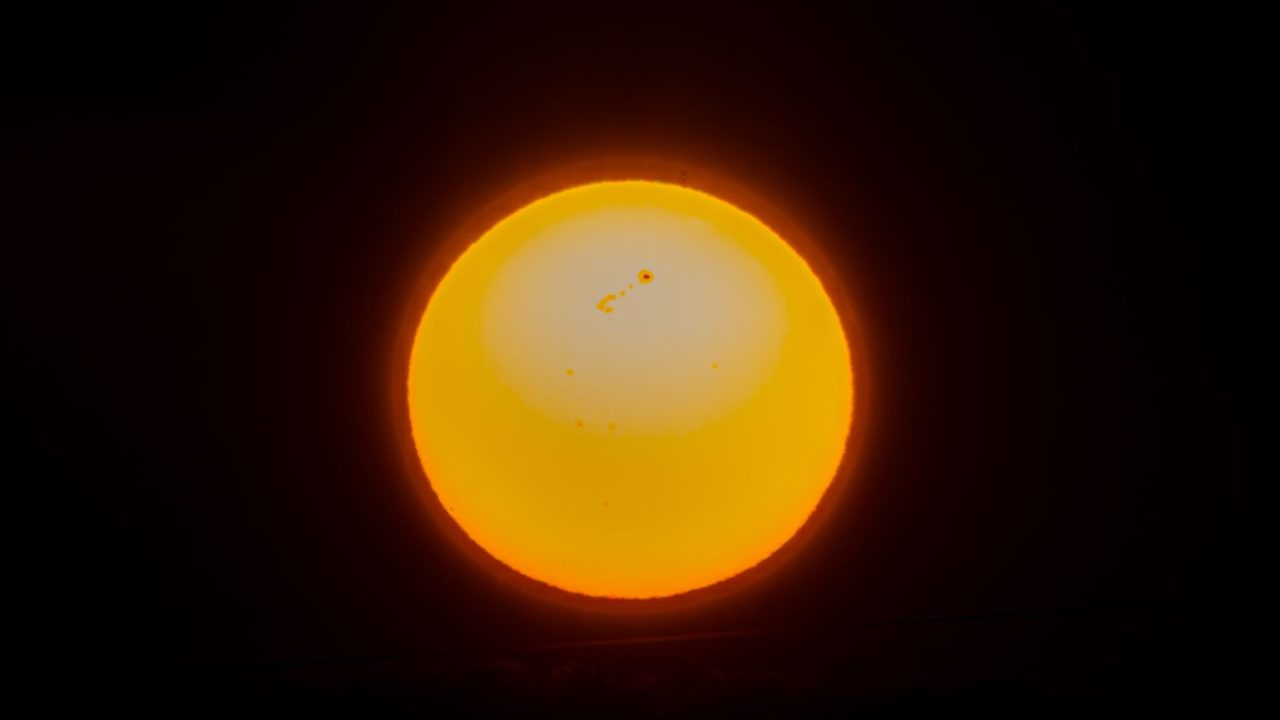
Solar flares can interfere with radio signals, GPS and power grids, yet the explosions behind them happen in a part of the Sun that is hard to watch. A new study in The Astrophysical Journal describes a way to read what is going on there by studying the bright marks a flare leaves lower down, according to Universe Today.

The researchers found that a flare does not dump its energy in one smooth event. The glowing patch it leaves behind breaks into fragments of different sizes, and the energy arrives in bursts.

Why flares reach into everyday life

Universe Today noted that the Sun, unlike distant objects in astronomy, affects daily life on Earth. Flares are the most powerful explosions in the Solar System, the outlet reported, releasing energy comparable to millions or even billions of hydrogen bombs going off at once.

Astronomers sort flares by X-ray brightness into the classes A, B, C, M and X, from weakest to strongest. Each step up the scale means a ten-fold increase in energy output.

The trigger is magnetic. The Sun's magnetic fields are constantly twisted and rotated until they snap and reconnect in a simpler, more stable arrangement. That process, called reconnection, frees energy that had been held in the fields and sends it out as a flare.

What the researchers looked at

Flares begin in the corona, the Sun's outermost layer. The glare of the Sun makes the corona difficult to observe, so the team turned to flare ribbons instead. Universe Today described these as a kind of footprint: plasma and high-energy particles that crash back into the Sun during reconnection, follow magnetic field lines and light up brilliantly where they hit the chromosphere.

The team, led by Marcel Corchado Albelo of the U.S. National Science Foundation, worked out a way to measure how the fine detail of those ribbons changes over time. The idea is that small features where the energy lands carry clues about what is happening far above, where it is released.

They first built a model and tested it against synthetic observations. They then applied it to a real event, an M6.5-class flare on June 22, 2015, which was observed by NASA's Interface Region Imaging Spectrograph, or IRIS, a solar observation satellite launched in 2013.

What they found

The ribbon split into fragments of different sizes, and the energy was deposited in bursts rather than evenly. According to the report, Corchado Albelo said in a press release that this was the first experimental demonstration of a physical link between the irregular shapes seen on the Sun and the structure of the region where energy is converted.

Maria Kazachenko, a co-author and scientist at the National Solar Observatory, said simulations had suggested for years that ribbon edges should behave in a particular way, but there had been no way to confirm it with observations. She described the study as the first quantitative observational test of those simulations. The measuring tool was adapted from a completely different field, and it showed that ribbon complexity rose along with the rate of reconnection, she said.

What it means for the rest of us

The study does not predict when the next flare will strike, and the report does not claim it does. Its value is in understanding. Flares can cause radio blackouts when they hit the ionosphere, disrupting aviation and maritime communications. They can introduce errors in GPS by altering the altitude of satellites, and they can cause electronics on spacecraft to malfunction. The coronal mass ejections that often accompany flares can disrupt power grids and also produce aurorae.

Because the corona is so hard to observe directly, ribbons offer a more accessible signal. The study authors wrote that ribbon substructure could serve as a unique diagnostic tool for physical processes in the flare's current sheet, the region where reconnection takes place. In practical terms, better knowledge of how flares release energy could improve the models scientists use to understand these events, though the report does not say how soon that might happen.

The result comes from one flare, so it is a first test rather than the final word. Universe Today said the research is part of an ongoing effort to understand solar flaring.

Around Prague, based on reporting by Universe Today
Share: Telegram WhatsApp

More science news

Could Webb's Mysterious Red Dots Be Black Holes Born Before the First Stars?
Astronomers at Johns Hopkins University say one of the James Webb Space Telescope's puzzling Little Red Dots could have started life as a primordial black hole, a type of black hole that would have fo
Voyager 1 Hits One Light-Day From Earth, and NASA Wants Your Phone Lit Up
Voyager 1, the most distant human-made object, will have traveled one light-day from Earth on Wednesday, Nov. 18, NASA said. That is more than 16 billion miles (25.9 billion kilometers), and it means
NASA Will Welcome Home Six Space Station Astronauts After 241-Day Mission
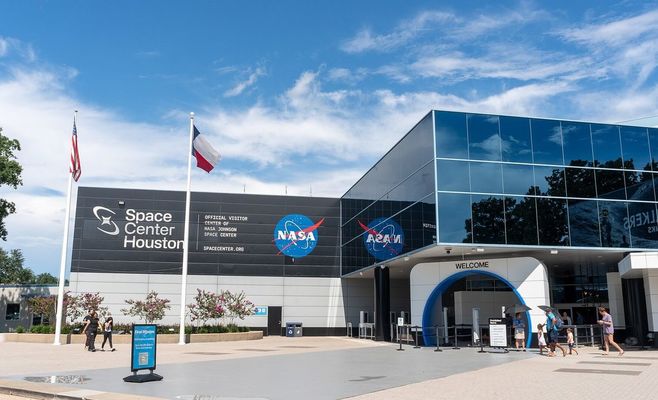
NASA will hold a public homecoming event for the Expedition 74 crew at Space Center Houston at 6 p.m. CST on Tuesday, Nov. 17, the agency announced. Six astronauts and cosmonauts from the Internationa
Physicists Say Gravity Could Break and Reconnect Like the Sun's Magnetic Fields
Gravity may be able to break and reconnect in new arrangements, much like the magnetic fields that power solar flares, according to a new theoretical study reported by ScienceAlert and Live Science. T
Robot Assembles Antenna Structure in Orbit With No Human at the Controls
A robot in orbit has assembled a structure without a human working the controls, which Caltech researchers and DARPA describe as a first for space construction, Space.com reported. The robot built par
Study Blames Millions of Sun Whirlpools for Its Superheated Corona
A new study argues that millions of small whirlpools of hot gas, churning across the Sun's surface, could supply the energy that keeps its outer atmosphere, the corona, far hotter than the surface bel

Related news

Astronomers at Johns Hopkins University say one of the James Webb Space Telescope's puzzling Little Red Dots could have started life as a primordial black hole, a type of black hole that would have formed in the first moments after the Big
Voyager 1, the most distant human-made object, will have traveled one light-day from Earth on Wednesday, Nov. 18, NASA said. That is more than 16 billion miles (25.9 billion kilometers), and it means any light sent from Earth would need 24
NASA will hold a public homecoming event for the Expedition 74 crew at Space Center Houston at 6 p.m. CST on Tuesday, Nov. 17, the agency announced. Six astronauts and cosmonauts from the International Space Station mission will share highl
Gravity may be able to break and reconnect in new arrangements, much like the magnetic fields that power solar flares, according to a new theoretical study reported by ScienceAlert and Live Science. The work comes from physicists Luca Comis
A robot in orbit has assembled a structure without a human working the controls, which Caltech researchers and DARPA describe as a first for space construction, Space.com reported. The robot built part of a reflective antenna, and the finis
A new study argues that millions of small whirlpools of hot gas, churning across the Sun's surface, could supply the energy that keeps its outer atmosphere, the corona, far hotter than the surface below it. Universe Today reported on the pa
NASA's twin ESCAPADE spacecraft have each completed an engine burn close to Earth that is meant to send them on to Mars, Space.com reported. The first probe did it on Nov. 7 and the second followed on Nov. 9, and NASA says both maneuvers we
The Summer Triangle, a famous pattern of three bright stars, has not left the night sky even though summer is long over. According to EarthSky, stargazers in the Northern Hemisphere can find it in November and December, high in the west in
Prestin, a protein inside the inner ear, is drawing attention from two research groups asking different questions. At UConn Health, researchers are testing whether blood levels of prestin can signal tinnitus. At Yale School of Medicine, a n
NASA’s Perseverance rover has detected corundum on Mars, the mineral structure that makes up rubies when it contains chromium. According to a NASA blog post by Roger C. Wiens, the principal investigator for the rover’s SuperCam instrument,
NASA’s Curiosity rover has drilled its 49th hole in Martian rock, a target named Nazca. According to a NASA mission blog written by planetary mineralogist Susanne P. Schwenzer of The Open University in the United Kingdom, the team picked th
Global carbon dioxide emissions from burning oil, gas and coal are projected to fall 0.4% this year, according to the 2026 Global Carbon Budget report. Live Science reported it is the first annual drop in fossil fuel CO2 since the coronavir