Tiny Asteroid Becomes Earth's Mini-Moon, Circling Farther Out Than the Moon
USD 21,70
Popular
Earth has a temporary new companion: a tiny asteroid called 2026 QQ8 that is circling the planet as a so-called mini-moon. According to Meteored's YourWeather, the Minor Planet Center, the clearinghouse for small-body observations run under the International Astronomical Union, confirmed that the object is natural rather than space junk.
The practical takeaway is modest. The rock is too small and too far away to see without professional equipment, it poses no danger, and it will eventually leave. Sources differ on exactly when.
The key numbers behind Earth's mini-moon
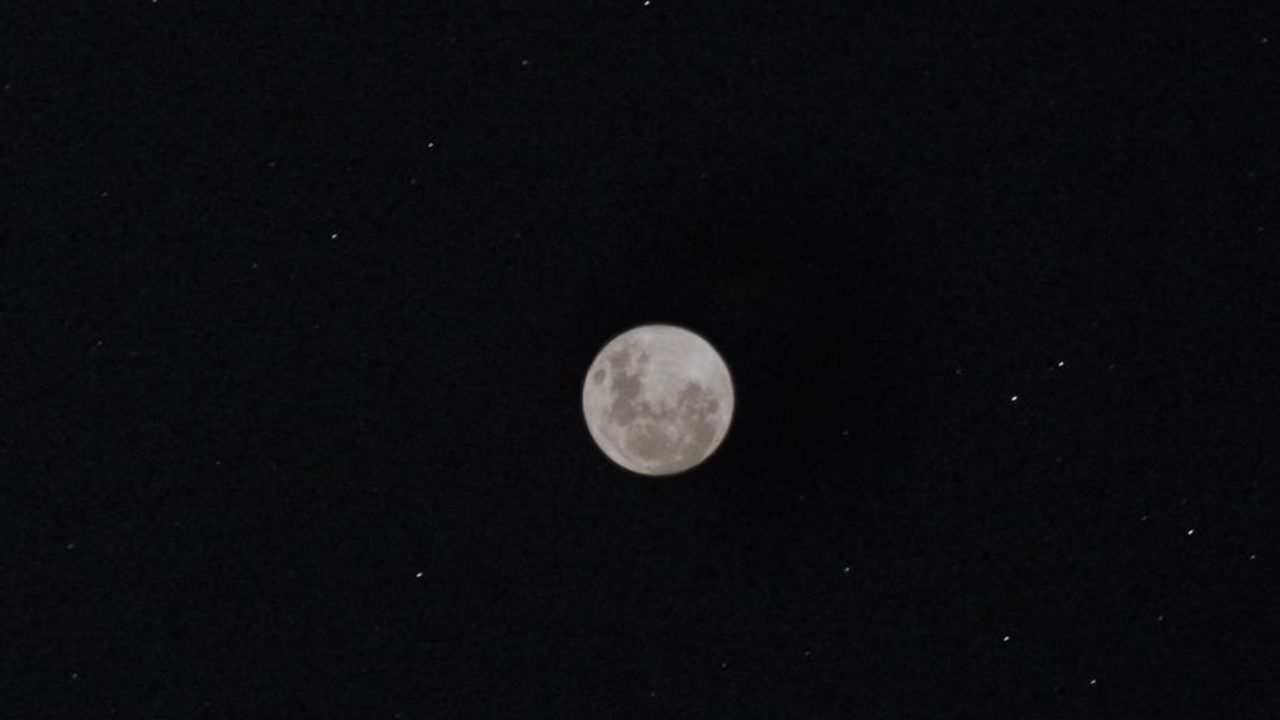
- 1 to 2 meters: the estimated diameter. Meteored and The Independent put it at about 2 meters or one to two meters, while the Daily Star says around 1 meter. For comparison, Meteored notes that the Moon is 3,474 kilometers across.
- Aug. 19: the date Hungarian astronomer Krisztián Sárneczky first observed it at the Piszkéstető Observatory, according to Meteored.
- Late April: when the asteroid is thought to have become bound to Earth, according to Meteored. The Independent and the Daily Star also say the capture happened in April.
- Oct. 29: when the Minor Planet Center published circular MPEC 2026-U95 with the object's orbital data, per Meteored. The Daily Star dates the center's official confirmation to the same day.
- 568,000 kilometers (353,000 miles): the closest the asteroid is expected to come to Earth during its stay, according to The Independent, which says that is about 1.5 times the average Earth-Moon distance.
- 359 days: how long the asteroid takes to orbit the Sun, based on a reconstruction of its path reported by The Independent and the Daily Star.
How a rock this small got caught
Small asteroids that pass near Earth usually carry on around the Sun. Meteored explains that 2026 QQ8's path took it into the Hill sphere, the region where Earth's gravity dominates over the Sun's, which turned it into a temporary natural satellite.
The Independent reports that the object makes a close approach to Earth roughly every 10 years. The Daily Star adds that this is the first time it has been pulled into orbit.
Its identity was not obvious at first. Meteored reports that, because of the way solar radiation pressure affects its motion, astronomers initially could not rule out that it was a fragment of space debris. Further observations from several observatories extended the tracking of its path and settled the question. The Minor Planet Center's monthly bulletin, published the following day according to Meteored, ruled out an artificial origin and described it as a probable temporary mini-moon.
When it leaves is not settled
Reports differ on the departure date. Meteored says orbital calculations show the asteroid remaining bound until approximately December 2026. The Independent says it will complete one and a half revolutions before escaping in 2027. The Daily Star also cites one and a half trips around Earth and says the object will leave as the new year approaches.
Why it matters for readers
For the public, the main points are reassurance and a bit of perspective. Meteored says 2026 QQ8 cannot be seen with the naked eye or amateur telescopes, and that while it is a mini-moon it will be farther from Earth than our Moon. All three outlets say it poses no threat: even on a collision course, the atmosphere would likely destroy it, according to The Independent and the Daily Star.
The discovery also shows that temporary captures are not rare, just hard to spot. The Daily Star and The Independent cite research suggesting Earth could have as many as six mini-moons at any given time. Meteored lists earlier cases including 2020 CD3, 2020 SO and 2024 PTS. The Daily Star adds that modeling this year suggests the average temporary satellite is about 75 centimeters across, which would make 2026 QQ8 larger than typical.
Where such objects may come from
The Independent notes that some mini-moons may be fragments of the Moon itself, thrown into space by impacts. It cites the roughly 40-meter object Kamoʻoalewa, discovered in 2016 as a quasi-satellite of Earth. According to the study's authors, its spectrum closely resembles space-weathered lunar samples, which points to a lunar origin. That finding concerns Kamoʻoalewa, not 2026 QQ8, whose origin the sources do not address.
Read next
Cape Cod Fireball Traced to Meter-Wide Asteroid Jupiter Likely Flung
Moon Rocks That Fell to Earth May Reveal What Apollo Missed
Asteroid Bennu Samples Point to a Birthplace Where Inner and Outer Solar System Met
Around Prague, based on reporting by yourweather.co.uk | Meteored, The Independent, Daily Star