Two Remote Pacific Atolls Teem With Sharks and Turtles, a Rare Look at Intact Reefs
USD 21,70
Popular
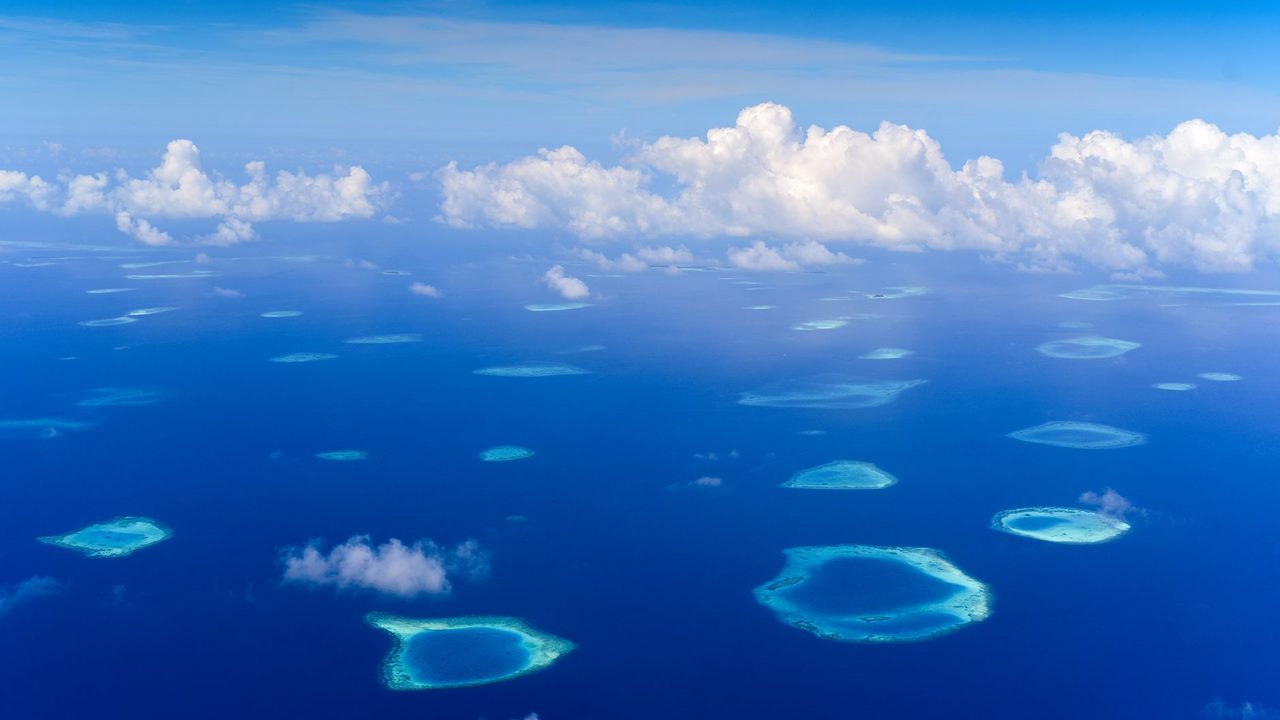
Scientists who surveyed two far-flung coral atolls in the Pacific say the sites hold some of the most intact ocean ecosystems left in the region, according to ScienceAlert's report on a new study in Frontiers in Marine Science. The atolls, Bikar and Bokak, were declared the first national marine sanctuary in the Marshall Islands last year.
The findings come from a 2023 research expedition. The team says the work offers one of the most comprehensive ecosystem assessments yet for remote central Pacific atolls, and gives researchers a rare yardstick for what a relatively healthy tropical sea looks like.
Why these atolls stayed so unspoiled
Marshallese communities have known about Bikar and Bokak for centuries. Their extreme remoteness has helped keep them in good condition: Bikar sits more than 100 kilometers (62 miles) from the nearest inhabited atoll, and Bokak is almost 400 kilometers from people.
Marine ecologist Alan Friedlander of the University of Hawai'i, who worked on the study, credited the community of Utirik Atoll, which he said has traditionally and carefully safeguarded these fragile places for decades. He described the atolls as treasures for the whole planet, not only for the Marshall Islands.
What the expedition found
Surveyors recorded 266 reef fish taxa from 38 families, with more fish biomass at Bokak than at Bikar. Sharks stood out. They made up the largest single share of fish biomass on the outer reef slope: 26.8 percent at Bikar and 33.9 percent at Bokak.
Researchers also went deeper. Using submersibles, they documented 138 fish taxa living at depths of up to 275 meters, and 14 of those groups appeared to be previously unreported for the Marshall Islands. Deep-sea cameras spotted another 79 groups of fishes living even deeper.
On land and along the beaches, the team counted 17 seabird species. They also recorded 71 turtle crawls and 132 turtle nest pits, mostly at Bikar. Friedlander said the atolls combine large seabird colonies, mature native vegetation, active turtle nesting, high reef-fish biomass and large predators. Bokak has coral-dominated reefs, and the deep-sea communities are surprisingly diverse and poorly known, he said.
Not entirely pristine
The researchers are careful not to oversell the result. At the time of the 2023 surveys, both atolls had populations of introduced Polynesian rats. And remoteness cannot shield reefs from warming water, coral bleaching or ocean acidification, which are global trends.
The authors say they use the phrase “relatively intact” as a comparison, not as a claim that remote reefs are pristine or untouched by history. They argue that a reef's condition should be judged by what is actually observed there, not by how far away it is.
A sobering contrast
Just days after surveying Bokak, the expedition moved on to Bikini Atoll, the site of U.S. nuclear tests in the mid-20th century. One expedition member wrote in a field diary that the bombing vaporized three islands and left radioactive contamination that still makes the atoll uninhabitable. The first dives there found some fish and a few patches of live coral, but also a lot of pulverized, dead reef.
Why it matters
Most coral atolls no longer look like Bikar and Bokak, ScienceAlert noted, because of human activity. That makes these two sites valuable as reference points. Friedlander said they are among the best ecological benchmarks available for understanding what has been lost elsewhere, and they can offer basic insights for conservation and restoration work.
For readers, the study is a reminder of what a healthier ocean can support, from shark-rich reefs to busy turtle beaches, and of how little of that remains. The sanctuary status, which the expedition's fieldwork helped secure, means the atolls now have formal protection.
Read next
Nearly All Shallow-Water Coral Reefs Face Collapse by 2075, IUCN Warns
Colombian Fossils Show Giant Sea Reptiles and Sharks Sharing an Ocean as Eras Shifted
Woman, 65, Killed by Shark Off South Africa's Eastern Cape; Two Beaches Shut
Around Prague, based on reporting by ScienceAlert