Science & Space By

Webb Peers Through Dust to Reveal Young Stars Hidden in a Stellar Nursery
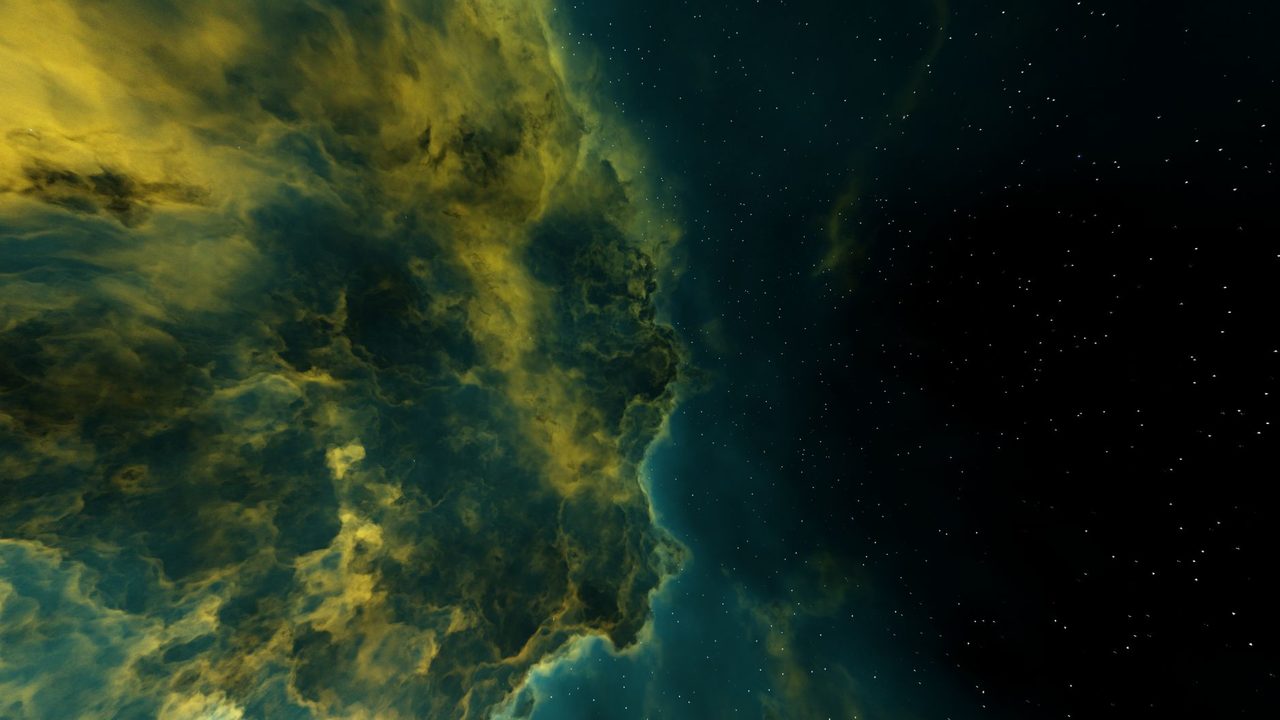
The James Webb Space Telescope has released a new image of NGC 7129, a stellar nursery about 3,300 light-years from Earth in the constellation Cepheus. Thick clouds of dust normally hide the youngest stars there, but Webb's infrared instruments can see through them, Universe Today reported, citing NASA.

The picture shows many stars that had been out of sight, and astronomers say it is already helping them understand how new stars form and change over time. The telescope is a joint project of NASA, the European Space Agency and the Canadian Space Agency.

Why stars are hard to see while they are being born

Stars begin their lives inside dense molecular clouds, which are cold collections of gas and dust also known as nebulae. Inside these cocoons the material slowly clumps together and gains mass. Eventually gravity makes it collapse, and a star is born.

Because of all that dust, young stars are often impossible to spot with telescopes that cannot detect infrared light. Webb is sensitive to the near- and mid-infrared parts of the spectrum, which allowed astronomers to look inside NGC 7129. They found many stars that are less than 1 million years old.

A crowded cluster with a dominant central star

More than 130 stars have been identified in the cluster. They are at different stages of development, depending largely on their mass, since more massive stars evolve faster and leave the main sequence sooner.

The most massive and most mature of them is the region's central star, LkH(alpha) 234. It is a pre-main-sequence star of about 5 to 8 Solar masses. Stars at that stage have mostly finished collecting mass and begin fusing hydrogen in their interiors soon afterward.

How the newborn stars are reshaping their surroundings

As the central star heats up, it warms the nearby gas and dust and lights them enough that astronomers can see into the cloud. In the Webb image, hot atomic hydrogen gas shows up as a golden region on the left. Cooler gas that has been struck by outflows from protostars still buried in the cloud appears red on the right, and smaller clouds linger in the upper left.

Outflows tied to the birth of LkH(alpha) 234 also carved the cavity on the left side of the image. Their shock largely scattered the hydrogen gas, but it squeezed some regions as well, and that compression caused additional stars to form inside the cavity.

Several of those stars are also pre-main-sequence stars, and they give off stellar winds. The winds create bow shocks nearby, which in turn open smaller cavities. The winds also press against the colder, denser gas outside the main cavity, producing the sharp ridge visible at the top of the image. Past the cavity, that pressure forms a boundary called the photodissociation region, where hydrogen molecules are split into atoms.

In the upper left, a bright blue nebula is lit by a protostar that is surrounded by a torus-shaped disk of material, with outflows visible close by.

What this means for the study of star formation

The image builds on earlier observations of NGC 7129 by NASA's Spitzer Space Telescope, which has since been retired. A comparison of the two shows that Webb's sharper resolution reveals more detailed filaments of gas and dust, along with many background galaxies.

That detail matters because it lets researchers see how stars at different stages affect the clouds that formed them. According to the report, continued study of the region should offer insight into how these stars and protostars shape their surroundings and, over the coming eons, gradually erode the molecular clouds.

For general readers, the image is a look at an early chapter in the life of stars, the kind of process that once produced stars like the Sun, though the sources do not draw that comparison. The data come from one region, so astronomers will likely compare it with others to see how widely the findings hold.

Around Prague, based on reporting by Universe Today
Share: Telegram WhatsApp

More science news

Physicists Find a Math Fix for Time-Travel Paradoxes, With a Catch
Two physicists at the University of New Hampshire have built a gravity model in which time can only run forward, which would rule out looping back into your own past. The catch, according to ScienceAl
Tiny Asteroid Becomes Earth's Mini-Moon, Circling Farther Out Than the Moon
Earth has a temporary new companion: a tiny asteroid called 2026 QQ8 that is circling the planet as a so-called mini-moon. According to Meteored's YourWeather, the Minor Planet Center, the clearinghou
Dire Wolves Weren't Really Revived, Researchers Say: They Were Edited Gray Wolves
The dire wolf was not brought back from extinction, two U.S. scientists argue in a new paper. According to ScienceAlert, the animals that biotech company Colossal Biosciences announced in 2025 were gr
Astronomers Map Cosmic Hydrogen From 4.5 Billion Years Ago in a First
Astronomers have made the first direct measurement of the large-scale structure of cosmic hydrogen, the gas that fed the first stars and galaxies, according to Universe Today. The team from the MeerKL
A Hot Jupiter Vanished From View After Seven Years. A Hidden Planet Did It
A giant planet that astronomers had tracked for seven years has dropped out of sight, and a new study says the cause is a second, unseen planet pulling it off course. The world, called TOI-2535 b, is
Telescope Finds a 26-Light-Year Gas Jet, Hinting at a Black Hole Next Door
A team of Japanese astronomers has found a jet of cold molecular gas stretching 26 light-years from LMC P3, a strong gamma-ray source in the Large Magellanic Cloud, according to Universe Today. The fi

Related news

Two physicists at the University of New Hampshire have built a gravity model in which time can only run forward, which would rule out looping back into your own past. The catch, according to ScienceAlert, is that the model is unstable in it
Earth has a temporary new companion: a tiny asteroid called 2026 QQ8 that is circling the planet as a so-called mini-moon. According to Meteored's YourWeather, the Minor Planet Center, the clearinghouse for small-body observations run under
The dire wolf was not brought back from extinction, two U.S. scientists argue in a new paper. According to ScienceAlert, the animals that biotech company Colossal Biosciences announced in 2025 were gray wolves with a handful of dire wolf tr
Astronomers have made the first direct measurement of the large-scale structure of cosmic hydrogen, the gas that fed the first stars and galaxies, according to Universe Today. The team from the MeerKLASS Collaboration says the hydrogen foll
A giant planet that astronomers had tracked for seven years has dropped out of sight, and a new study says the cause is a second, unseen planet pulling it off course. The world, called TOI-2535 b, is about 1,000 light-years away. According
A team of Japanese astronomers has found a jet of cold molecular gas stretching 26 light-years from LMC P3, a strong gamma-ray source in the Large Magellanic Cloud, according to Universe Today. The finding strengthens the case that the obje
Astronomers at Johns Hopkins University say one of the James Webb Space Telescope's puzzling Little Red Dots could have started life as a primordial black hole, a type of black hole that would have formed in the first moments after the Big
Voyager 1, the most distant human-made object, will have traveled one light-day from Earth on Wednesday, Nov. 18, NASA said. That is more than 16 billion miles (25.9 billion kilometers), and it means any light sent from Earth would need 24
NASA will hold a public homecoming event for the Expedition 74 crew at Space Center Houston at 6 p.m. CST on Tuesday, Nov. 17, the agency announced. Six astronauts and cosmonauts from the International Space Station mission will share highl
Gravity may be able to break and reconnect in new arrangements, much like the magnetic fields that power solar flares, according to a new theoretical study reported by ScienceAlert and Live Science. The work comes from physicists Luca Comis
A robot in orbit has assembled a structure without a human working the controls, which Caltech researchers and DARPA describe as a first for space construction, Space.com reported. The robot built part of a reflective antenna, and the finis
A new study argues that millions of small whirlpools of hot gas, churning across the Sun's surface, could supply the energy that keeps its outer atmosphere, the corona, far hotter than the surface below it. Universe Today reported on the pa