Science & Space By

Your Brain May Flicker Between What You See and Don't Notice 15 Times a Second

Your brain may be quietly switching between the image you are aware of and one that never reaches your awareness, about 15 times every second. That is the suggestion of a new preprint study in macaque monkeys and humans, reported by ScienceAlert. The work has not yet been peer-reviewed, and it rests on a very small number of animals.

The research was led by neuroscientists Janis Hesse and Doris Tsao of the University of California, Berkeley. It targets a basic puzzle: at any moment, only part of the brain's activity becomes conscious experience, while the rest is processed without being felt. The team described how that split arises as one of the most basic unsolved problems in neuroscience.

Why researchers looked at time instead of place

For decades, scientists have searched for the brain regions that become active when a person consciously perceives something. A problem emerged along the way: the same regions can also respond to stimuli that people never notice. Hesse and colleagues asked whether the search had focused on the wrong dimension. Instead of asking where in the brain the difference lies, they asked whether it shows up in how activity changes over time.

How the experiment worked

The team used a classic trick called binocular flash suppression. The macaques wore anaglyph glasses, the kind with one red and one cyan lens, so that each eye saw a different image. One face was shown to one eye. While it stayed in place, a second face was suddenly shown to the other eye.

Rather than seeing both faces, the brain tends to favor the newly introduced one and push the first out of awareness. The first face is still reaching the eye, but it is no longer consciously perceived. Because the monkeys could not report what they saw, humans were recruited to confirm that the second face dominates conscious perception with this method.

The researchers then recorded electrical activity from hundreds of neurons at once, using tiny electrodes placed in visual areas, including regions that specialize in recognizing faces. They found one pattern of activity linked to the first face and another linked to the second.

What they found

Although the second face was expected to dominate, the neurons did not hold steadily to it. Their activity alternated rapidly between the face that was consciously perceived and the one suppressed from awareness, roughly 15 times a second. In the moments when a face was consciously perceived, neurons also responded more sharply to its features than they did to the suppressed face during the suppressed moments. That hints that the brain has a way to tell the two states apart even as it switches between them.

The study does not explain how the brain decides which information reaches consciousness. The authors speculate that the rapid switching may let the brain weigh alternative interpretations of a scene without changing what a person is currently doing.

What this means for how we think about experience

The result suggests that the smooth, steady view of the world you experience may be built on fast and complex activity that you never notice. It also raises the possibility that something other than what is visually available helps shape what you consciously see.

The limits are important. Only two macaques took part, and their conscious perception had to be inferred from the human experiments. The researchers also looked only at specific visual regions, not the whole brain. Until the findings are reviewed and repeated, they are best read as an intriguing early signal rather than a settled description of how awareness works.

Around Prague, based on reporting by ScienceAlert
Share: Telegram WhatsApp

More science news

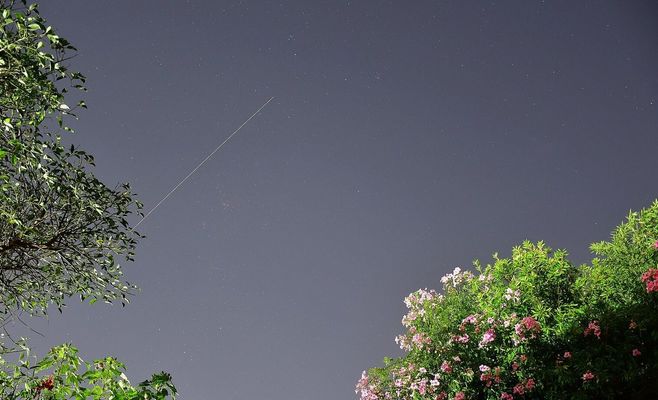
Leonid Meteors Peak Nov. 17, but a Storm Isn't Expected This Year
The Leonid meteor shower peaks on Nov. 17 at about 3:00 Universal Time, and the Moon is cooperating this year, according to Universe Today. Forecasters expect only a modest show of roughly 20 meteors
Earth’s Own Air Fueled 85% of Particles in May 2024 Solar Superstorm
Earth’s own atmosphere may have helped turn the May 2024 solar storm into one of the most powerful in decades, according to a study in Science Advances. Satellite measurements showed that roughly 85%
Superheated Magma Held Off Crystals for Over Eight Hours in Lab Tests
Magma that is heated beyond the point where its crystals would normally stay stable can go for more than eight hours without forming new crystals, according to a University of Manchester-led study. In
Earth Has a New Minimoon, a 6-Foot Rock That Will Orbit Into 2027
Earth has a temporary new companion. Astronomers have confirmed that a tiny asteroid called 2026 QQ8 was pulled into orbit around the planet in April, and it is expected to stay until January 2027, Li
SpaceX's Starship Push Could Leave NASA Without a Ride to the ISS
SpaceX is preparing its most ambitious test yet of Starship, its giant new rocket, and the company's own plans could leave NASA with a problem, NPR reported. As SpaceX shifts resources to Starship, it
Euclid Telescope Releases Map of Over 900 Million Galaxies
The European Space Agency's Euclid space telescope released its first major batch of data on Thursday, Nov. 12, capturing light from more than a billion objects across a huge stretch of sky, Space.com

Related news

The Leonid meteor shower peaks on Nov. 17 at about 3:00 Universal Time, and the Moon is cooperating this year, according to Universe Today. Forecasters expect only a modest show of roughly 20 meteors per hour, not the dramatic storm the sho
Earth’s own atmosphere may have helped turn the May 2024 solar storm into one of the most powerful in decades, according to a study in Science Advances. Satellite measurements showed that roughly 85% of the charged particles fueling the dis
Magma that is heated beyond the point where its crystals would normally stay stable can go for more than eight hours without forming new crystals, according to a University of Manchester-led study. In the same experiments, magma that had no
Earth has a temporary new companion. Astronomers have confirmed that a tiny asteroid called 2026 QQ8 was pulled into orbit around the planet in April, and it is expected to stay until January 2027, Live Science reported. The object is about
SpaceX is preparing its most ambitious test yet of Starship, its giant new rocket, and the company's own plans could leave NASA with a problem, NPR reported. As SpaceX shifts resources to Starship, it has said it will stop flying the smalle
The European Space Agency's Euclid space telescope released its first major batch of data on Thursday, Nov. 12, capturing light from more than a billion objects across a huge stretch of sky, Space.com reported. The release, called DR1-Found
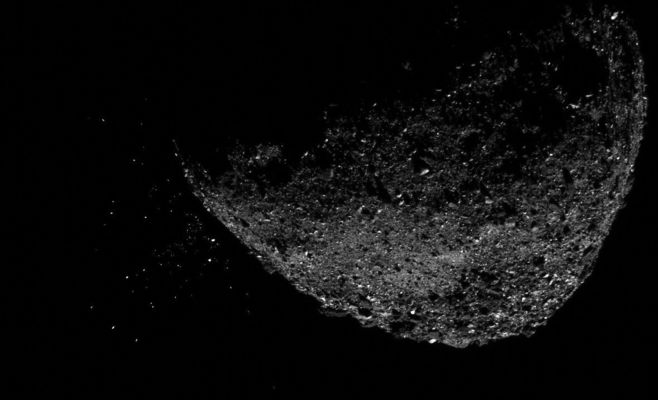
A new study of asteroid Bennu's sample has turned up a surprise inside a single molecule, according to Universe Today. Researchers at Penn State measured the carbon in a molecule called beta-alanine from Bennu and from the Murchison meteori
Scientists have set a new record for the coldest temperature ever recorded, according to Live Science: 10 picokelvins, barely above absolute zero. The measurement came from an experiment aboard China's Tiangong space station, where a laser
Researchers have documented 280 Paleolithic motifs engraved on the walls of Cova de la Font Major, a cave in Catalonia, northeastern Spain, ScienceAlert reported. The figures sat in plain view for decades while cave enthusiasts, treasure hu
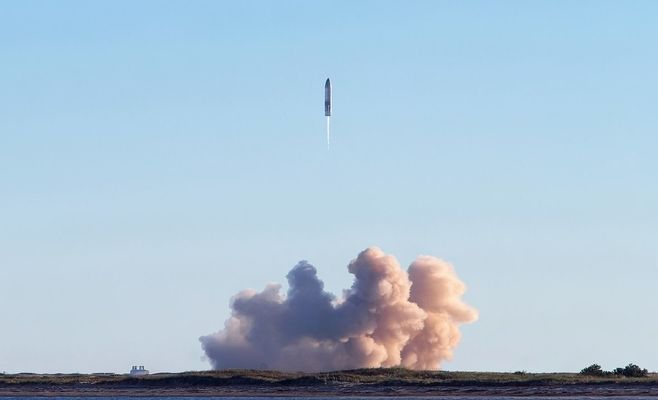
SpaceX is aiming to launch its Starship megarocket on its 15th flight test as soon as Friday, Nov. 13, and the mission may give people across much of the United States something to look up for. Space.com reported that the upper stage, calle
A team of physicists led by researchers at Shanxi University in China says it has found a way to get around a quantum measurement limit that has stood since 1927, by using information from both before and after the moment being measured, Sc
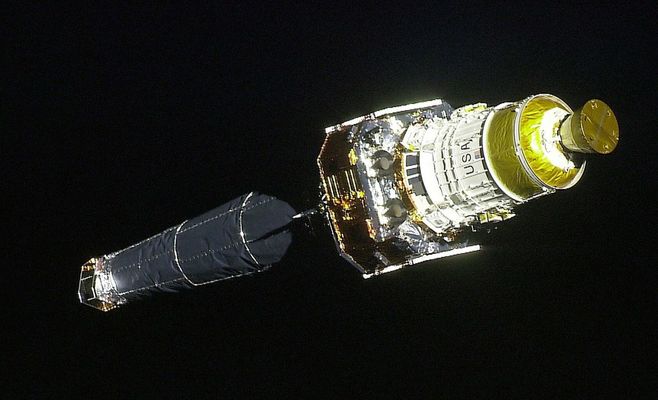
A star that has imitated a supernova 27 times and counting is being drained by an unseen companion, either a black hole or a neutron star, according to Space.com. NASA's Chandra X-ray Observatory caught the telltale X-rays that point to the