Scientists find chimpanzees hug and comfort each other before stress — just like humans
USD 21,01
Popular
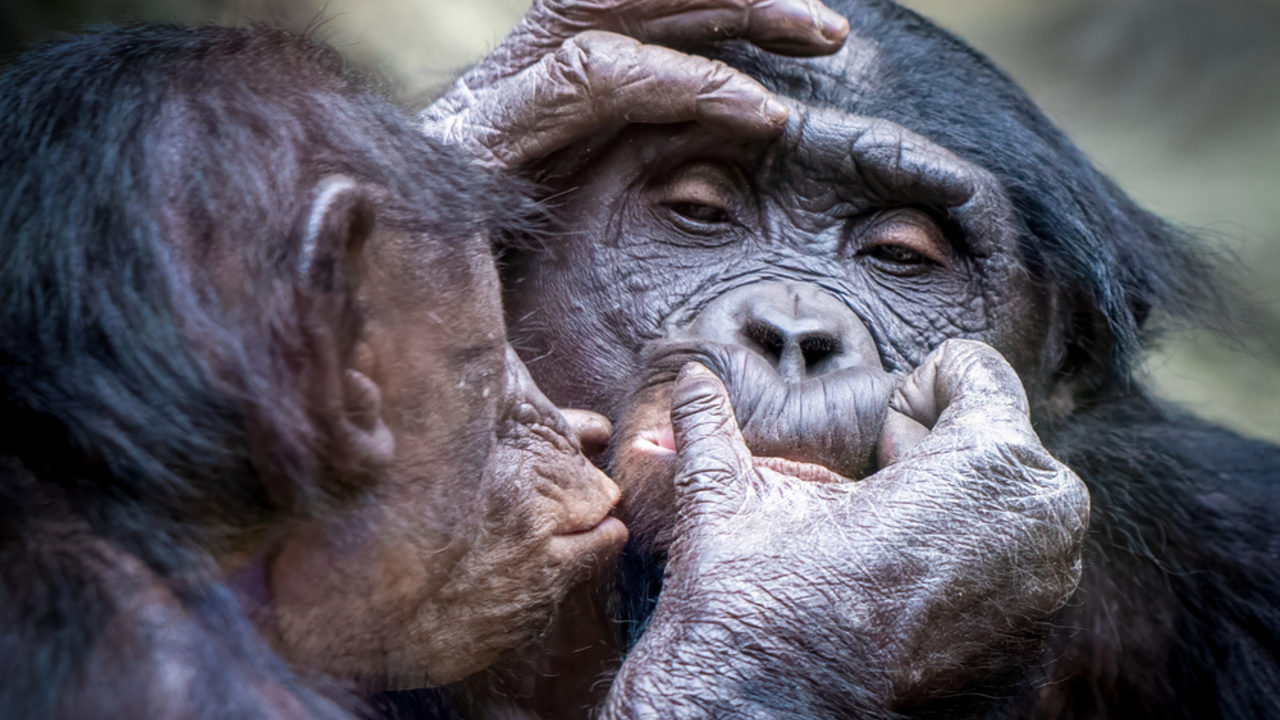
Researchers have discovered that chimpanzees and bonobos gather together before stressful situations, calming one another with touches, hugs and kisses — behaviour that echoes footballers huddling up and patting each other on the back before a match.
According to researcher Zanna Clay, this kind of behaviour could be described as a primate version of a "battle cry." She explains that the animals essentially prime one another for an upcoming challenge through physical contact.
Scientists observed two species of the chimpanzee genus in reserves in Congo and Zambia. For the experiment, researchers used peanuts to mimic the natural foraging process seen in the wild. They recorded the primates' behaviour during the five minutes before the animals were given the nuts — and it was precisely in this window that the highest number of calming contacts, including touching, hugging and kissing, was observed.
According to the study, individuals who touched and embraced each other more often had a better chance of gaining access to food and were able to eat calmly alongside their group mates. Meanwhile, in more tolerant groups, the level of calming contact was noticeably higher, including instances where primates took turns hugging one another.
"Comparing bonobos and chimpanzees — our two closest living relatives — gives us a fascinating window into the evolutionary roots of social behaviour, and into how they, and we, cope with tension, competition and cooperation," said researcher Jake Brooker. In his view, mutual touch is one of the oldest forms of communication, likely predating speech itself.
Scientists believe that using touch to build trust and cooperation may have emerged at least seven million years ago — even before the evolutionary paths of humans and chimpanzees diverged from a common ancestor. In other words, when footballers huddle together before a game or embrace a teammate, they may well be drawing on a social toolkit that is millions of years old.
The findings were published in the scientific journal Proceedings of the Royal Society B: Biological Sciences.
Source: ekolist.cz