Scientists Propose Draining the Lower Reservoir of Nové Mlýny — Local Mayors Have No Objections
USD 21,04
Popular
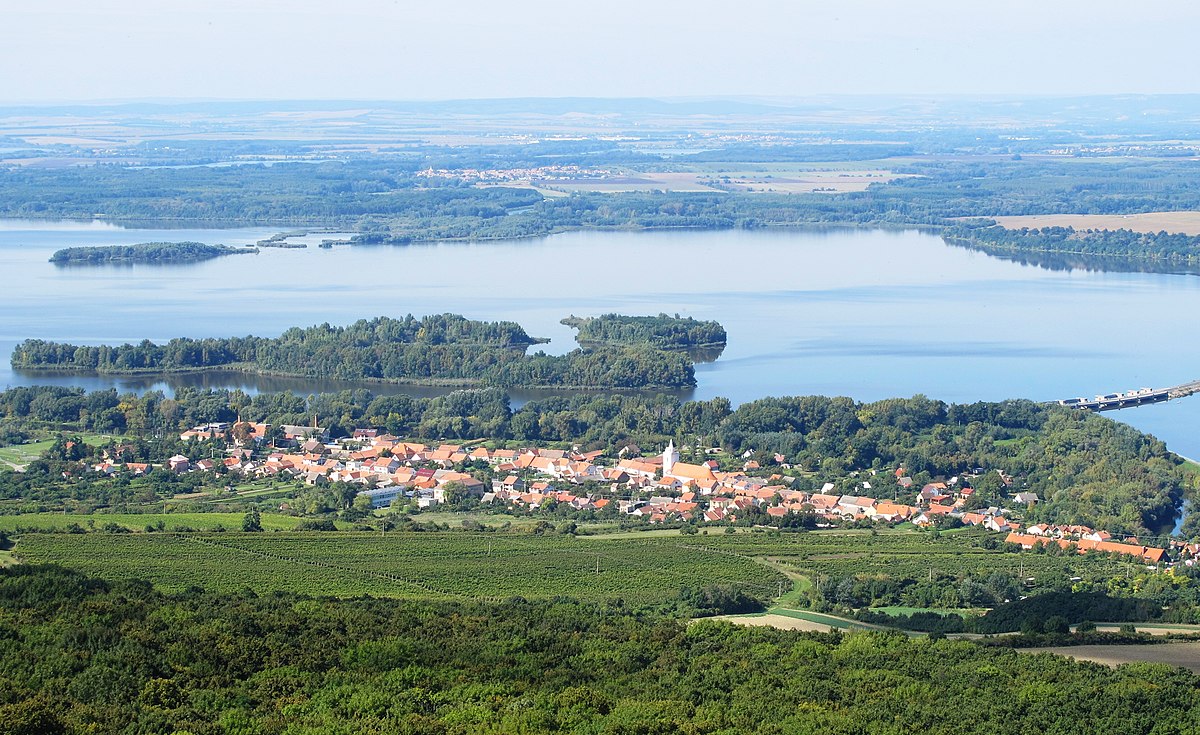
Mayors of the South Moravian villages near the Nové Mlýny reservoirs have raised no objections to scientific proposals to drain the lowest of the system's three reservoirs, which in recent years has earned a reputation as a breeding ground for blooming blue-green algae.
The idea of holding a broad public discussion involving experts is backed by one of the advocates of draining the water — ecologist and botanist Christoph Hitry of the University of Vienna. His opinion carries weight with Jaroslava Reichlová, mayor of Dolní Věstonice and a member of the "Věstonice Association." "My husband and I collaborate with him on several 'green' projects. These are intelligent people, not eco-terrorists in the least. I'd have no problem with draining the water. The blue-green algae get worse every year — it's a stinking sludge," Reichlová said, describing the water quality.
According to her, tourists don't come to the area for the water itself, but for the wine and cycling routes. She and another local mayor, Mikáčová, agree that the unpleasant smell is only noticeable right at the water's edge, and can no longer be detected in the village itself. Each year, the reservoirs turn green for several weeks or months due to algae blooms.
Both mayors recalled that some local residents once opposed the construction of the reservoirs, which gradually flooded unique floodplain forests during the 1970s and 1980s. "Even our first post-revolution mayor was against it," Mikáčová said. They also mentioned the mosquitoes — an inseparable part of life near floodplain forests, which virtually disappeared once the reservoir was filled.
At the same time, villagers themselves don't seem particularly interested in the reservoirs' future. "If I don't bring up the topic myself, nobody discusses it," Mikáčová admitted. According to the mayor of Dyjákovice, there hasn't been any discussion in his village yet, though he believes the topic is bound to come up on the agenda soon.
The Nové Mlýny reservoirs were fully filled by 1989 and were built as flood protection and a reserve of irrigation water. In practice, however, they barely serve the second purpose. Although the three-reservoir system is formally the second-largest body of water by surface area in Czechia, its shallow depth — no more than about seven meters — means the actual volume of stored water is comparable to reservoirs such as Vranov or Dalešice.
Read also: Prague Metro: map and tickets
Source: ekolist.cz