Senior Council Representative: Pensioners Don't Want Benefits at Their Grandchildren's Expense
USD 20,98
Popular
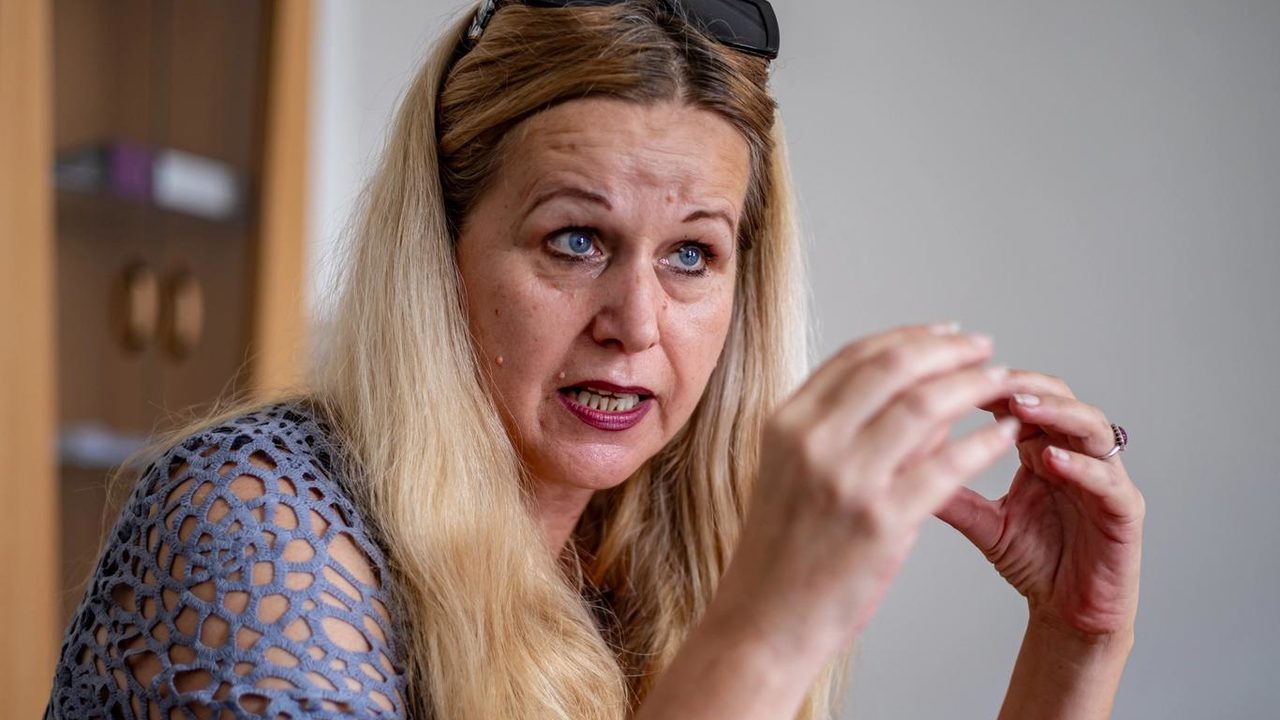
Ahead of the elections, the Czech governing parties promised pensioners better pension increases and discounted fares, but delivering on these pledges has stalled, and some have already been quietly abandoned. Lenka Desátová, a representative of the Senior Council, commented on the situation.
According to her, the question of discounted transport for older people isn't even being seriously discussed yet, and the organisation itself takes a reserved view of the idea. "Many of our members say themselves that they don't want to receive benefits at the expense of their grandchildren," Desátová noted, adding that abroad, too, the biggest transport discounts usually go not to pensioners but to students.
Fare discounts and road safety
Regions support the idea of discounted travel for seniors mainly as a way to keep older people from driving themselves as much. It's not that they drive badly, Desátová explains, but that because of physical frailty they suffer more serious injuries in accidents than younger drivers — something confirmed by insurance company data. As a result, elderly patients end up in hospital more often or spend long periods in long-term care facilities, since the Czech Republic lacks enough specialised geriatric beds. In the Senior Council representative's view, it would be worth calculating what savings discounted fares could bring to the healthcare and social welfare systems, rather than treating the measure purely as a gift to pensioners.
Pension indexation and the promised thousand crowns
The Senior Council is also keeping an eye on the promise to factor in half of real wage growth when indexing pensions. Even then, wages would still rise faster than pensions, but the gap should narrow more slowly, Desátová explains: pensioners' real incomes are already falling, and a growing burden on the social system benefits no one. This measure hasn't been adopted yet, but the organisation doesn't see this as a disaster — to calculate real wage growth adjusted for inflation, wages first need to return to pre-inflation-spike levels, which hasn't happened yet.
What worries pensioners far more is another campaign promise — to return the thousand crowns they missed out on due to past extraordinary pension indexations. According to Desátová, talk of this has quieted down recently, and there's no sign of movement so far. She notes, however, that the current government has only been in office for six months and still has time before the next election to make good on the promise.
Employment for pensioners and the transition to retirement
Employment for older people is a separate issue. A five percent discount on social insurance contributions for employers hiring pensioners remains in place, but Desátová believes it's still too complicated administratively to implement effectively. In her view, this measure needs to be tied to a broader reform of flexible working arrangements — something needed not only by pensioners but also by people over fifty, many of whom turn to counselling centres unable to find reduced-hour work due to health issues or caring for relatives.
It is precisely this shortage of part-time positions that often pushes people nearing retirement age to take early retirement, the Senior Council representative notes. The problem, she says, lies in the labour market model itself: employers still tend to think in terms of an eight-hour working day, splitting it at most into two half-time positions, even though there is demand — among parents of young children, for example — for 0.8 full-time-equivalent roles. The organisation is often approached by disillusioned pensioners who agreed to reduced hours but ended up doing almost a full workload for half the pay.
Financial preparation for old age
As for financially preparing for retirement, Desátová says that not everyone can realistically afford to set money aside for old age — if most of one's income goes toward a mortgage or raising children, building up a meaningful reserve simply isn't possible. And those who have managed to save are often extremely reluctant to spend it: a common explanation is that the money is set aside for a funeral, so as not to burden relatives. In reality, someone who has spent their entire working life putting aside part of their income can't simply drop that habit in retirement.
This caution among pensioners is holding back the development of social assistance, since the state assumes that families will cover the costs. But families have their own children and housing expenses, and now they're also expected to save for the future pensions of their members, given that calculated pensions are set to decline. Desátová points to a contradiction in the ideas currently being discussed — that families should also pay for an elderly relative's stay in a care home: the same money can't be used for several purposes at once. Such an approach temporarily eases the burden on the social system, but it builds future poverty into today's contributors and undermines intergenerational solidarity within the family itself.
Read also: Extension of temporary protection in Czechia for Ukrainians
Source: denik.cz