The Secret to Perfect Brownies: Why Just One Minute in the Oven Changes Everything
USD 21,23
Popular
The American chocolate dessert known as brownies won over cafés and home kitchens worldwide back at the turn of the 20th century, and it has remained one of the most beloved treats ever since — including in Czech households, where it has become synonymous with true chocolate indulgence.
At first glance, brownies might look like ordinary chocolate squares, but their texture is something else entirely: dense and moist, with a thin, crackly top crust and a soft, almost fudgy center. The ingredient list, meanwhile, is surprisingly short — good-quality dark chocolate, butter, sugar, eggs and just a little flour.
Unlike most baked goods, where flour takes center stage, brownies are all about melted chocolate and butter, which is why the dessert turns out rich and dense rather than light and fluffy — and that's exactly what makes it so beloved.
Experts advise melting the chocolate and butter gently, ideally over a double boiler, to avoid any sudden temperature shock to the mixture. The eggs and sugar should be whisked until pale and fluffy, and the flour and cocoa should always be sifted to prevent lumps. But the crucial step comes at the end: folding the flour into the chocolate mixture must be done very gently with a spatula. Overmix the batter, and instead of a tender dessert, you'll end up with a dense, rubbery block after baking.
The key detail that separates a perfect brownie from a dry disappointment is baking time. The dessert is baked at a relatively low temperature — between 150 and 180 degrees Celsius — and here the golden rule applies: it's better to pull it out a minute too early than a minute too late. Doneness is tested with a wooden skewer: it shouldn't come out completely clean from the center — a few moist crumbs should still cling to it, though not raw batter. If the skewer comes out perfectly clean, the moment has already passed, and the brownie will be overbaked.
Once baked, brownies need time to rest — first cooling in the pan, then sitting for several more hours to fully set. Only then should they be cut into neat squares that hold their shape and keep that signature texture.
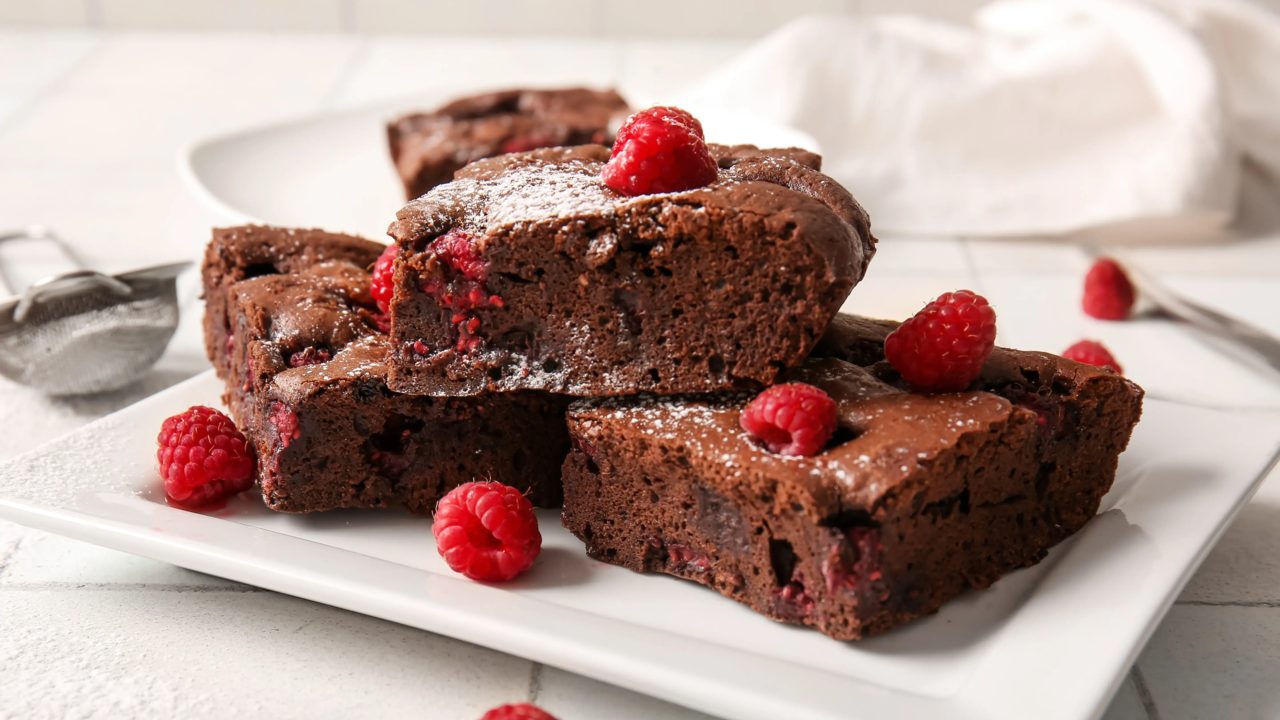
The classic version is delicious on its own, but brownies also lend themselves beautifully to experimentation: fans of crunch add walnuts, pecans or hazelnuts, while chunks of chopped chocolate create little molten pockets throughout the batter. For those who love a contrast of flavors, freeze-dried raspberries or strawberries are worth trying — their tartness beautifully offsets the rich sweetness of the chocolate.
The dessert can be served simply, with a light dusting of cocoa alongside a cup of coffee, or restaurant-style — warm, topped with a scoop of real vanilla ice cream, since the contrast of hot and cold is a proven winning combination. A pinch of flaky salt on top or fresh berries on the plate also do wonders for highlighting the chocolate flavor. And although brownies are now sold in nearly every modern café, homemade ones are still the best — all you need is quality ingredients, a bit of baking intuition, and the courage to take the pan out of the oven at just the right moment.
Source: apetitonline.cz