Total Solar Eclipse Dazzles Spain — Stunning Photos
USD 21,01
Popular
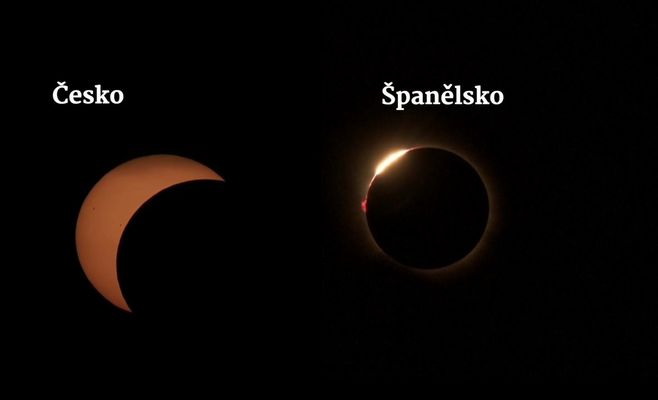
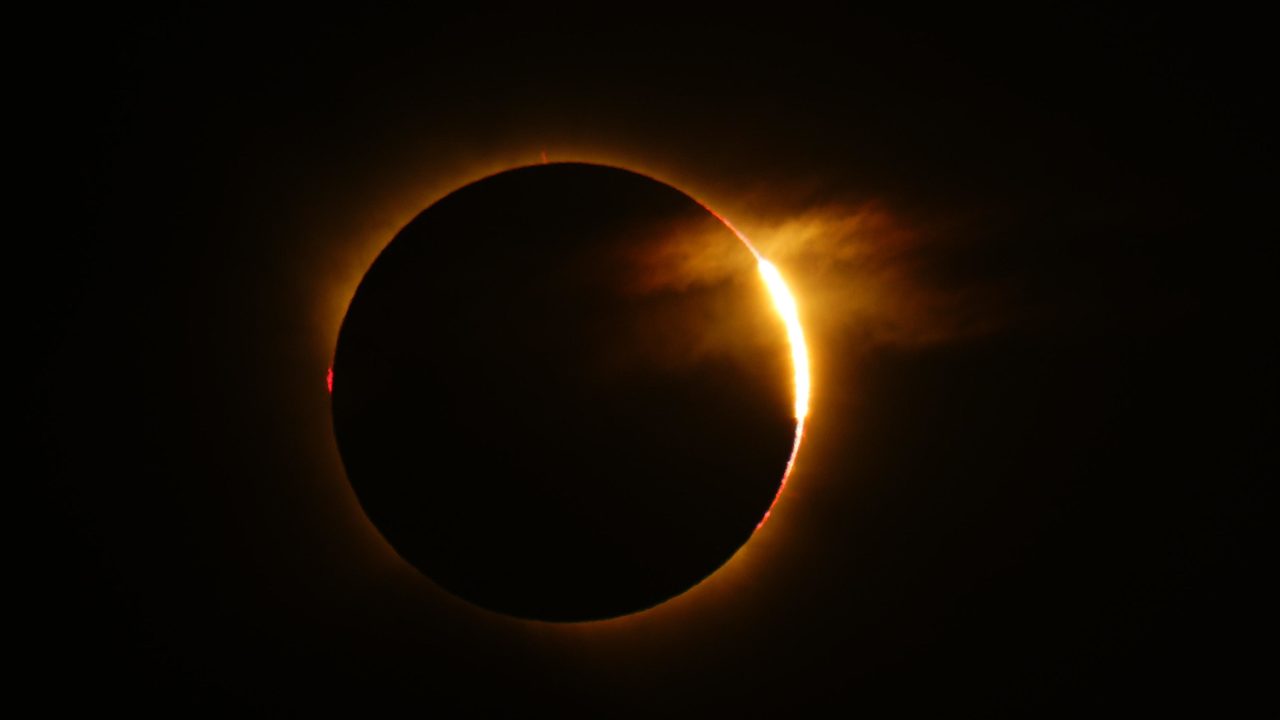
Residents of Spain witnessed a rare natural spectacle this week — a total solar eclipse, during which the Moon completely blocked out the Sun's disk. The path of totality also swept across Iceland and Greenland, while other regions, including Czechia, only saw a partial eclipse.
How an eclipse happens
A solar eclipse is the result of a remarkable astronomical coincidence. The Moon is roughly 400 times smaller than the Sun in diameter, but it also sits about 400 times closer to Earth — which means the two bodies appear almost exactly the same size in our sky.
An eclipse occurs when, during a new moon, the Moon passes directly between the Earth and the Sun, casting its shadow onto the planet's surface. Observers within the narrow band of full shadow, known as the path of totality, witness a total eclipse, while those in the wider surrounding area, touched by only part of the shadow, see a partial eclipse, in which the Moon covers just a portion of the Sun.
The phenomenon is rare because the Moon's orbit is tilted relative to the plane of Earth's orbit around the Sun. Most of the time, the Moon passes slightly above or below the Sun in the sky. An eclipse can only occur when a new moon coincides with the point where the Moon's orbit crosses Earth's orbital plane.
Why you should never look without protection
Looking directly at an eclipse is dangerous — sunlight can damage the retina within just a few minutes of continuous exposure. Safe viewing requires special eclipse glasses, a filter from an observatory, or a darkened welder's glass. It's possible to film the event on an ordinary phone, but without a proper filter or film, the footage will likely turn out uninformative, or worse, the camera lens itself could be damaged.
Was there a noticeable temperature drop?
According to calculations by the numerical modelling department of the Czech Hydrometeorological Institute, in Czechia itself — for example, at the station in Tušimice — temperatures during the eclipse dropped by just 0.2 degrees. In Western Europe, including the UK, the cooling effect could reach around one degree. The most significant drop was felt within the path of totality itself: in Spain, temperatures may have fallen by up to five degrees, with an even sharper dip in Greenland.
The eclipse's unusual path — sweeping through Spain, Iceland and Greenland — is explained by the fact that the Earth is round and constantly rotating, causing the Moon's shadow to essentially "race" across its surface.
Source: novinky.cz