"We Saved Football": The World Slams Argentina's Dirty Tactics After World Cup Final
USD 21,04
Popular
The World Cup final at MetLife Stadium ended with Spain defeating Argentina, but instead of handshakes and congratulations, the final whistle triggered a brawl on the pitch — Leandro Paredes threw punches at Spanish players' faces, unable to accept the loss.
According to match statistics, Spain outshot their opponents on target 12:0, and in total attempts 22:2. Argentina only began to threaten Spain's goal in stoppage time of extra time, past the 120th minute. Lionel Messi broke down in tears, realizing he would not be able to defend his world champion title.
Spanish outlet Marca summed up the result this way: "This wasn't just about winning the World Cup. This was about saving football — and we saved it." The paper noted that Argentina had relied on gritty late comebacks throughout the tournament — against Egypt in the round of 16 and against England in the semifinal — but in the decisive match, the team simply abandoned any attempt to score, betting entirely on spoiling the game and running down the clock.
Former Italian striker Giuseppe Rossi called the match "the most one-sided final in World Cup history." Germany's former world champion Toni Kroos summed it up in two words: "Football won." British outlet The Telegraph wrote of a "victory over Argentine crimes," while The Times declared: "Spain's method proved stronger than Argentina's madness."
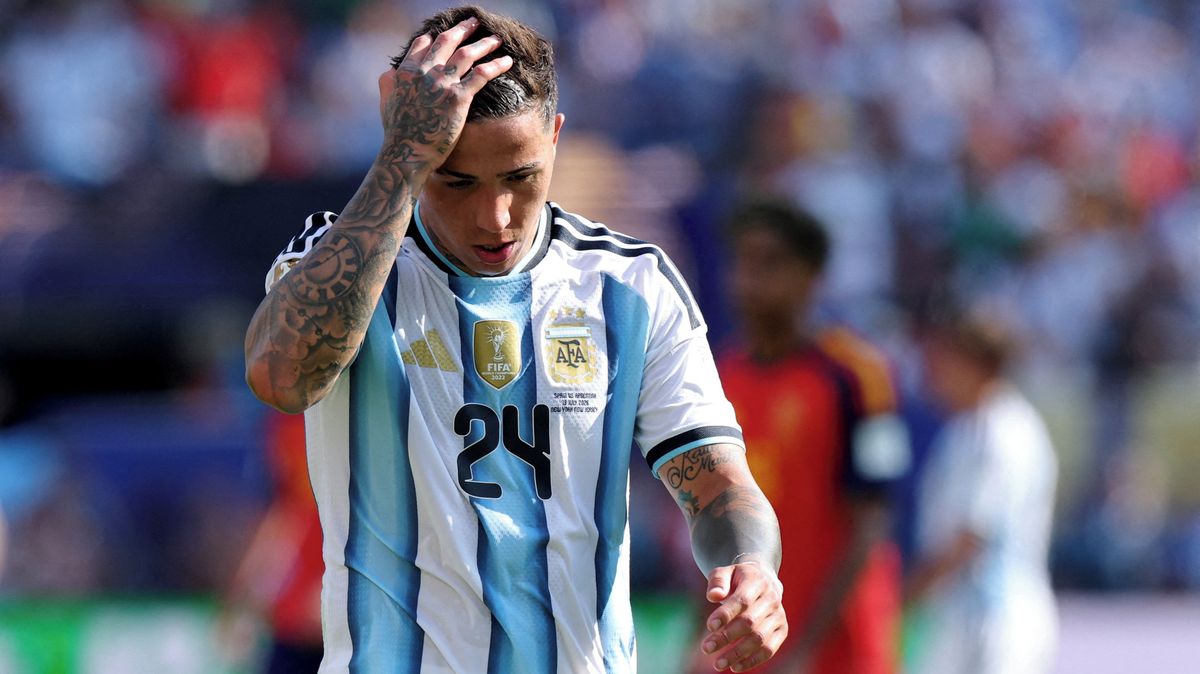
Spain's long-awaited goal finally came in the 106th minute, scored by substitute Ferran Torres, who had been criticized throughout the tournament for missing chances. Argentina, meanwhile, aside from a desperate late push, had nothing else to offer. A telling moment came in stoppage time of regulation, when Enzo Fernández, already on a yellow card, needlessly fouled Cubarsí.
"Amid all this provocation and dirty tactics, it would have been easy to respond in kind and start playing a different kind of football. Thankfully, Spain declined the invitation," Marca wrote. "Argentina once again turned the pitch into a battlefield, while we did exactly the opposite — we kept passing the ball and believing in football."
Notably, in the semifinal against the same Argentina, England under coach Thomas Tuchel had already denied themselves a shot at victory by parking the bus in defense — Messi and company sealed the win with two clinical finishes, leaving England unable to fight for gold. In the final, Argentina pushed this game-killing approach to the extreme: even with arguably the best footballer in history in their ranks, the team simply waited for a sporting miracle, running around without the ball and growing increasingly frustrated.
Former England star striker Michael Owen wrote: "Fully deserved win for Spain. By far the best team in the tournament" — and hardly anyone would argue with that assessment now.
A genuine carnival has broken out across the Iberian Peninsula. This title carries special weight for Spain: the country's first World Cup win back in 2010 launched an entire era of triumphs, and two years ago the team won the Euros — now they're world champions once again. Spanish outlet AS notes: "Never before have both the men's and women's national teams of the same country simultaneously held the World Cup title. Our success is the result of an unmistakable footballing identity: no experiments, every Spanish team plays the same style, from the senior side down to the U-17s."
As celebrations continue across Spain, the country is already looking ahead to the 2030 World Cup, to be co-hosted with Morocco and Portugal. The squad already has players to build around — including Cubarsí, officially named the tournament's best young player, and fellow rising star Yamal. The mood among Spanish fans after this euphoric win is crystal clear: "Yes, we can do it again."
Source: seznamzpravy.cz