Why the US Is Pulling Diplomats From Saudi Arabia as Houthi Attacks Grow
USD 21,59
Popular
The U.S. State Department has ordered nonemergency government employees and their family members to leave Saudi Arabia, citing a surge in attacks by Yemen's Houthi movement on the kingdom. Al Jazeera, The Guardian and the BBC all reported the order, which came Wednesday.
The move follows deadly strikes on Saudi airports and energy sites. It also signals how fast the regional conflict is moving, with the State Department warning that the hostilities could escalate rapidly.
What the State Department said
Spokesperson Tommy Pigott said Iranian-supported Houthis have increasingly engaged in hostilities against Saudi Arabia, including attacks on civilian airports and other critical infrastructure that caused civilian casualties and severe travel disruptions, according to Al Jazeera. He said the safety of department personnel and their families remains the top priority.
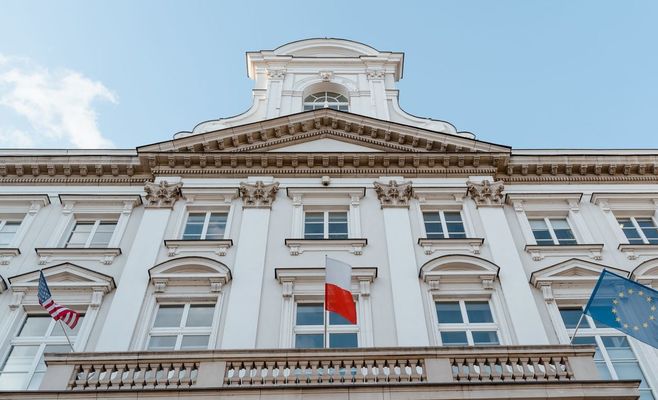
The Guardian reported that the order covers the embassy in Riyadh and its satellite consulates. The embassy was badly damaged at the start of the U.S. war on Iran and had run with a skeleton staff for months, though some diplomats returned in recent weeks.
Several outlets reported that families at U.S. missions in other Gulf states were also being withdrawn. The Guardian cited NBC and AFP naming the United Arab Emirates, Jordan, Qatar and Bahrain, and Al Jazeera said four U.S. officials told Reuters the same. Pigott called those reports inaccurate and said the order applies to Saudi Arabia only.
The attacks behind the order
On Wednesday evening, one Saudi resident was killed in attacks on King Fahd International Airport in Dammam and eight people were hurt, according to Saudi officials cited by The Guardian and the BBC. Flightradar24 said flights were diverted away from the airport.
Separately, falling debris from an intercepted drone aimed at an oil facility in the southeast killed two people and injured two more, the Saudi energy ministry said. The BBC identified the target as the Shaybah oil field. Neither attack had been claimed by the Houthis when the reports were published.
The Guardian and the BBC both said a recent strike on Riyadh's international airport was the deadliest in the kingdom in years. The U.S. embassy in Riyadh also issued a security alert about possible further Houthi attacks on Saudi Arabia.
How the Saudi-Houthi fighting escalated
According to the BBC, an informal ceasefire held for about four years before unraveling in July, when the Houthis announced a maritime embargo against Saudi Arabia and began missile and drone attacks on airports, oil facilities and tankers in the Red Sea. The group says it is retaliating for what it calls a Saudi blockade of its territory and for an air strike on Sanaa airport that it blames on the kingdom.
Yemen has been devastated by a civil war that began when the Houthis ousted the government from the capital, Sanaa, in 2014, and escalated in 2015 when a Saudi-led coalition intervened, the BBC noted.
Why it matters beyond Saudi Arabia
The Houthi embargo in the Bab al-Mandab Strait has helped push up global oil prices, the BBC reported, because Saudi Arabia had come to rely on the Red Sea for oil exports after the war involving the U.S., Israel and Iran effectively closed the Strait of Hormuz. Al Jazeera said the wider conflict has snarled global energy trade and hurt Gulf economies, and the Yemen fighting has opened another front.
For travelers, the airport attacks have already caused severe disruption, as the State Department itself noted.
Questions about U.S. plans
The Guardian reported that the New York Times said the U.S. and Israel have developed plans for a short but intensive operation against Iran, and that Trump has publicly said he does not intend to restart the war before the Nov. 3 elections. NBC reported that the U.S. military has been quietly scaling back its presence at bases across the Middle East, though a Central Command spokesperson said service members are regularly moved to optimize mission readiness.
Around Prague, based on reporting by Al Jazeera, The Guardian, BBC News