Invalidovna in Prague: Petr Hájek's angel-wing extensions, binary code
USD 21,68
Popular
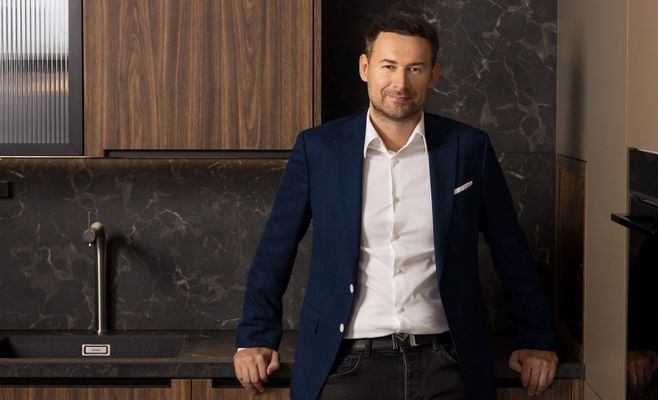
Czech architect Petr Hájek, who is on Forbes' list of the country's best architects, has designed extensions for Prague's Invalidovna. Even before they are built, the project is being called unique: two modern volumes resembling angel wings will get first-class acoustics and will not disturb the historic buildings.
Hájek is known for combining architecture with other fields — above all acoustics and music. That was the case when he fitted a multifunctional hall into the lobby of the neo-Renaissance Imperial Spa in Karlovy Vary, for which he won the Czech Architecture Award. It was also true of the hall at the DOX Centre for Contemporary Art. Now the same idea is at work at Invalidovna. “It is a similar discipline to the Imperial Spa. You have to breathe new life into something historic, otherwise it will fall into decay,” the architect says.
The history of the place. Invalidovna was designed in 1731 by the outstanding Czech architect Kilian Ignaz Dientzenhofer, modelled on the Hôtel des Invalides in Paris. The idea came from Count Petr Strozzi: after being wounded in war, he made a will in favour of disabled and sick soldiers and their families. Thanks to the will and the efforts of his widow Marie Kateřina, a foundation was established in 1714, and its money paid for Prague's Invalidovna — one of three in the Habsburg Monarchy. The complex served its purpose until the days of the First Republic. Many remarkable people stayed here, for example photographer Josef Sudek, who took iconic pictures here after returning from the front. The current building is only a ninth of the originally planned complex, which was meant to be a city within a city.
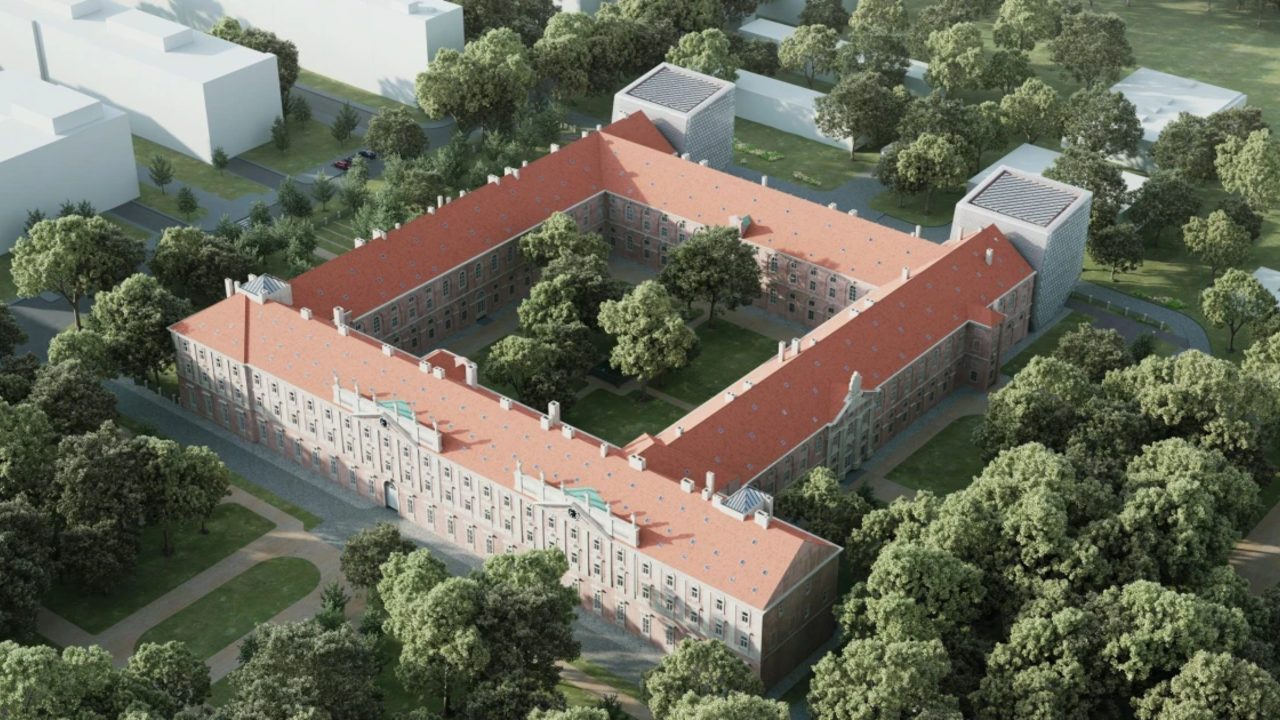
The scale of the reconstruction. The comprehensive restoration was prepared by the National Heritage Institute (NPÚ), which has managed the building since 2018. Earlier it seemed that Invalidovna would become a hotel, but in the end the state kept the valuable monument with a plan to give it a new cultural function. The reconstruction officially began in late August and will last about three years. The investment is around 2.15 billion crowns — the largest in NPÚ's history. Besides restoring the historic building and gardens, two modern extensions designed by Hájek will be built at the rear.
Once the work is finished, the NPÚ Regional Heritage Office in Prague and the Prague Philharmonic Choir will be based here. Part of the complex will be opened to the public, with an information and education centre and exhibition, creative and conference spaces.
Wings, acoustics and code. The key element of the project is two extensions resembling angel wings. They house first-class acoustics and all the technology, so the rafters under the historic roof do not have to be taken apart. “The original building is preserved as a relic down to the last detail, nothing is demolished. And the extensions will be, as it were, only guests,” Hájek explains. The extensions' facades use profiled glass elements with two types of profile — together they form a binary code. “It will be like ones and zeros that can be read, for example, through a phone app,” the architect says. What exactly will be encoded is not yet clear, but it will be an excerpt from a poem, which NPÚ will help choose.