Cisco’s Zuzana Švecová: Czechia is working on digital sovereignty

USD 22,10
Popular
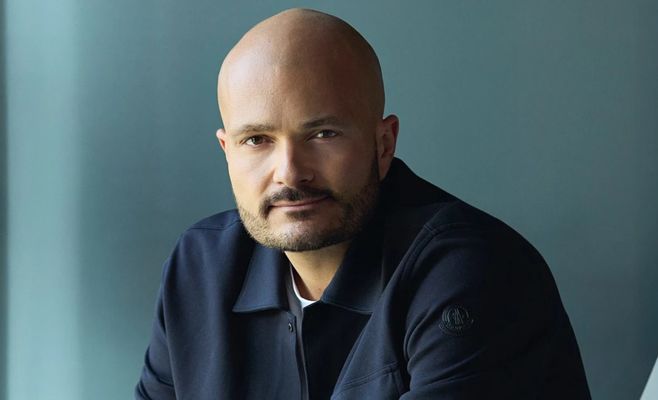
Zuzana Švecová has headed the Czech branch of the American technology giant Cisco for three years and has been climbing the company’s career ladder for 13. In an interview with Forbes, she says Czechia was not digitally sovereign but is now doing its utmost to become so, and explains why Cisco’s infrastructure business has become strategically important.
Her path in the corporation began unconventionally. Švecová was noticed while still a rank-and-file sales manager, after she managed to close a large deal with an American client. In her words, the sales leadership was itself surprised, because she did not even know she was supposed to report the deal to anyone, and nobody there was expecting a big new allocation of funds. “That was my start,” she says with a smile.
Cisco, whose market capitalisation exceeds 380 billion dollars, does not deal in what is nowadays considered “sexy” technology. Švecová compares its products to the most basic items in a shop that you cannot live without: the company makes the “pipes” that make the internet work. Like oil pipelines in the physical world, these pipes have become a strategically important part of a state’s critical infrastructure, and every state strives for independence and digital sovereignty.
Data, as they say, is the new oil, so countries increasingly want to know where their information is stored and who controls it. For companies like Cisco, this is both a technological challenge and a major business opportunity. Švecová considers the mere analysis of what the state has, where it is located and how citizens’ data is protected a step in the right direction.
She speaks cautiously about Czechia’s current position. She is not sure digital self-reliance is being built in all areas of the state: given how long and complex such changes are, probably not. But the drive to stand on its own feet is strong, as in the rest of Europe. Czechia, she says, is not at the forefront of adopting new technologies and is not rushing into rapid innovation. Perhaps not all the expected indicators are lit up, but thanks to a cautious and more traditional approach the fundamentals are mastered very well, and against the European backdrop the country looks quite good.
Švecová knows what she is talking about: Cisco’s multibillion business in Czechia depends roughly half on demand from the state.
The cooperation is not limited to classic business. Cisco was the first to sign a cooperation agreement with the new leadership of the Czech Technical University (ČVUT), headed by rector Michal Pechouček. This closed a historical circle: Pechouček sold his successful startup Cognitive Security precisely to Cisco 13 years ago.
By the Around Prague newsroom