Zlín zoo elephant dies after complex tusk removal surgery
USD 21,68
Popular
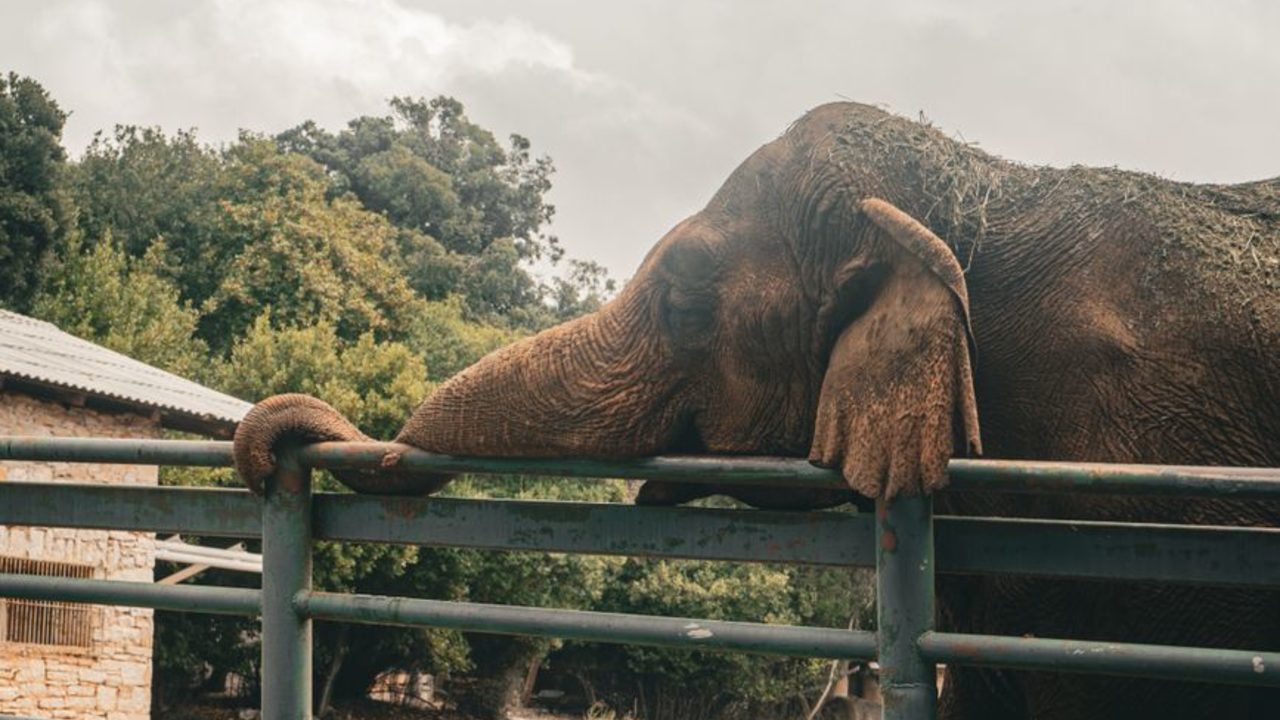
A female elephant has died at the zoo in the Czech town of Zlín: an international team of six veterinary specialists spent several hours performing a complex operation to remove her damaged tusk, but the animal never came round from the general anaesthetic. As zoo spokeswoman Romana Mikešová explained, this is not the first time Zlín has lost an elephant.
Over the summer the elephant broke off part of her right tusk, and the wound became infected. According to the zoo's zoologists, antibiotic treatment did not help. A month ago, vets and outside specialists tried to deal with the problem without general anaesthesia, cleaning the abscessed area under light sedation. But, as the zoo's freelance veterinarian Ondřej Táborský explained, the size and location of the inflamed wound made it impossible to reach without full anaesthesia.
Examination by German specialists
From the very start of treatment, Zlín zoo consulted the team from the Leibniz Institute for Zoo and Wildlife Research (IZW) in Berlin, whose specialists later came to examine the elephant in person. The veterinary examination confirmed extensive inflammation that had spread as far as the animal's eye. "We determined that the only possible solution to this serious problem was surgical removal of the remaining part of the tusk. Without the operation, the elephant would very soon have gone blind and then died in severe agony. In the wild, sepsis following a broken tusk is in fact one of the most common causes of death among elephants," explained Professor Thomas Hildebrandt of the Berlin institute.
A difficult decision to operate
Deciding to go ahead with an operation under general anaesthesia was not easy for Zlín zoo, but without removing the affected tusk the infection would inevitably have killed the elephant. After personal consultations with the Berlin specialists, the team chose the option that gave the animal a chance of recovery, and keepers began preparing her for the procedure. Early on Tuesday morning, an international team of veterinarians gathered at the zoo — specialists in this kind of surgery on large mammals, among the most respected in the world, who had already successfully carried out similar procedures on several occasions.
The operation itself proved exceptionally difficult and lasted several hours. "We did everything that was possible to do at that moment. This was not a routine procedure but a very complex operation on one of the most challenging species from a veterinary point of view," said Professor Hildebrandt. After hours of effort, the affected tusk was fully removed.
Complications after the anaesthesia
The operation and the anaesthesia placed an enormous strain on the elephant. Despite professional care and a successfully completed, complex operation, severe complications developed right at the end as she was coming round from the anaesthetic, and the animal died.
"This is an incredibly difficult moment for us. Losing any animal is painful, all the more so when you know how much time, care and effort the whole team put into her. We wanted to give the elephant a chance, and we did everything we could to help her recover after such a complex operation. Unfortunately, that did not happen," said Zlín zoo director Roman Horský, stressing that the zoo deeply appreciates the work of the specialists who came to Zlín and took part in the difficult procedure.
Source: novinky.cz