Czech drought: farmer accuses the government of inaction
USD 21,62
Popular
Farmer Daniel Pitek, in a guest column for the Ekolist portal, accused the Czech government of inaction in the face of drought. In his view, the authorities fight it only in words, while in practice their policy only makes the drought worse.
Complaints against the government
Pitek points out that record temperatures have become routine and that drought is one of the main manifestations of human-caused climate change. He criticizes Prime Minister Andrej Babiš and Agriculture Minister Martin Šebestián: according to him, they toss around populist phrases and promise billions to deal with the consequences of drought, but nobody knows what actually stands behind them.
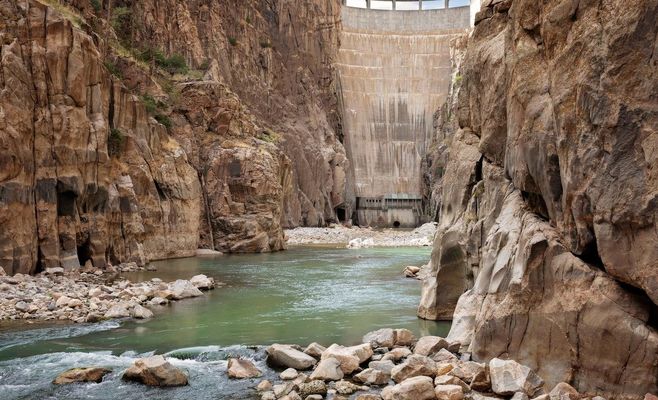
Perhaps this refers to the twenty dams promised by Babiš. The author notes that this year the Orlík, Hracholusky, Lipno and Slapy reservoirs received no inflow and became shallow. He believes the authorities are hoping for an “exceptional anomaly”, but, as Pitek sees it, this is a long-term trend caused by an excess of greenhouse gases.
Soil as the main defence
The climate problem is global, and the Czech Republic cannot solve it alone, the author writes. But as a small country it can, together with others, pressure major players such as the United States, China and India, and the European Union is one of the tools for doing so.
At the national level, he argues, the landscape needs to be adapted to heat, downpours and long droughts: instead of large uniform fields, a varied landscape is needed. The decisive role is played by the condition of the soil, which holds the most water when it is not eroded and is rich in organic matter.
Pitek calls the legislation on protecting agricultural land very weak and claims that the current government has also loosened anti-erosion rules, serving the interests of big business and short-term profit.
A court hearing in the field
Pitek attended the second hearing of the district court in Benešov in a dispute between a field owner and an agricultural company over excessive erosion and soil degradation. The hearing took place right in the field. According to him, the judge has an unusual approach, and the case may end in a precedent-setting ruling important for the quality of land across the country.
The farmer believes that adapting soil and landscape is a practical path for individuals and small groups, but without cutting greenhouse gas emissions it is probably not enough. Such a decision must be made by governments. A government that, in the author's opinion, denies the climate crisis or fails to address it “commits a crime against its own citizens and neighbouring countries”.
Source: ekolist.cz